Yazılar

Goldman Sachs Predicts Crude Oil Spike Amid Potential Iran-Israel Conflict

Goldman Sachs has warned that oil prices could rise by as much as $20 per barrel if Iranian oil production is hit due to Israeli retaliation for Iran’s recent missile attack. Oil prices are already on the rise, with U.S. crude futures climbing by 5% on Thursday and continuing to increase on Friday. The market is reacting to fears of disruptions to Iran’s significant oil output amid escalating tensions between Iran and Israel.

Daan Struyven, Goldman Sachs’ co-head of global commodities research, estimated that a sustained reduction of 1 million barrels per day in Iranian production could push oil prices up by about $20 per barrel next year, assuming that OPEC+ does not increase production to compensate. If major OPEC+ members like Saudi Arabia and UAE step in to offset the shortfall, the price rise could be closer to $10 per barrel.

Since the Israel-Hamas conflict began in October 2023, the oil market had remained stable due to increased U.S. production and low demand from China. However, the recent missile attacks by Iran have reignited concerns about supply disruptions. Iran produces about 4 million barrels of oil per day, accounting for roughly 4% of global supply, making it a key player in the global oil market.

Saul Kavonic, an energy analyst at MST Marquee, raised the possibility that Kharg Island, responsible for 90% of Iran’s crude exports, could become a target for Israeli strikes. This would significantly impact Iran’s ability to export oil, adding further pressure to the global market.

Another major concern is the Strait of Hormuz, a crucial channel through which nearly 20% of the world’s daily oil production flows. Any conflict that disrupts transit through this region could lead to even more dramatic spikes in oil prices.

Fitch Solutions issued a note stating that in the event of a full-scale war, Brent crude could rise above $100 per barrel, and any closure of the Strait of Hormuz could push prices to $150 per barrel or higher. While the probability of a full-scale war is seen as relatively low, the risk of miscalculation or escalation is now elevated.

Although some analysts believe that OPEC+ has enough spare capacity to cover any shortfall in Iranian oil, most of this capacity is concentrated in the Middle East, which could itself be drawn into a broader conflict if tensions worsen.

 

Berkshire Halves Apple Stake, Boosts Cash to $277 Billion as it Gets ‘Defensive’

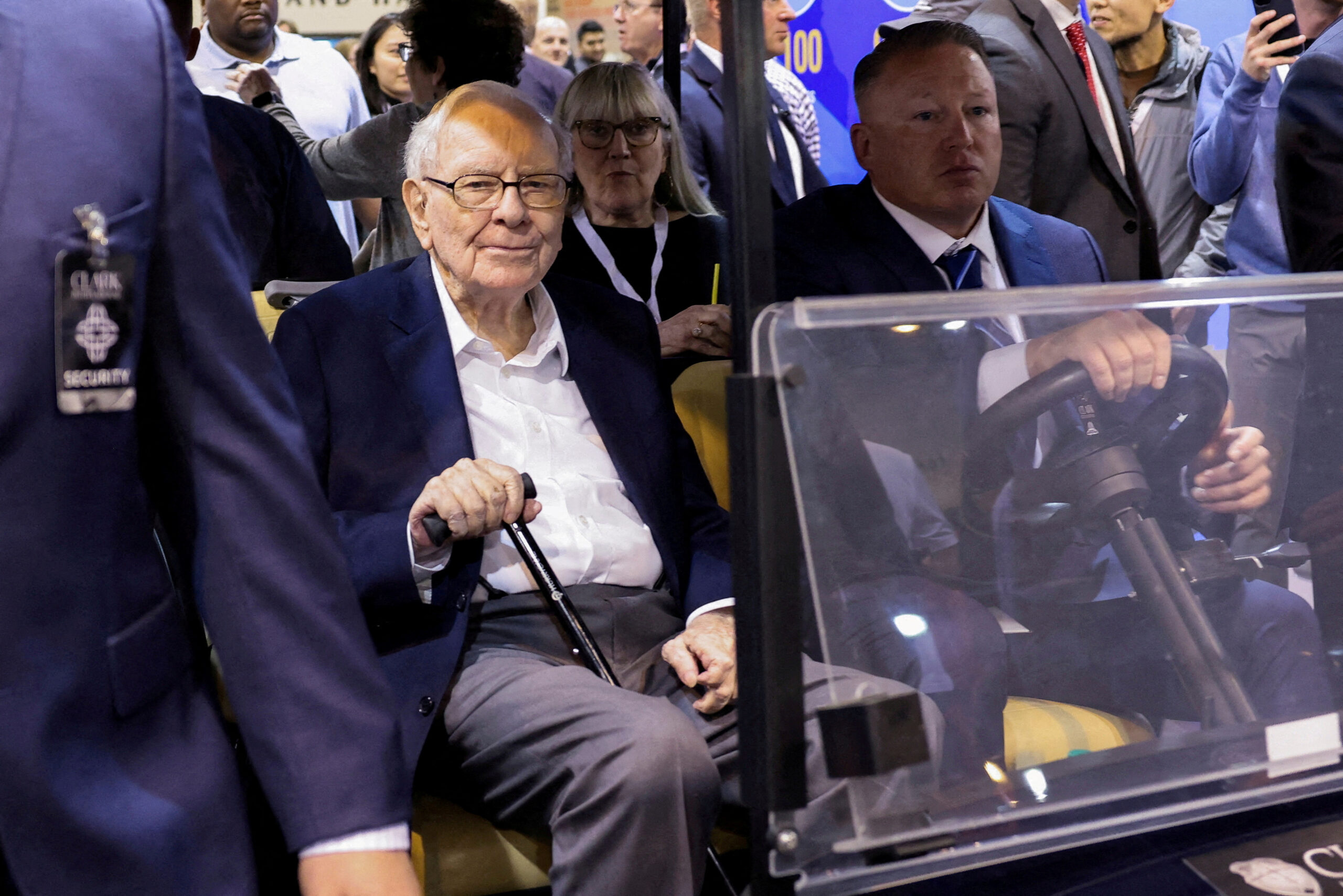
Warren Buffett’s Berkshire Hathaway has significantly increased its cash reserves to nearly $277 billion, while also selling about half of its stake in Apple. This move suggests that Buffett, at 93 years old, is becoming cautious about the broader U.S. economy and potentially overvalued stock market. The company’s results were released after a global stock market selloff, with the Nasdaq entering correction territory and a weak jobs report raising concerns about U.S. economic activity.

Cathy Seifert, an analyst at CFRA Research, interprets Berkshire’s actions as defensive, highlighting the conglomerate’s growing cash stake and reduced stock investments. As of June 30, Berkshire’s cash reserves increased from $189 billion three months earlier, largely due to selling $75.5 billion worth of stocks. Notably, Berkshire sold around 390 million Apple shares in the second quarter, on top of 115 million sold earlier in the year, as Apple’s stock price increased by 23%. Despite these sales, Berkshire still owns about 400 million Apple shares valued at $84.2 billion.

This marked the seventh consecutive quarter in which Berkshire sold more stocks than it purchased. Additionally, Berkshire repurchased only $345 million of its own stock, down significantly from $2.57 billion in the first quarter. Jim Shanahan, an analyst at Edward Jones, noted that Buffett’s reluctance to invest in publicly traded stocks, including Berkshire’s own, raises concerns about his outlook on the markets and economy.

Financial Performance and Strategic Moves

Berkshire’s second-quarter profit from its diverse businesses increased by 15% to $11.6 billion, with substantial contributions from its insurance businesses, including Geico. However, overall revenue saw only a modest 1% rise to $93.65 billion, with notable declines in sectors such as auto dealerships and the Pilot truck stop chain.

The conglomerate’s earnings were buoyed by short-term Treasury returns, which might decline once rate cuts begin. Shanahan suggested that revenue challenges could make it difficult for Berkshire to sustain earnings growth into 2025. Quarterly net income fell 15% to $30.34 billion due to stock price fluctuations affecting Berkshire’s investment values.

Buffett has consistently advised shareholders to disregard quarterly investment gains and losses due to their volatility. Despite substantial cash reserves, Berkshire often accumulates cash when it cannot find attractive investment opportunities. Since mid-July, the company has also sold over $3.8 billion in Bank of America shares, its second-largest stock holding.

Buffett emphasized the importance of making low-risk investments with potential for significant returns. He expects Apple to remain Berkshire’s largest stock investment, although selling shares made sense to mitigate tax implications.

Impact on Key Businesses

Berkshire’s second-quarter results showed mixed performance across its various sectors. Profit at BNSF railroad declined by 3%, affected by legal expenses despite lower operating costs and increased shipping volumes. Berkshire Hathaway Energy’s profit fell by 17%, partly due to lawsuits against its PacifiCorp utility unit, which is blamed for causing wildfires in Oregon in 2020.

Despite these challenges, Berkshire’s Class A shares have performed well, closing at $641,435 on Friday, up 18% for the year, compared to a 12% increase in the S&P 500. As Buffett approaches 60 years of leading Berkshire, Vice Chairman Greg Abel is anticipated to succeed him as CEO.