ESA’s Proba-3 Mission, Set to Study Solar Eclipses, Heads to Launch Site in India
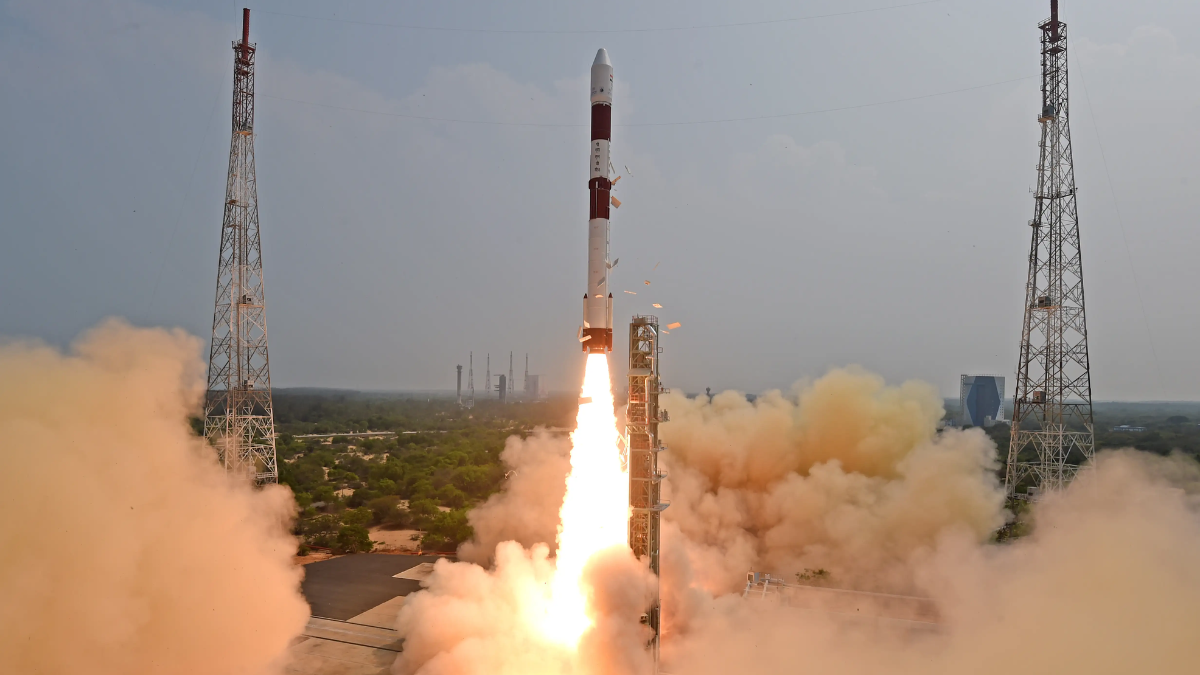
ESA’s Proba-3 mission, a groundbreaking project designed to simulate solar eclipses in space for studying the Sun’s corona, has officially left Europe and is now en route to its launch site in India. The dual-spacecraft mission departed from Redwire Space’s facility in Kruibeke, Belgium, and is on its way to the Satish Dhawan Space Centre near Chennai, where it will undergo final preparations for launch. The primary goal of Proba-3 is to create an artificial eclipse, allowing scientists to study the Sun’s outer atmosphere—an area that is usually only visible during brief moments of a natural eclipse on Earth.
The Proba-3 mission is a pioneering effort in space science and technology, involving two spacecraft: the Occulter and the Coronagraph. These two satellites will fly in formation with incredible precision, using one to cast a shadow on the other, effectively simulating the eclipse needed for the observation of the Sun’s corona. ESA Mission Manager Damien Galano emphasized the complexity of the mission, noting that achieving such precise formation flying, where the satellites must maintain an accuracy within a millimeter, required years of development. The mission is set to provide unprecedented insights into solar phenomena, giving scientists a clearer view of the Sun’s magnetic field and its impact on space weather.
Scheduled for launch on December 4, Proba-3 will be deployed aboard India’s PSLV-XL rocket. Once in orbit, the spacecraft will enter a highly elliptical trajectory, ranging from 600 kilometers to 60,000 kilometers above Earth. This specific orbit is crucial for enabling the formation flying required for the eclipse simulation, as it places the spacecraft at altitudes where the gravitational pull is weaker, reducing the amount of fuel needed for the precise movements. Despite some initial challenges, such as delays in air freight logistics that required the spacecraft’s batteries to be shipped separately, the mission is now on track for its December launch.
This mission marks a significant milestone in solar observation, as it provides a unique opportunity to study the Sun’s corona in greater detail than ever before. By mimicking the conditions of a solar eclipse, Proba-3 will give scientists access to crucial data about the Sun’s behavior and its effects on space weather, which can have far-reaching consequences for satellite operations and Earth’s communication systems. As the mission progresses, it is expected to contribute valuable knowledge to the field of heliophysics and deepen our understanding of the Sun’s dynamic nature.