
Yazılar

Bitcoin Surges Past $100,000 Amid Trump-Driven Crypto Optimism

Bitcoin crossed the $100,000 mark for the first time on Thursday, signaling a historic milestone for digital assets. The surge followed U.S. President-elect Donald Trump’s nomination of pro-crypto advocate Paul Atkins to lead the Securities and Exchange Commission (SEC), propelling Bitcoin to a record high of $103,619 before settling at $102,650.

The cryptocurrency market, now valued at nearly $3.8 trillion according to CoinGecko, has doubled in size this year, rivaling the market capitalization of tech giant Apple. Bitcoin, often viewed as the face of decentralized finance, has doubled its value in 2024 and surged more than 50% in the four weeks since Trump’s election victory, which brought a wave of crypto-friendly lawmakers into Congress.

Institutional Adoption and Regulatory Momentum

Industry experts describe this moment as a “paradigm shift” for digital assets. Mike Novogratz, CEO of Galaxy Digital, highlighted factors such as institutional adoption, tokenization advancements, and clearer regulatory frameworks as drivers of Bitcoin’s mainstream integration.

Trump’s campaign promises to make the U.S. a global leader in cryptocurrency, coupled with his pledge to accumulate a national Bitcoin reserve, have bolstered market optimism. Pro-crypto policies and the nomination of Atkins, known for his work on digital asset best practices, signal a more favorable regulatory landscape. The Blockchain Association praised Atkins as a key figure in ushering a “new wave of American crypto innovation.”

Institutional and Market Drivers

Institutional investors have played a significant role in Bitcoin’s rally. U.S.-listed Bitcoin exchange-traded funds (ETFs), approved in January 2024, have attracted over $4 billion since the election, accounting for approximately 3% of Bitcoin’s total supply this year. The normalization of digital assets in financial markets is becoming evident, with trading desks for cryptocurrencies emerging alongside traditional asset classes such as foreign exchange and commodities.

Bitcoin’s journey into six-figure territory also marks a dramatic recovery from its 2022 lows of under $16,000, following the collapse of the FTX exchange. Analysts note that the launch of Bitcoin futures in 2017 and the strong performance of BlackRock’s Bitcoin ETF options in November 2024 further demonstrate the financialization of the asset.

Crypto-related stocks have surged alongside Bitcoin’s rise. Companies like MARA Holdings and Coinbase saw their shares climb 65% in November, while MicroStrategy, which holds over 402,000 bitcoins, has gained 540% this year.

Criticism and Resilience

Despite its success, the cryptocurrency industry faces ongoing criticism. Concerns over energy consumption, crypto-related crime, and unfulfilled promises of transformative financial technology persist. On Wednesday, U.S. and U.K. authorities disrupted a cryptocurrency-based global money laundering ring tied to Russian elites and drug traffickers.

Still, Bitcoin’s resilience has drawn attention. Russian President Vladimir Putin remarked that its decentralized nature makes it immune to prohibition. Economists like Shane Oliver of AMP acknowledge Bitcoin’s momentum but admit its value remains difficult to assess, adding, “As time goes by, it’s proving itself as part of the financial landscape.”

The Road Ahead

As the Trump administration prepares to take office, the cryptocurrency market appears poised for further growth. Trump’s launch of World Liberty Financial in September, along with Elon Musk’s continued advocacy for digital assets, underscores the increasing prominence of cryptocurrencies in shaping future financial systems.
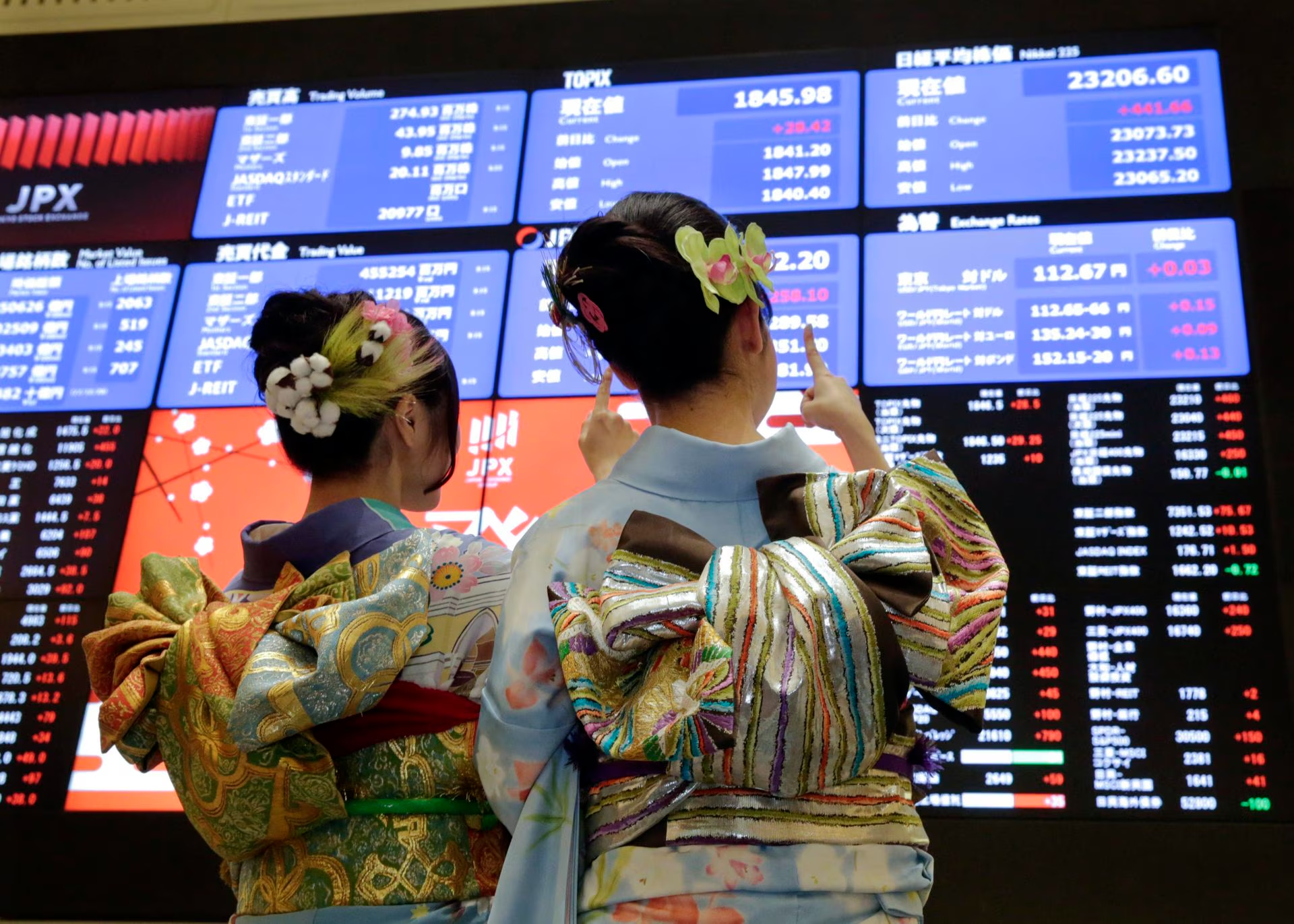

Trump’s Return Could Boost Asian Markets, Particularly in China and Japan

As President Donald Trump returns to office, Asian markets, including China, appear poised for resilience, with investors optimistic that the region’s economy can withstand potential tariffs and trade tensions better than Europe. While European sectors like automotive and renewables experienced declines, Asia’s financial markets displayed steadiness, underscoring confidence in the region’s ability to adapt to Trump’s trade policies.

Analysts note that Asia’s supply chains and export markets are structurally better equipped to navigate protectionist policies. China, in particular, is expected to counterbalance any potential external pressures by bolstering domestic demand, while India’s robust growth continues to attract investment. Japan’s financial markets also showed steady activity, with significant buying in industrial and financial sectors. Shinji Ogawa, co-head of Japan cash equities sales at J.P. Morgan in Tokyo, highlighted this investor confidence, attributing it to Japan’s anticipated interest rate hikes and economic measures expected from an upcoming policy meeting in China.

Historically, Trump’s trade policies led investors to favor U.S. equities, drawing funds from Asian markets, especially Hong Kong. However, those with diversified portfolios are now retaining their Asia investments. Ken Peng, head of Asia investment strategy at Citi Wealth in Hong Kong, believes that current economic conditions will likely sustain growth-focused investments in Asia, particularly in India, where economic momentum remains strong.

In Japan, stocks for automakers, banks, and capital expenditure-sensitive heavy machinery companies surged, indicating investor preference for industries set to benefit from renewed investment. In Vietnam, anticipation of expanded manufacturing boosted shares in companies such as Becamex, a key industrial park operator, while Kinh Bac City, which has a business relationship with Trump’s private conglomerate, also saw gains.

China’s Better Preparedness for Trade Tensions

During Trump’s first term, China faced significant economic strain from trade tensions, which impacted both growth and the yuan. This time, however, investors believe China is more prepared for Trump’s policies. Charles Wang, chairman of Shenzhen Dragon Pacific Capital Management, pointed out that China is now better equipped both economically and technologically to handle trade challenges.

Wang has taken a cautious approach, divesting from Chinese auto parts companies due to anticipated tariff impacts, but he remains invested in China’s property sector, expecting that the government will support it regardless of trade conditions. Further, China’s strategic pivot toward domestic demand has reduced the U.S.’s share in China’s export market, minimizing direct trade risks and potentially encouraging more supportive domestic policies. According to Dong Baozhen, chairman of Beijing-based asset manager Lingtong Shengtai, heightened tariffs may reinforce China’s focus on internal demand, fostering policies that encourage local economic growth.

Capital Flows and Potential Opportunities

Despite recent fluctuations in the yuan, foreign long-only funds purchased $11.1 billion in Chinese equities through October, according to Morgan Stanley, with outflows remaining limited. Investors anticipate that Beijing will soon unveil a stimulus package, providing further stability.

Trump’s proposed domestic tax cuts may also benefit Asian markets indirectly, potentially boosting demand for Chinese goods. Some analysts see Trump’s isolationist policies as an opportunity for China to strengthen relations with other global markets, including Europe. Robert St Clair, head of investment strategy at Fullerton Fund Management, noted that Trump’s pragmatic approach as a businessman might lead him to manage tariff levels carefully, recognizing China’s significant role in high-value industries.

Ultimately, while challenges from U.S.-China trade dynamics remain, many investors are confident that China and broader Asian markets are better equipped to manage them, with Trump’s policies potentially opening new avenues for growth across the region.


Treasury Yields Steady as U.S. Awaits Presidential Election and Fed Decision

U.S. Treasury yields remained nearly stable on Tuesday morning as investors anticipated the outcome of the U.S. presidential election. As of 4:45 a.m. ET, the yield on the 10-year Treasury note was down slightly, by less than one basis point, at 4.3029%. Similarly, the 2-year Treasury yield was also marginally lower at 4.1681%. Yields, which move inversely to bond prices, had little movement as markets braced for election results and further economic indicators.

The U.S. presidential election has been a focal point for investors, with polling suggesting a tight race between Vice President Kamala Harris and former President Donald Trump, both tied at 49% in the latest NBC News poll. In addition to the presidency, control of Congress remains in question. A divided Congress could limit either candidate’s ability to push through major policy changes, while a single-party majority would likely enable broader shifts in spending and tax policies.

Beyond election results, investors are also keeping an eye on upcoming economic data and Federal Reserve policy. The October ISM Services PMI, scheduled for release later on Tuesday, will provide insights into the growth rate of the U.S. service sector, potentially highlighting trends in economic health. Additionally, the Census Bureau reported on Monday that factory orders for September fell by 0.5%, aligning with economists’ expectations and reflecting ongoing adjustments in the manufacturing sector.

Looking ahead, the Federal Reserve’s policy meeting on Thursday is expected to draw significant attention. Market participants are widely expecting the Fed to announce a quarter-point rate cut, building on a larger, half-point cut in September. The CME Group’s FedWatch Tool currently indicates a 98% probability of the cut, reflecting widespread anticipation of more accommodative monetary policy as the economy navigates ongoing uncertainties.