Yazılar

Trump-Musk Feud Triggers $150 Billion Wipeout in Tesla Market Value

Tesla shares plummeted 14% on Thursday, erasing $150 billion in market value, as a public feud between U.S. President Donald Trump and Tesla CEO Elon Musk rattled investors. The stock selloff occurred despite no major company-specific news, as traders reacted to escalating tensions between the two high-profile figures.

The dispute began when Trump criticized Musk’s opposition to his administration’s tax bill, which includes provisions that would eliminate federal subsidies for electric vehicle (EV) purchases. Musk responded by attacking Trump’s policies on social media, further intensifying the confrontation. Trump later escalated his rhetoric, suggesting that terminating government subsidies and contracts with Musk’s companies could save the federal government billions of dollars.

The spat poses multiple risks for Tesla, especially as it tries to navigate a shifting regulatory landscape. The U.S. Transportation Department, which regulates vehicle safety standards, could become an obstacle to Musk’s ambitions of mass-producing autonomous robotaxis — a cornerstone of Tesla’s future growth strategy. The department is also investigating Tesla’s Full Self-Driving system following a fatal crash.

“Elon’s politics continue to harm the stock,” said Dennis Dick, chief strategist at Stock Trader Network. “First he aligned with Trump, upsetting Democratic buyers. Now he’s alienated the Trump administration.” Analysts warn that political fallout could also influence regulatory decisions that disproportionately affect Tesla, particularly if regulators mandate technologies like lidar, which Tesla currently avoids in favor of camera-based systems.

The market rout has also dented Musk’s personal wealth. Following Thursday’s selloff, his net worth fell by roughly $27 billion to $388 billion, according to Forbes.

Investors are increasingly concerned about Tesla’s exposure to political headwinds as well as its heavy reliance on government incentives. Trump’s budget proposal includes ending the popular $7,500 EV subsidy by late 2025, which could slash Tesla’s annual profit by $1.2 billion and hit regulatory credit sales by an additional $2 billion, according to J.P. Morgan estimates.

Despite these risks, Tesla remains the most valuable automaker globally with a market capitalization of around $1 trillion — more than triple that of Toyota. However, some investors question the stock’s lofty valuation, which trades at 150 times profit estimates. “I am short Tesla. I don’t understand its valuation or fundamentals. I think it’s overhyped,” said Bob Doll, chief investment officer at Crossmark Global Investments.

Tesla’s stock has been highly volatile since Musk endorsed Trump’s reelection bid in mid-2024. After an initial 169% surge, shares have since fallen 54% amid protests and weakening sales in major markets including Europe, China, and key U.S. states like California.

While Transportation Secretary Sean Duffy has already moved to ease some autonomous vehicle safety regulations, experts caution that federal regulators could still shape rules in ways that disadvantage Tesla. “With President Trump, being on his bad side always creates risk,” said Morningstar analyst Seth Goldstein, though he noted that broader industry pressure may limit targeted retaliation.

Ultimately, analysts suggest the political drama could overshadow Tesla’s ambitious AI and autonomous driving plans, which Wedbush previously valued at up to $1 trillion in potential market capitalization.

Robinhood Beats Profit Estimates as Post-Election Trading Surge Lifts Volumes

Robinhood (HOOD.O) exceeded expectations for fourth-quarter profit, driven by a sharp rise in equity, options, and cryptocurrency trading after Donald Trump returned to the White House. Following the announcement, Robinhood’s shares jumped more than 14% in after-hours trading.

The company’s transaction-based revenue soared 236% to $672 million compared to the same quarter a year ago, fueled by increased fees from options, equities, and crypto trades.

Crypto trading activity was a major growth driver, with revenue from that segment rising 700% during the quarter as bitcoin approached the $100,000 mark. Investors were optimistic about pro-crypto policies expected under the new Trump administration.

“It was no secret that Robinhood’s Q4 earnings were going to be great, driven primarily by a huge uptick in crypto-related revenues,” said John Wu, President of Ava Labs.

The surge in equity and crypto markets came after Trump’s election victory, as investors anticipated deregulation and pro-business policies that would favor U.S. corporations and the growing digital asset sector.

Robinhood reported an adjusted profit of $1.01 per share, well above analysts’ expectations of 44 cents, according to data from LSEG.

The company’s assets under custody increased by 88% to $193 billion during the quarter, and quarterly net interest revenue, driven largely by margin investing, rose 25% to $296 million.

“This was a big quarter for us, so we did over $1 billion in revenue for the first time in the history of the company, and that capped off what was a record-breaking year with over $3 billion in revenue for the whole year,” Robinhood co-founder and CEO Vlad Tenev said on the company’s post-earnings call.

Hedge Fund Retreat Transforms Cocoa Markets Amid Price Surge

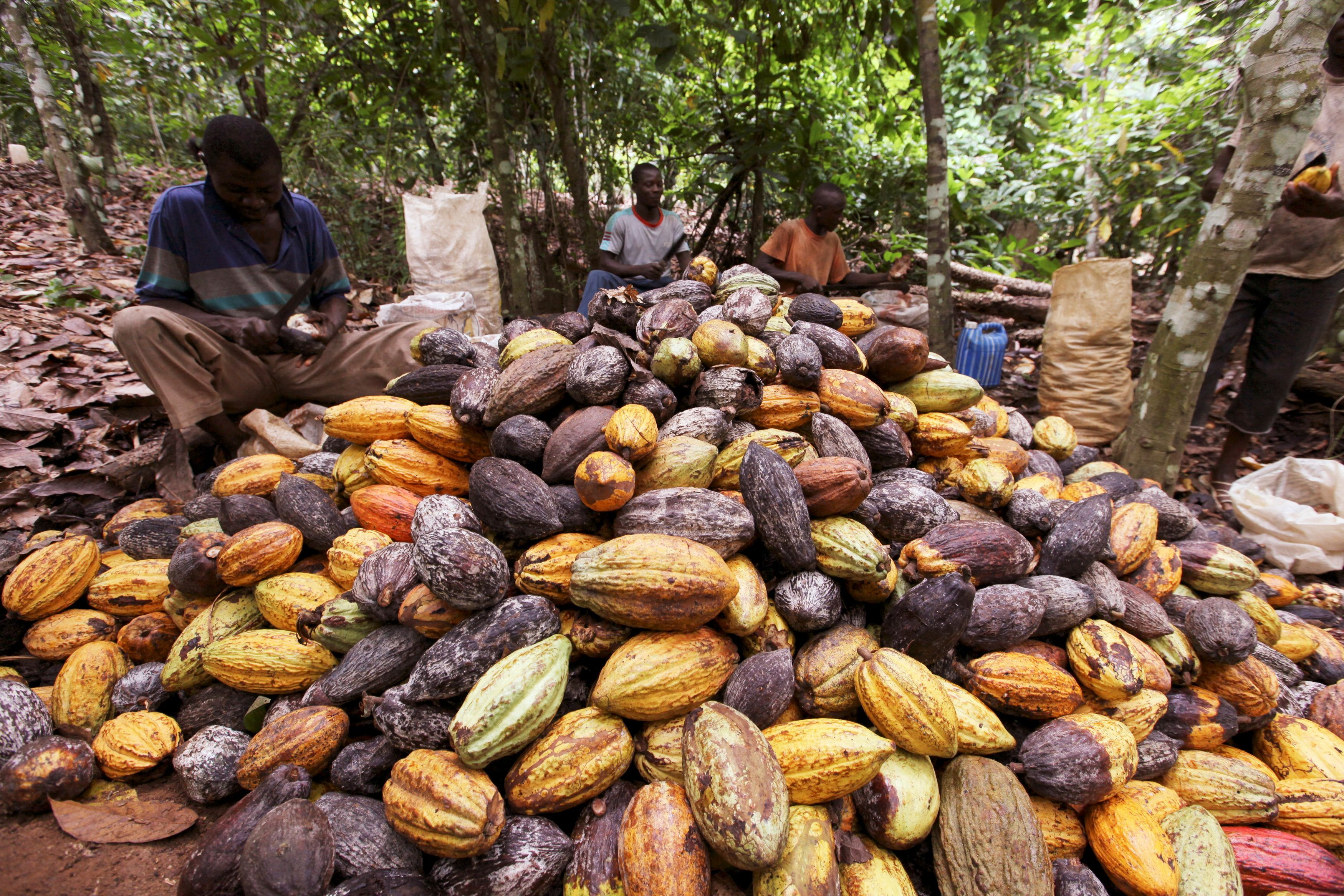
A record-breaking surge in global cocoa prices this year has exposed a dramatic shift in financial markets underpinning the cost of chocolate: hedge funds, once key players in cocoa futures trading, have largely exited the market. Their withdrawal has reshaped cocoa markets, driving unprecedented volatility and straining liquidity.

Cocoa futures, traded on exchanges in London and New York, are vital for determining the price of cocoa beans, influencing confectionery costs worldwide. However, by mid-2022, hedge funds—speculative investors that use pooled private capital—began scaling back their activity in cocoa markets. This retreat accelerated in 2023 due to heightened price swings, which increased trading costs and eroded profitability.

The market turmoil was fueled by adverse weather conditions and crop diseases in top cocoa-producing nations Ivory Coast and Ghana. These challenges drove cocoa prices to a record high in February, surpassing the previous peak set in 1977. Hedge funds, which peaked at a 36% share of the market in May 2023, reduced their presence to just 7% by late May, their lowest participation in over a decade.

Razvan Remsing of Aspect Capital, a $9.3 billion London-based hedge fund, explained that extreme volatility compelled the firm to reduce its exposure to cocoa futures. Aspect trimmed its cocoa holdings from nearly 5% of its portfolio in January to under 1% by April. Lawrence Abrams of Absolute Return Capital Management noted that the collateral required to trade cocoa futures skyrocketed, increasing costs for speculators.

The hedge fund exodus had cascading effects on the market. Liquidity—the ease of buying and selling—plummeted, leading to wider bid-ask spreads and amplified price swings. Daily price fluctuations reached $800 in May, up 15 times from the previous year, while volatility hit record highs. As a result, traders and brokers faced significant challenges executing large trades without distorting prices.

The cocoa market’s altered dynamics prompted some industry players to seek alternatives to futures contracts. Macquarie, an Australian investment bank, reported increased demand for over-the-counter products, which offer narrower price protection. However, such instruments have limited use compared to traditional futures contracts.

Major trading houses and cocoa producers also faced steep losses as Ghana delayed delivery on nearly half of its cocoa harvest for the October 2023 to September 2024 season. This disruption forced traders to liquidate positions at significant losses, compounding market instability.

Despite some hedge funds returning to the market, their collective share of cocoa trading remains well below previous levels. Short-term investors, including day traders, have partially filled the gap but lack the liquidity-providing role of hedge funds. Brokers have nicknamed these transient participants “cocoa tourists” for their fleeting involvement in the market.

The fallout from the hedge fund retreat extends to chocolate makers, particularly small and medium-sized businesses. Volatile prices and higher costs have forced many to pass expenses to consumers, reduce product sizes, or shutter operations.

For cocoa-producing nations like Ivory Coast and Ghana, the turbulence in futures markets has profound implications. These countries depend on stable futures markets to hedge income and protect farmers from price fluctuations. The market’s current volatility underscores the risks of relying heavily on speculative financial actors.

As cocoa markets navigate their transformed landscape, the episode highlights the systemic importance of hedge funds and their outsized influence on global commodity markets.