

Yazılar

Best Buy Raises Full-Year Profit Outlook After Beating Earnings and Revenue Expectations

Best Buy raised its profit forecast for the fiscal year after reporting stronger-than-expected earnings and revenue for the recent quarter. The company now anticipates full-year adjusted earnings per share (EPS) between $6.10 and $6.35, an increase from its previous range of $5.75 to $6.20. This comes as Best Buy works through an ongoing sales slump amid softer consumer demand following the pandemic-era tech boom and high inflation pressures.

For the quarter ending August 3, Best Buy exceeded Wall Street’s expectations, posting an EPS of $1.34 compared to the expected $1.16, and revenue of $9.29 billion against the anticipated $9.24 billion. Despite a year-over-year decline in net sales from $9.58 billion to $9.29 billion, the company’s net income grew to $291 million, up from $274 million last year.

While comparable sales fell by 2.3%, this marks a significant improvement from the 6.2% decline seen during the same period last year. The retailer has faced challenges with declining consumer electronics sales, which have been forecasted to drop another 2% in 2024 according to Circana.

Best Buy is positioning itself for recovery through several key initiatives. The company is focusing on boosting sales in computing, appliances, and home theater by deploying trained sales teams to these areas, and it is also launching a marketing campaign to engage consumers, including YouTube videos to highlight tech products.

The retailer is banking on new technology rollouts, such as Apple’s new iPads and AI-enabled laptops from Microsoft, to reignite interest and spur spending as the replacement cycle for pandemic-era tech products begins to take shape. Best Buy anticipates increasing stabilization in the industry as 2024 approaches, despite the ongoing challenges in the consumer electronics market.

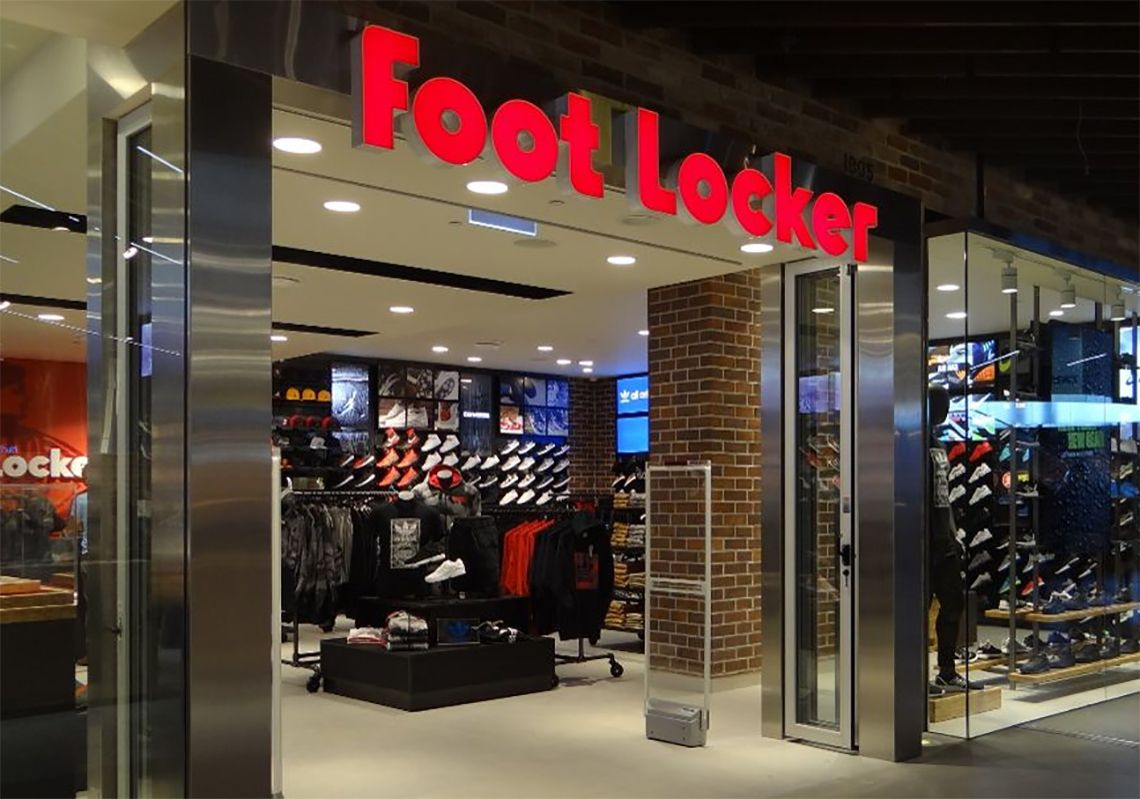
Foot Locker Reports First Sales Growth in Six Quarters Amid Store Revamps

Foot Locker has reported a 2.6% increase in comparable sales for the fiscal second quarter, marking its first growth in six quarters. This rise exceeded analysts’ expectations and indicates that the company’s efforts to revitalize its stores and enhance customer experience are paying off. Despite this positive news, Foot Locker’s stock fell approximately 8% in premarket trading.

CEO Mary Dillon highlighted the success of the “Lace Up Plan,” Foot Locker’s turnaround strategy, noting improved top-line trends and a solid start to the Back-to-School season. The company also saw its gross margin expand for the first time in over two years.

Foot Locker’s fiscal performance included a loss of $12 million, or 13 cents per share, compared to a loss of $5 million, or 5 cents per share, in the same period last year. Adjusted for one-time items, the loss was 5 cents per share, better than the expected 7 cents. Revenue reached $1.90 billion, surpassing the anticipated $1.89 billion.

For the remainder of the fiscal year, Foot Locker has maintained its sales guidance, expecting a range of 1% decline to 1% growth, outperforming the anticipated 0.4% decline. The company also retained its adjusted earnings per share forecast, projecting earnings between $1.50 and $1.70, ahead of the expected $1.54.

Under Dillon’s leadership, Foot Locker is focusing on transforming its store network, with plans to invest $275 million this year to remodel two-thirds of its stores by the end of fiscal 2025. The company is also closing or transferring operations of 30 stores in the Asia-Pacific region and 629 in Europe, while expanding its reach in Greece and Romania.

Foot Locker’s Champs Sports banner is showing signs of recovery, with comparable sales down 3.9%, a significant improvement from the 25.3% decline seen last year. The company is also relocating its global headquarters from New York City to St. Petersburg, Florida, by late 2025, aiming to enhance collaboration and reduce costs.

Despite broader retail industry challenges and consistent inflation, Foot Locker’s strategies are driving sales growth and customer engagement. Dillon remains confident in the company’s approach to ensure long-term profitable growth and shareholder value.

Meta Shares Surge 6% on Strong Q2 Earnings and Positive Revenue Forecast

Meta shares jumped 6% on Thursday after the company reported second-quarter earnings that exceeded Wall Street’s expectations and provided an optimistic revenue forecast.

Key Figures:

Revenue: $39.07 billion (up 22% from $32 billion a year earlier; analysts expected $38.31 billion)
Net Income: $13.47 billion, or $5.16 per share (up 73% from $7.79 billion, or $2.98 per share; analysts expected $4.73 per share)

Meta expects third-quarter revenue between $38.5 billion and $41 billion, surpassing the average analyst estimate of $39.1 billion.

CEO Mark Zuckerberg and CFO Susan Li highlighted the benefits of Meta’s investments in artificial intelligence (AI), noting improvements in content recommendations and advertising effectiveness. Analysts at Baird and Bank of America emphasized Meta’s strong AI-related performance and growth potential in ad conversions, digital assistants, and multimodal content creation.

Meta’s capital expenditures for the year are projected to be between $37 billion and $40 billion, up from the previous low-end estimate of $35 billion. Analysts at Barclays praised Meta’s execution pace in digital advertising and anticipated new AI-driven products.