Yazılar

Google Unveils Bold AI Upgrades, Premium Plans, and Smart Glasses at I/O 2024

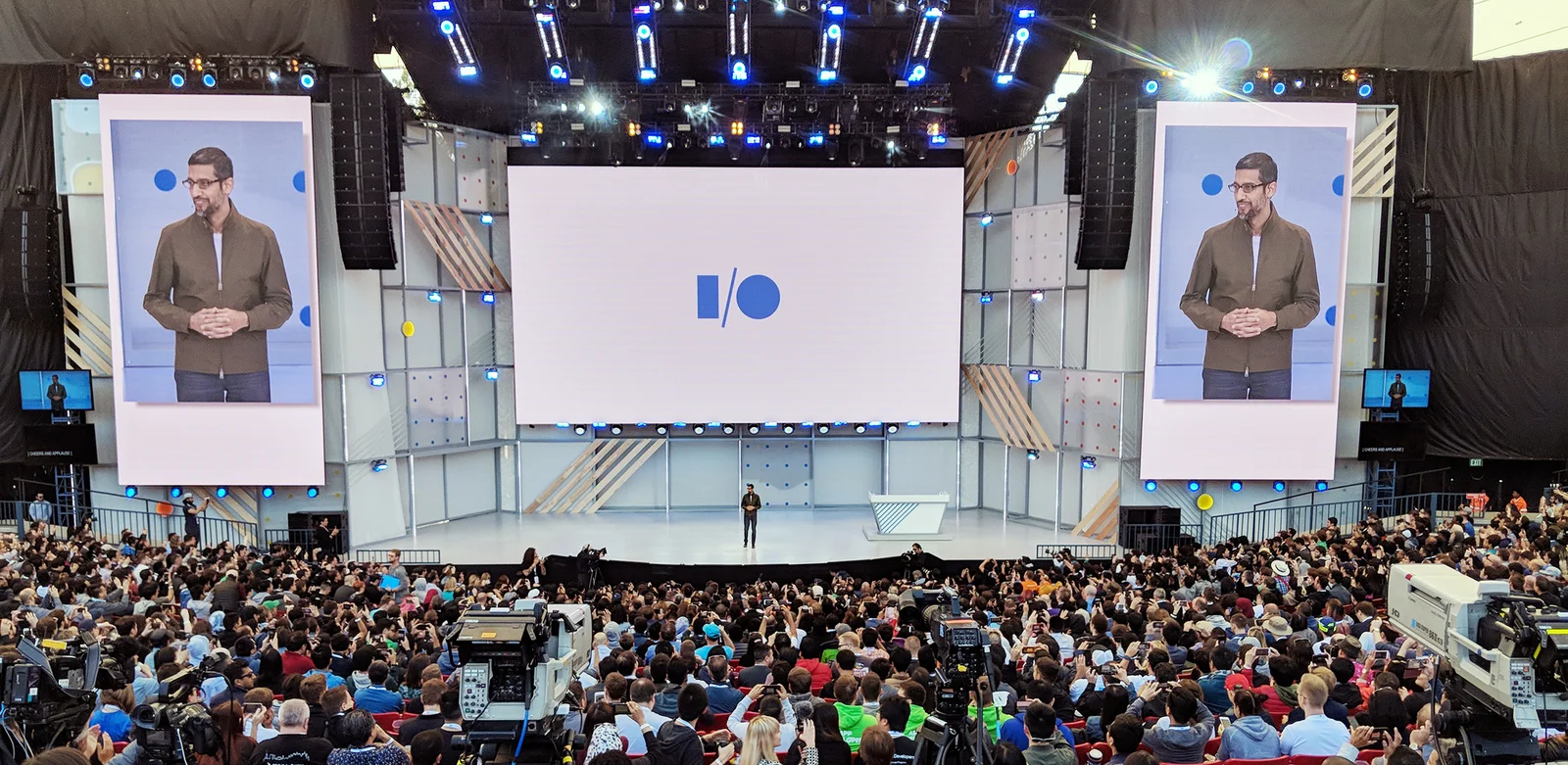
At its annual Google I/O conference in Mountain View, California, Alphabet unveiled sweeping updates to its artificial intelligence strategy, including new AI tools, a $249.99/month Ultra subscription plan, and a renewed push into smart glasses.

The announcements come amid intensifying competition from rivals like OpenAI, Anthropic, and Meta, and signal Google’s intent to maintain dominance in search, while rapidly expanding AI services for both consumers and professionals.


AI Mode in Google Search

Google introduced “AI Mode” for U.S. users, transforming traditional search by replacing web links with AI-generated responses for complex queries. Rolled out as an experiment in March, it is now available more widely and aims to deliver deeper, contextual answers.

Gemini App and AI Agents

CEO Sundar Pichai announced that the Gemini AI assistant has reached 400 million monthly active users. The company showcased Gemini’s ability to:

  • Perform real-world tasks like adding events to calendars via smartphone camera scans,

  • Fetch email info and contextual data in conversation,

  • Act as a “universal AI agent” requiring minimal prompting.


AI Ultra Plan – $249.99/Month

Google launched its AI Ultra Plan, targeting power users with:

  • Early access to experimental tools like:

    • Project Mariner – browser automation via keystrokes/mouse clicks,

    • Deep Think – enhanced reasoning with the top-tier Gemini model,

  • 30 TB of cloud storage,

  • An ad-free YouTube subscription.

This premium plan rivals OpenAI’s and Anthropic’s ~$200/month enterprise offerings, and reflects the escalating costs of AI development. It joins Google’s growing portfolio of subscription services, which now count 150 million+ paid users.


Return to Smart Glasses & XR Headset

Google returned to the smart glasses race with new frames running Android XR, demonstrated with live real-time language translation and context-aware Gemini responses during a walk around the I/O venue.

In addition, the company announced:

  • A new XR headset co-developed with Samsung, launching later in 2024,

  • Partnerships with Warby Parker and Gentle Monster to build stylish smart glasses with AI integration.


Search Pressure & Market Outlook

Despite these advances, Alphabet is under pressure. It lost $150 billion in market value earlier this month after testimony revealed that AI had reduced searches in Apple’s Safari browser — a key source of Google’s traffic.

Analysts now warn that Google’s search market share could drop from 90% to under 50% in the next five years due to consumer shifts toward AI chatbots over traditional search.

However, Google sees opportunity in this transition. Executive Robby Stein suggested that more complex AI interactions could lead to new forms of targeted advertising, Google’s main revenue source.


New AI Model – Veo 3

Google also introduced Veo 3, a powerful AI model capable of generating high-quality video and audio, allowing creators to produce realistic, cinematic content through natural prompts.


Investment in AI

Alphabet is going all-in: it’s forecasting $75 billion in capital expenditures for 2025, up from $52.5 billion in 2024, with AI development as the central focus.

Baidu Says Homegrown Tech Shields AI Ambitions from U.S. Chip Curbs

Chinese tech giant Baidu asserted on Wednesday that its artificial intelligence (AI) development remains largely insulated from recent U.S. semiconductor export restrictions, thanks to an expanding domestic supply of chips and software. The company also reported stronger-than-expected Q1 financial results, fueled by growth in its AI cloud segment.

“Domestically developed chips and increasingly efficient homegrown software will form a strong foundation for long-term innovation in China’s AI ecosystem,” said Shen Dou, Baidu’s Vice President, during a conference call with analysts.

The statement follows the latest U.S. curbs on advanced chips — including Nvidia’s H20, a product tailored for the Chinese market — which officially took effect last month. Baidu’s confidence mirrors that of rival Tencent, which recently cited existing chip stockpiles as a buffer against Washington’s tightening export controls.

Baidu’s first-quarter revenue rose 3% year-over-year to 32.45 billion yuan ($4.5 billion), surpassing analysts’ estimates of 30.9 billion yuan, according to LSEG. The company’s non-online marketing revenue, primarily driven by its AI cloud business, jumped 40% to 9.4 billion yuan, highlighting Baidu’s accelerating pivot away from its legacy ad-based search engine model.

While revenue from its online marketing segment fell 6% to 17.31 billion yuan — slightly below forecasts — Baidu posted a robust profit of 21.59 yuan per American Depositary Share, up from 14.91 yuan a year earlier.

Baidu has made aggressive moves in the generative AI space since becoming one of the first Chinese firms to launch a ChatGPT-style chatbot in early 2023. However, its flagship Ernie model now faces stiff competition from fast-rising domestic players like DeepSeek.

In response, Baidu scrapped subscription fees for premium AI chatbot services in April and launched enhanced models including Ernie X1 and Ernie 4.5, later upgrading both to “Turbo” versions. The company’s AI ambitions are powered by its self-developed P800 Kunlun chips, with a 30,000-chip cluster said to be capable of training DeepSeek-scale models.

Despite the upbeat earnings and AI momentum, Baidu’s U.S.-listed shares were slightly down 0.3% in Wednesday morning trading.

Andreessen Horowitz-Backed AI Studio Promise Partners with Google, Expands Investor Base

Generative AI content studio Promise, backed by venture capital giant Andreessen Horowitz, announced a strategic partnership with Google to integrate its cutting-edge AI technologies into the studio’s production tools and creative pipeline.

Promise will leverage Google’s AI capabilities, including collaboration with researchers from DeepMind, to enhance its proprietary workflow software MUSE — a platform aimed at streamlining content production for the entertainment industry.

The studio also revealed it has broadened its investor pool. New funding comes from Google’s AI Futures Fund, Crossbeam Venture Partners, and an increased investment from North Road Company, the media firm founded by former News Corp President Peter Chernin, who is also a co-lead investor.

Promise was co-founded by Fullscreen CEO George Strompolos, former YouTube executive Jamie Byrne, and AI artist Dave Clark. The startup aims to position itself at the forefront of the generative AI boom in entertainment, offering tools to reduce production costs and accelerate timelines for content development.

The company is already working with Hollywood partners on a multi-year slate of AI-driven projects. Production for Promise’s first feature-length film is set to begin later this year, marking a major step in its ambition to reshape storytelling with generative AI.

As traditional studios continue to explore the role of AI in filmmaking, Promise’s alliance with Google could set a precedent for deeper integration of AI into Hollywood’s creative and technical ecosystems.