Yazılar

Germany Launches Nvidia-Powered Jupiter Supercomputer to Compete in Global AI Race

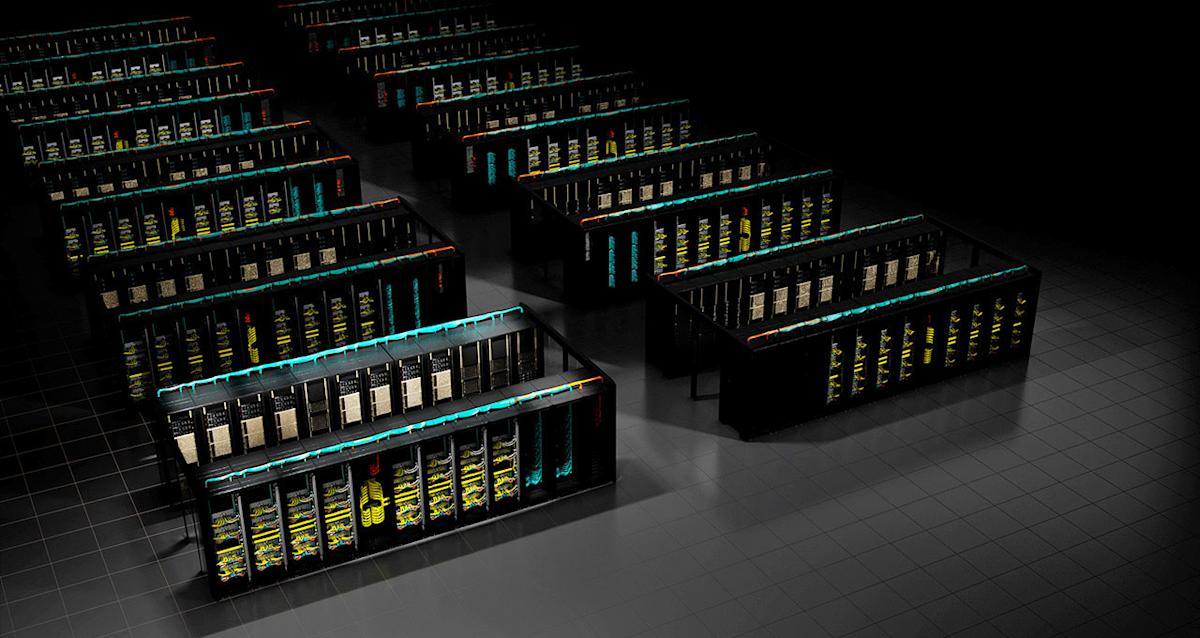
German Chancellor Friedrich Merz on Friday inaugurated Jupiter, a Nvidia-powered supercomputer that ranks as the fourth-fastest in the world and Europe’s first Exascale-class machine. Located at the Juelich Research Centre, Jupiter can perform one billion billion (10^18) calculations per second—equivalent to the power of about 10 million laptops.

Built in partnership with France’s Atos and Germany’s ParTec, Jupiter represents a landmark effort for Europe to catch up with the U.S. and China in high-performance computing and AI infrastructure. “We are today witnessing a historic European pioneering project,” Merz said, stressing that Europe has the opportunity not only to close the gap but also to remain competitive in the long run.

Beyond its symbolic importance, Jupiter is expected to advance research in biotechnology, climate modeling, and AI development, reducing Europe’s reliance on foreign digital infrastructure. Ralf Wintergerst, head of German tech association Bitkom, called for easy access to the system for startups and established firms to maximize its impact on innovation.

With Jupiter now operational, Germany positions itself at the heart of Europe’s AI and scientific research ecosystem, while aiming to balance global competition with technological sovereignty.

Zalando Revises 2025 Outlook Amid Inventory and Growth Concerns

Zalando, Germany’s largest online fashion marketplace, has adjusted its 2025 guidance following the acquisition of rival About You. While the updated forecast reflects higher expected sales, analysts and investors expressed concern over growing inventories, heavier discounting, and signs of weaker consumer sentiment—factors that could weigh on second-half performance.

After initially gaining, Zalando’s shares fell 5.6% to their lowest level in almost a year, bringing year-to-date losses to around 25%. Deutsche Bank analyst Adam Cochrane noted that the stock’s appeal as a revenue growth play is now in question, with less potential for earnings to exceed expectations.

The company now expects 2025 gross merchandise volume (GMV) of €17.2–€17.6 billion ($19.91–$20.38 billion), representing 12–15% growth from last year’s figures for the combined group. This is a sharp increase from its previous forecast of 4–9% growth, largely due to the inclusion of About You, acquired in July for €1.13 billion.

Second-quarter GMV rose 5% year-on-year to €4.06 billion, but gross margin slipped by 80 basis points due to increased discounting. Analysts flagged that earnings quality was weaker than hoped and pointed to a 15% year-on-year inventory rise to €1.66 billion by June 30, raising the risk of more markdowns ahead.

Co-CEO Robert Gentz acknowledged weaker consumer sentiment but remained optimistic about a strong second half. Interim CFO David Schroeder said the third quarter had started well, with mid-single-digit growth expected to continue.

Zalando is also expanding its European logistics network, opening it to partners in an effort to boost growth amid rising competition from fast-fashion rivals like Shein. The company forecasts 2025 adjusted EBIT of €550–€600 million for the combined group, up from its prior estimate of €530–€590 million excluding About You. Gentz added that while U.S. tariffs would not directly affect operations, they could dampen consumer sentiment in the long term.

German Firms to Submit Separate EU Bids for AI Data Centre, Report Says

Several major German companies — Deutsche Telekom, Ionos, and the Schwarz Group’s IT subsidiary — plan to submit separate bids to the European Union for funding to build an AI data processing centre, according to Germany’s Tagesspiegel newspaper.

The European Commission has announced plans to allocate $20 billion to support the construction of AI data centres aimed at helping Europe catch up with the U.S. and China in artificial intelligence capabilities.

Under the current German government coalition agreement, Chancellor Friedrich Merz’s conservative party and the Social Democrats have prioritized having at least one of these AI centres located in Germany.

In May, Deutsche Telekom revealed it had partnered with SAP, Ionos, and the Schwarz Group to jointly seek EU funding for an “AI gigafactory” — a specialized facility designed to meet the massive computing demands of AI. However, the Tagesspiegel report noted that SAP is no longer involved in the bid.

SAP did not comment on the bidding process itself but said it is not pursuing a role as operator or investor in AI gigafactories. Instead, SAP aims to contribute as a technology and software provider to future AI data centre projects in Germany and Europe.

Ionos told Reuters that the expression of interest being submitted to Brussels this Friday is an initial step, with a formal application planned later this year alongside partners.

The Schwarz Group declined to confirm whether it will submit a separate bid, stating that if a German consortium is formed, all relevant parties will be invited to contribute to creating the fastest, most reliable, and most convincing AI gigafactory.

Deutsche Telekom did not respond to Reuters requests for comment.