
Trump slaps $100K annual fee on H-1B visas, rattling U.S. tech sector
The Trump administration on Friday announced a sweeping change to the H-1B visa program, saying companies will now have to pay $100,000 per year per visa—a move critics warn could devastate the U.S. tech industry’s access to global talent.
Commerce Secretary Howard Lutnick framed the move as part of Trump’s broader immigration crackdown, urging firms to “train Americans” instead of hiring foreign workers. But tech giants including Microsoft, Amazon, and JPMorgan quickly advised employees on H-1B visas to remain in the U.S. or return before the new fees take effect at midnight Saturday.
The H-1B program, which provides 85,000 visas annually for specialized workers, has long been dominated by Indian nationals (71% of approvals in 2024) and Chinese professionals (11.7%). In the first half of 2025 alone, Amazon received approval for more than 12,000 H-1B visas, with Microsoft and Meta securing over 5,000 each.
Under the new rules, the cost of a three-year H-1B stint would balloon to $300,000 per worker, compared with just a few thousand dollars under the current system. Analysts say this could force smaller firms and startups to offshore high-value work, weakening the U.S. in the global AI and tech race against China.
Industry figures voiced alarm. Venture capitalist Deedy Das warned the change “creates disincentive to attract the world’s smartest talent,” while eMarketer analyst Jeremy Goldman said Washington risks “taxing away its innovation edge, trading dynamism for short-sighted protectionism.”
The announcement sparked immediate financial fallout: shares of Cognizant sank nearly 5%, while Infosys and Wipro slipped 2–5% in U.S. trading.
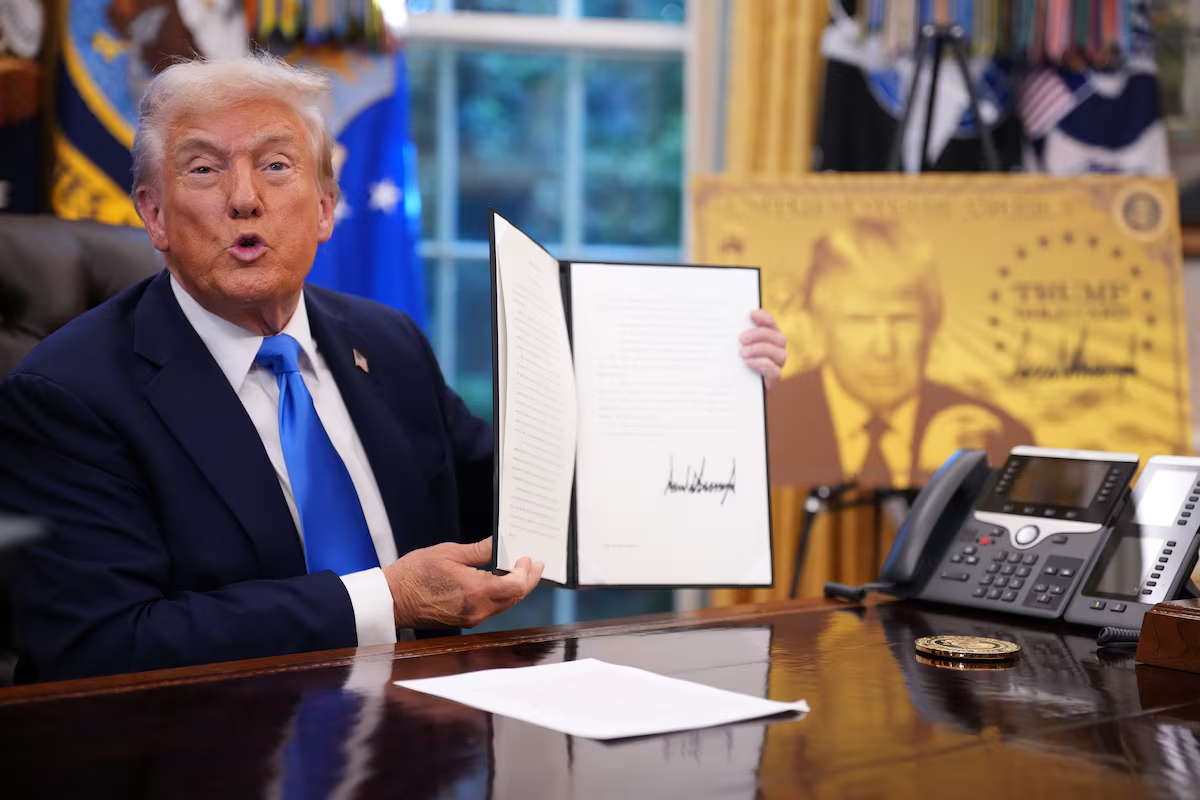
Meanwhile, Trump also signed an executive order creating a “gold card” residency program, offering permanent U.S. residency for those who can pay $1 million upfront.
Legal experts questioned the fee’s validity, noting Congress only authorizes visa fees to cover administrative costs, not as a revenue generator. Still, the administration insists “all the big companies are on board.”