
Yazılar

UK Data Centre Spending to Hit £10 Billion Annually by 2029 Amid AI Boom

Spending on new UK data centres is set to surge to £10 billion a year by 2029, more than five times higher than in 2024, according to new analysis from construction data firm Barbour ABI.

The report found that £1.75 billion was spent on data centre construction in 2023, with that figure projected to rise to £2.38 billion in 2025 as demand for AI-driven computing power continues to accelerate. Over the next five years, tech giants including Microsoft, Nvidia, and Google are expected to invest a combined £25 billion in the UK’s data infrastructure, with nearly 100 new projects already in the pipeline.

Barbour ABI said the expansion reflects both global AI adoption and UK government initiatives, such as the AI Growth Zones, designed to speed up planning approvals for digital infrastructure.

While London and its surrounding regions remain the country’s data centre hub, development is now spreading nationwide, driven by rising demand for low-latency connectivity and renewable energy sources to power data-intensive AI systems.

The largest upcoming project is a $13 billion hyperscale data centre planned in North East England, led by U.S. private equity group Blackstone—a sign that international investors view the UK as a strategic AI infrastructure hub.

The rise in data centre construction comes amid a global race to expand digital capacity following the release of ChatGPT in late 2022, which sparked an explosion in AI model training, cloud computing, and enterprise automation.

Barbour ABI said the shift marks one of the fastest-growing infrastructure trends in the country’s history. “AI has completely reshaped data demands,” the report noted. “We’re now entering a decade defined by hyperscale expansion.”

India Proposes Tough AI Labelling Rules to Curb Deepfakes and Misinformation

India’s government has unveiled draft regulations requiring artificial intelligence and social media platforms to clearly label AI-generated content, in a sweeping effort to combat deepfakes and misinformation amid rising concerns over the technology’s misuse.

The proposed rules, released Wednesday by the Ministry of Electronics and Information Technology, would compel companies such as OpenAI, Google, Meta, and X to include visible AI markers covering at least 10% of a video or image’s surface area, or the first 10% of an audio clip’s duration, to indicate that the material was artificially created.

India — home to nearly 1 billion internet users — has faced an explosion of AI-generated deepfakes and false information, particularly during elections, in a country already divided along ethnic and religious lines. Officials warn that manipulated videos and fake news could incite violence and erode public trust.

Under the proposal, platforms must also ask users to declare whether their uploads are AI-generated and introduce technical safeguards to verify authenticity. The ministry said the rules aim to ensure “visible labelling, metadata traceability, and transparency for all public-facing AI media.”

The government cited a growing threat from generative AI tools capable of impersonating individuals, spreading propaganda, or manipulating elections. “The potential for harm has grown significantly,” it said in a statement inviting public and industry feedback by November 6.

Legal experts noted that the new labelling rule is one of the first in the world to set a quantifiable visibility standard. Dhruv Garg, founding partner of the Indian Governance and Policy Project, said it would require AI platforms to develop automated detection and tagging systems that identify synthetic content at the moment of creation.

The issue has already reached India’s courts. Bollywood actors Abhishek Bachchan and Aishwarya Rai Bachchan recently sued to block AI-generated videos using their likenesses, while challenging YouTube’s AI training policies.

India’s fast-growing digital landscape has made it a major market for AI firms. OpenAI CEO Sam Altman said in February that the country is the company’s second-largest market by user numbers, which have tripled in the past year.

Anthropic, Google Discuss Cloud Deal Worth Tens of Billions, Bloomberg Reports

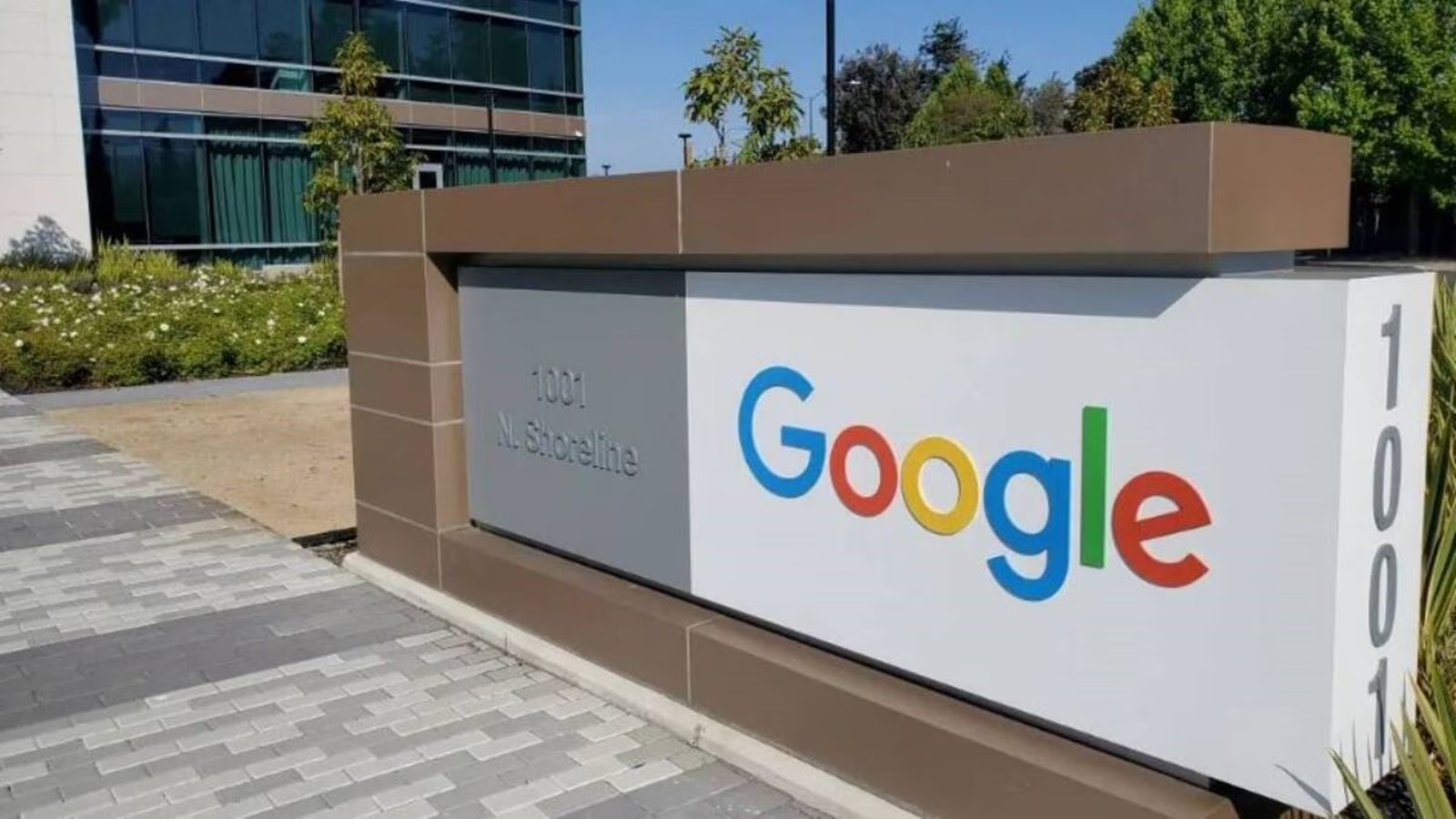
Anthropic, the AI startup behind the Claude chatbot, is in advanced discussions with Google (GOOGL.O) over a massive cloud computing deal valued in the high tens of billions of dollars, according to Bloomberg News, citing people familiar with the talks. The agreement, which is not yet finalized, would see Google provide cloud infrastructure and computing power to support Anthropic’s fast-growing AI operations.

The potential deal underscores the increasing cost and scale of AI development, as companies like Anthropic, OpenAI, and Microsoft-backed Mistral race to secure computing resources needed to train and deploy large language models.

Alphabet shares rose 2.3% after hours following the report, reflecting investor optimism over Google Cloud’s role as a major infrastructure provider for next-generation AI systems. Google declined to comment, while Anthropic did not immediately respond to requests for clarification.

Anthropic, which counts Google and Amazon (AMZN.O) among its biggest investors, has seen rapid adoption of its enterprise AI products and is reportedly on track to reach a $9 billion annual revenue run rate by the end of 2025, nearly tripling its current pace, according to a Reuters report last week.

The collaboration could deepen Google’s long-standing relationship with Anthropic, which already relies heavily on Google Cloud for model training. If completed, the deal would be among the largest cloud infrastructure partnerships ever in the AI sector, solidifying both firms’ positions in the escalating competition against OpenAI and Microsoft.