Yazılar

Microsoft Unveils Copilot Chat to Accelerate AI Adoption for Businesses

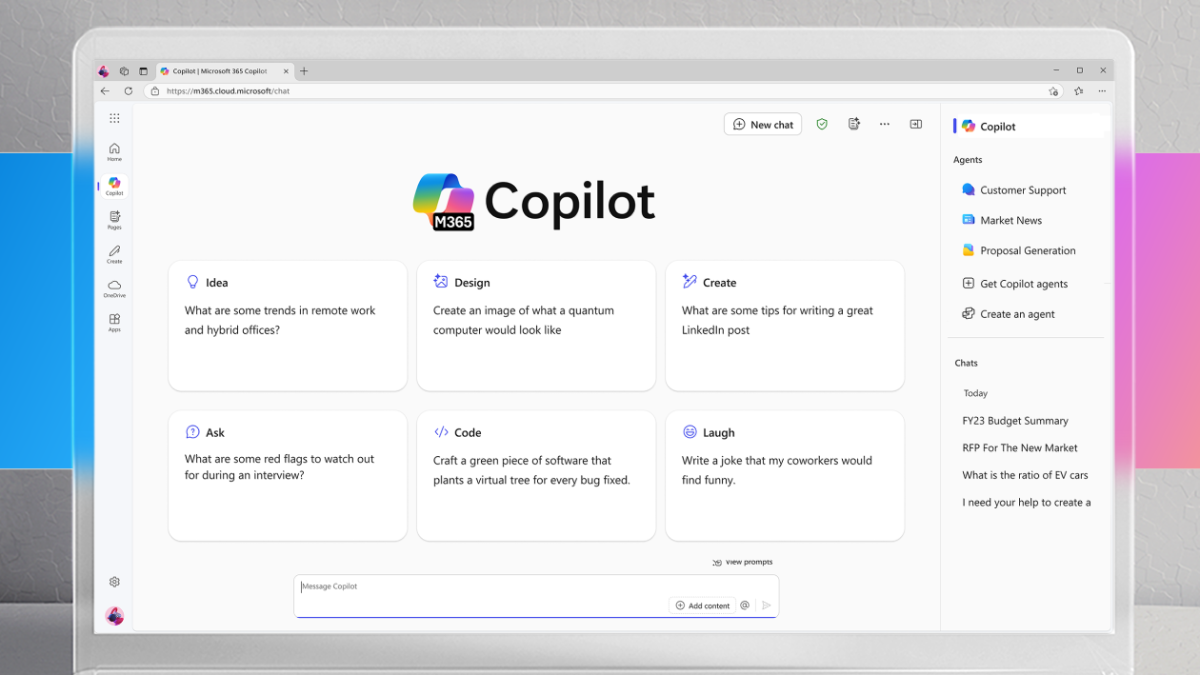
Microsoft launched a new AI service, Copilot Chat, on Wednesday, aiming to help businesses integrate on-demand AI agents for routine tasks. The service, which uses OpenAI’s GPT-4, is designed to make AI more accessible with a pay-as-you-go model that could drive widespread adoption. Copilot Chat allows users to create AI agents in natural languages, such as English and Mandarin, for tasks including market research, writing strategy documents, and meeting preparation.

While the basic service is free, additional features like summarizing and transcribing Teams calls and creating PowerPoint slides are available through a $30 monthly Microsoft 365 Copilot subscription. Microsoft, which has invested heavily in AI infrastructure, including a projected $80 billion this fiscal year on data centers and AI-related projects, is under pressure to demonstrate the financial return on these investments.

Despite some initial skepticism about Copilot’s uptake, as highlighted by a Gartner report, Microsoft has continued to promote the service. In November, the company started enabling customers to create autonomous AI agents requiring minimal human oversight, a move that some analysts see as a potential way for tech companies to monetize AI more efficiently.

 

OpenAI Set to Launch GPT-4 Successor Before Year-End, Reports Suggest

OpenAI is reportedly preparing to unveil the successor to its GPT-4 model by the end of this year, marking a significant milestone in the company’s AI development. According to recent reports, this next-generation model, internally referred to as “Orion,” is set to be more advanced and powerful than its predecessor. While a formal release is anticipated for December 2024, it is expected that Orion will initially be available only to a select group of enterprise partners, rather than being made widely accessible to the public right away.

The Verge has indicated that OpenAI is targeting December 2024 for Orion’s release, with sources familiar with the project confirming the model’s internal codename. Initially, rumors pointed to the model being named “Strawberry,” but it has since been clarified that this referred to the GPT-4o model, an updated version of GPT-4. Unlike GPT-4 and its previous updates, Orion is expected to represent a true leap forward in terms of architecture and capabilities, rather than simply being a refinement of existing models.

OpenAI has already released several iterations of GPT-4, including GPT-4 Turbo and GPT-4o, which were essentially optimized versions of the original GPT-4 architecture. These models incorporated improvements in efficiency and functionality but did not introduce groundbreaking changes to the underlying framework. Orion, however, is expected to break new ground, with advancements that could set the stage for the company’s next major leap in AI technology—likely branded as GPT-5.

This move suggests that OpenAI is preparing to shift toward a new era of AI capabilities, with models like Orion pushing the boundaries of what large language models can achieve. Given the increasing reliance on AI across industries, the launch of such an advanced model is set to have significant implications, both for the development of future AI applications and for the broader AI landscape. As the company works closely with its enterprise partners, Orion may soon become an integral part of many business processes, shaping the future of AI interactions in both commercial and technical domains.

OpenAI Launches GPT-4 Turbo With Enhanced Vision Capabilities for API and ChatGPT

OpenAI’s Enhanced Vision Capabilities Enable JSON Mode and Function Calling

Devamını Oku