Yazılar

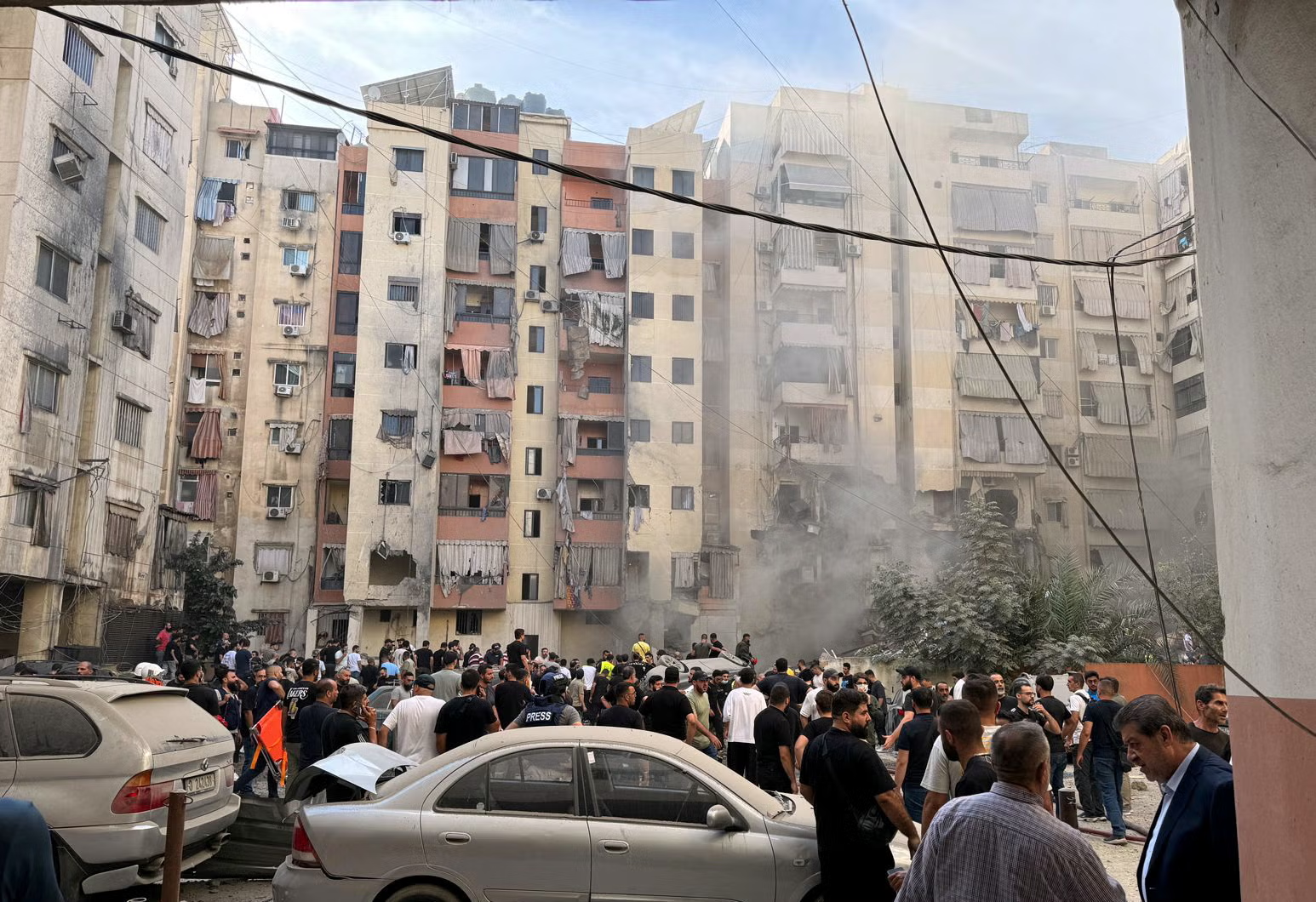
Israeli Airstrike in Beirut Kills Hezbollah Commander and Over a Dozen Others

Israel launched a rare and deadly airstrike in a densely populated area of southern Beirut on Friday, killing Ibrahim Akil, a senior Hezbollah commander, and 13 others. This strike targeted Beirut’s southern Dahiya district, marking the deadliest attack on Lebanon’s capital in decades. Akil, a commander of Hezbollah’s elite Radwan Force and a member of its Jihad Council, was among those killed. The United States had sanctioned Akil for his involvement in the 1983 U.S. Embassy bombing in Beirut and other attacks, offering a $7 million reward for his capture.

The Israeli military confirmed the strike, with Israeli Defense Minister Yoav Gallant describing the operation as part of “a new phase of war” aimed at neutralizing Hezbollah threats. Hezbollah confirmed Akil’s death, praising him as a significant military leader.

This airstrike is part of the ongoing escalation between Israel and Hezbollah, further inflamed by Hezbollah’s rocket attacks on northern Israel, which followed earlier explosions in Lebanon attributed to Israeli operations. The latest Israeli strike occurred as fears of a full-scale conflict between the two rivals increase, with Israel bolstering its forces on the northern border in response.

Surgeon Describes Overwhelming Workload After Device Explosions in Lebanon

In the wake of devastating device explosions in Lebanon, surgeon Elias Jaradeh recounted the overwhelming number of severely injured patients that forced him to adopt a “robotic” approach just to continue his work. The attacks, which have been attributed to Israel, resulted in the deaths of 37 people, including two children, and injured around 3,200 others.

Dr. Jaradeh, also an MP for the Change parliamentary bloc, treated numerous victims at a specialized eye and ear hospital. He noted that while many of the injured were young men, a significant number were women and children. Tragically, many patients suffered severe injuries, including the loss of eyesight.

The attacks have not only targeted Hezbollah fighters but also affected innocent bystanders and family members, with Dr. Jaradeh observing that most of the victims appeared to be civilians. “You have to dissociate yourself,” he explained, highlighting the emotional toll on medical staff as they witnessed the nation suffering.

In the aftermath, eye specialist Prof. Elias Warrak revealed that he performed more eye extractions in one night than he had in his entire career, describing the experience as unprecedented. Health Minister Firass Abiad emphasized the life-altering nature of the injuries sustained by the victims, many of whom will require extensive rehabilitation.

Witness accounts describe scenes of chaos and horror in hospitals, with injuries primarily affecting the face and hands. One journalist noted the rapid arrival of ambulances, bringing in patients with severe wounds, while another recounted seeing individuals with horrific facial injuries.

The attacks have reignited traumatic memories from the Beirut port explosion four years ago, when a massive blast resulted in significant casualties. Now, as the Lebanese army destroys suspicious devices and bans walkie-talkies and pagers on flights, the health minister warns of the serious implications of technology being weaponized.

Hezbollah leader Hassan Nasrallah condemned the device attacks as a “massacre” and a “declaration of war,” amid ongoing tensions and cross-border fire with Israel. Both Dr. Jaradeh and Health Minister Abiad expressed grave concerns for the future, suggesting that without a genuine peace process, Lebanon may be bracing for further conflict.

Recent Explosions in Lebanon Linked to Israeli Covert Operations

In a series of deadly incidents, hundreds of pagers exploded simultaneously across Lebanon, resulting in multiple casualties and thousands of injuries. Reports indicate that these explosions were part of a coordinated operation involving Israel’s intelligence service, Mossad, and the Israeli military. Just a day later, additional walkie-talkies detonated, raising concerns about further attacks targeting the Iran-backed militant group Hezbollah.

Israel has a long history of conducting covert operations against perceived threats, particularly in its ongoing conflict with Hezbollah. Allegations of using explosives in telecommunication devices date back to 1972, following the Munich Olympics massacre, leading to “Operation Wrath of God,” a campaign aimed at tracking down those responsible for the attack.

One notable case involved Mahmoud Hamshari, a Palestine Liberation Organization (PLO) representative, whose home was infiltrated by operatives who planted a bomb in his phone. When Hamshari answered a call, the bomb was detonated remotely.

The recent pager explosions echo past high-profile assassinations, such as that of Yahya Ayyash, Hamas’ chief bombmaker, who was killed in 1996 when his cell phone detonated. This incident triggered a wave of retaliatory suicide bombings.

Since 2010, Israel has also targeted Iranian nuclear scientists, with several assassinations linked to covert operations. The 2010 Stuxnet cyberattack, which disrupted Iranian nuclear facilities, further illustrates Israel’s willingness to employ advanced technology in its intelligence efforts.

The assassination of Mohsen Fakhrizadeh, Iran’s chief nuclear scientist, exemplified the integration of cutting-edge technology and human intelligence, utilizing a remote-controlled machine gun in a carefully orchestrated attack.

In light of the recent explosions, speculation arose regarding potential cybersecurity breaches that could have caused the detonations. However, former NSA analyst David Kennedy suggested that the scale of the explosions indicates a more direct involvement, possibly involving human operatives embedded within Hezbollah’s supply chain to tamper with the devices.

The New York Times reported that Israel allegedly concealed explosives within pagers ordered from a Taiwanese manufacturer, designed to detonate remotely upon receiving a specific message. These incidents underscore the intricate interplay of intelligence operations and high-stakes geopolitics in the region.

While many of Israel’s covert operations rely on sophisticated technology, human intelligence remains crucial. Recent events highlight the complex landscape of security and counter-terrorism in the Middle East, where the lines between cyber warfare and traditional tactics blur.