Yazılar

Malaysia to discuss semiconductor tariffs with U.S. at ASEAN summit next week

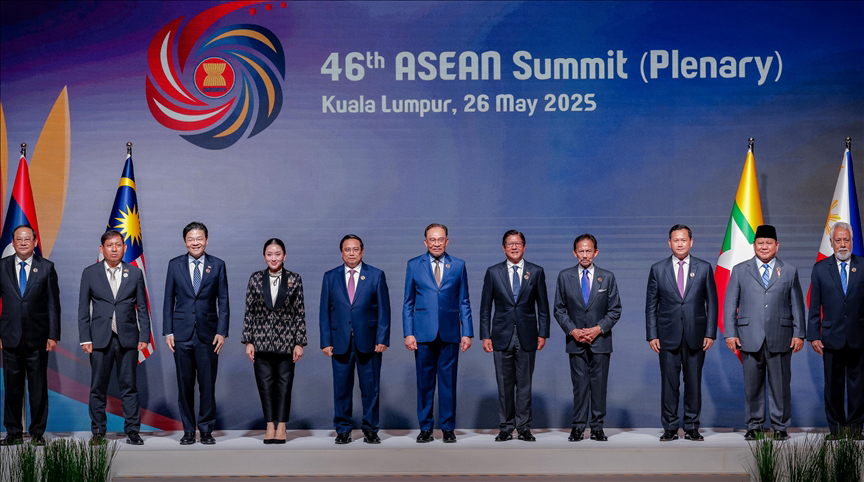
Malaysia plans to hold talks with U.S. Commerce Secretary Howard Lutnick next week on sectoral tariffs, including those on semiconductors, during the ASEAN Leaders Summit in Kuala Lumpur, state media reported on Wednesday.

The discussions come amid rising trade tensions after President Donald Trump’s administration imposed a 19% tariff on Malaysian exports to the U.S. in August. While semiconductors are currently exempt, they remain under review as part of a U.S. national security probe.

Malaysia is the world’s sixth-largest semiconductor exporter, and officials have warned that removing exemptions on chip exports could hurt competitiveness and disrupt global supply chains. Trade Minister Tengku Zafrul Aziz said he expects to finalize tariff negotiations with Washington during the summit, scheduled for October 26–28.

“I will hold discussions with Lutnick. He will also be attending the ASEAN Leaders Summit next week,” Tengku Zafrul told state news agency Bernama, adding that a final tariff agreement could be signed during the event.

The minister said Malaysia’s agriculture, industrial, and manufacturing sectors, as well as those engaged in U.S. trade and investment, are likely to benefit from the upcoming agreement. Several other ASEAN members are also expected to sign bilateral trade deals with Washington at the summit.

Under current U.S. policy, most Southeast Asian nations face tariffs between 19% and 20%, with Singapore receiving a 10% rate, while Laos and Myanmar have been hit with 40% tariffs.

Applied Materials Warns of $600 Million Revenue Hit in 2026 After Expanded U.S. Chip Export Curbs

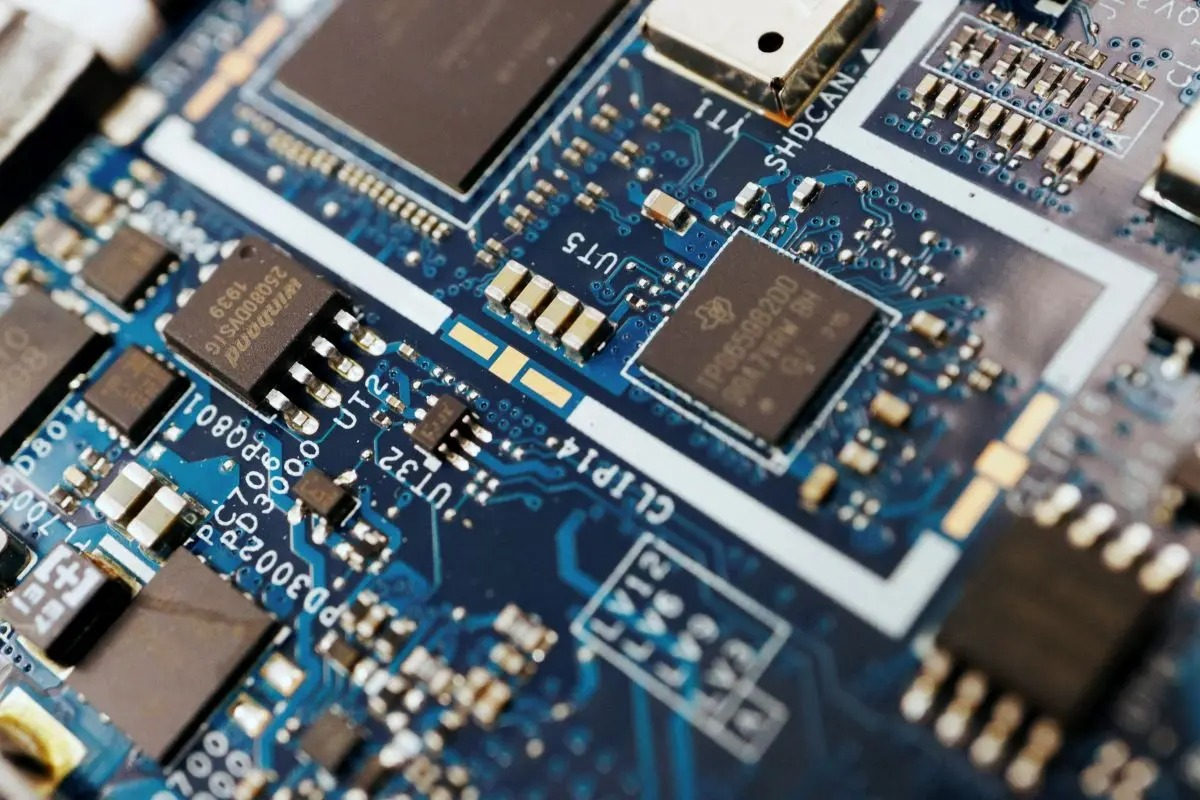
Applied Materials, one of the world’s largest semiconductor equipment makers, said it expects a $600 million revenue impact in fiscal 2026 after the U.S. government broadened export restrictions on technology shipments to China and its affiliates.

The company’s shares fell about 3% in after-hours trading on Thursday following a regulatory filing that detailed the potential hit. Applied Materials said the new rules will make it harder to export certain products and provide parts or services to specific China-based subsidiaries without a U.S. export license.

New U.S. Restrictions Target Loopholes

The U.S. Department of Commerce this week expanded its export blacklist to include majority-owned subsidiaries of already restricted companies. The move targets entities that have been using offshore affiliates to circumvent U.S. export controls on sensitive technologies, particularly in the semiconductor, aerospace, and medical equipment sectors.

The company estimated an additional $110 million impact on its fourth-quarter 2024 revenue, compounding challenges already caused by a slowdown in China and ongoing tariff pressures.

Broader Industry Pressure

Applied Materials, along with European chipmaking equipment supplier ASML Holding, has been hit by weak demand in China, where export curbs have limited access to advanced lithography and chip-manufacturing tools.

Analysts said the new rule could disrupt global semiconductor supply chains and increase the number of firms that will now need licenses to receive U.S.-origin components and services.

Washington’s Push for Domestic Chip Production

In a related policy move, U.S. Commerce Secretary Howard Lutnick said Washington was urging Taiwan to adopt a 50-50 manufacturing split with the United States, part of efforts to boost domestic chip production and reduce dependence on overseas supply chains.

Applied Materials’ Financial Outlook

Despite the looming headwinds, Applied Materials reported strong results for fiscal 2024, with revenue up 2.5% year-over-year to $27.18 billion. Third-quarter revenue rose 8% to $7.30 billion, surpassing market expectations of $7.22 billion, according to LSEG data.

However, the company’s August outlook had already signaled a cautious tone, citing “geopolitical uncertainty and weaker equipment spending” as persistent risks heading into 2025.

As the U.S.–China technology rivalry intensifies, Applied Materials’ latest warning highlights the growing cost of Washington’s export-control campaign, which is reshaping the global semiconductor landscape and testing the resilience of supply chains worldwide.

Taiwan Weighs High-Tech Strategic Partnership with the U.S. Amid Tariff Talks

Taiwan is considering the creation of a high-tech strategic partnership with the United States, as Washington seeks greater Taiwanese investment and industrial cooperation, Taiwan’s top tariff negotiator said on Thursday.

Taiwan — home to the world’s leading contract chip manufacturer, TSMC — currently faces a 20% U.S. tariff on its exports and is looking to negotiate a reduction. The initiative comes as both economies explore deeper technological collaboration amid growing global competition over semiconductor supply chains.

Vice Premier Cheng Li-chiun, who heads Taipei’s delegation in the ongoing tariff talks, said she remains optimistic about reaching a consensus with the U.S. on what she called a “Taiwan model” for investment.

“The current negotiation focus is that the United States expects us to expand investments and engage in supply chain cooperation,” Cheng told reporters in Taipei after returning from Washington.

She emphasized that Taiwan’s approach would not involve relocating its core supply chains, but rather expanding production capacity on U.S. soil in strategic sectors. The plan would include export credit guarantees, joint R&D projects, and the co-development of industrial clusters between the two countries.

TSMC’S ROLE AND THE U.S. EXPECTATIONS

While the U.S. has expressed interest in more domestic semiconductor production, Cheng clarified that TSMC was not directly involved in the latest negotiation round. The company, currently investing $165 billion in chip plants in Arizona, continues to keep most of its production operations in Taiwan.

She also dismissed recent reports that U.S. Commerce Secretary Howard Lutnick had proposed a 50-50 chip production split, saying:

“That idea was not raised in our talks, and it is not something Taiwan would agree to.”

Cheng noted that Washington’s priority appears to be strengthening its domestic chip production to reduce supply chain dependence on Asia, while Taiwan’s long-term strategy is to stay rooted at home but expand globally through bilateral cooperation.

INDUSTRIAL PARTNERSHIP, NOT RELOCATION

The envisioned “Taiwan model,” Cheng said, represents a strategic partnership framework—one where the island’s companies would invest in R&D and manufacturing capacity abroad, supported by governmental financial and policy mechanisms, without shifting their operational core from Taiwan.

Neither the U.S. Commerce Department nor the Office of the U.S. Trade Representative has commented publicly on the discussions, which continued as the U.S. government entered a temporary shutdown this week.

With Taiwan’s semiconductor industry playing a pivotal role in the global AI and electronics boom, both Taipei and Washington are looking to balance national security priorities with economic growth.

“Our aim,” Cheng concluded, “is to remain rooted in Taiwan, deploy around the world, and build bilateral strategic cooperation that supports both sides’ technological ambitions.”