Yazılar

US Removes Malware Allegedly Planted by Chinese-Backed Hackers

The U.S. Justice Department announced on Tuesday that it had successfully removed malware, known as “PlugX,” from over 4,200 computers that had been targeted by a group of hackers linked to the Chinese government. The malware, which had been used to steal sensitive information, was installed through infected USB devices by a group identified as “Mustang Panda” or “Twill Typhoon.”

The hackers, allegedly backed by the Chinese government, used PlugX for cyber-espionage, affecting thousands of computers globally. According to U.S. prosecutors, the Chinese government paid the Mustang Panda group to develop the malware. The hacking campaign has been active since at least 2014, targeting computers in the U.S., Europe, and Asia, as well as those belonging to Chinese political dissidents.

Cybersecurity company Sekoia traced the command-and-control infrastructure for PlugX and collaborated with French law enforcement to seize control of it in July 2024. In coordination with French authorities, the FBI identified devices in the U.S. affected by the malware and worked to send self-delete commands to remove it from those devices.

The operation marks a significant step in international cooperation to counteract cyber threats linked to state-sponsored hackers, with U.S. officials emphasizing the importance of protecting critical infrastructure from such sophisticated attacks.
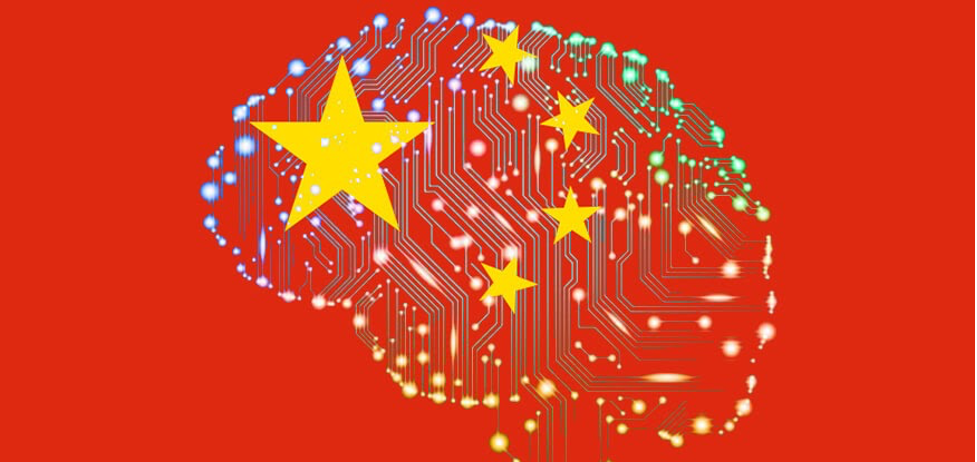
 

China’s AI Balancing Act — Advancing Technology While Guarding Political Control

INTRODUCTION

China’s pursuit of artificial general intelligence (AGI) may place it ahead of the U.S. in the global race to develop cutting-edge AI technologies, but such advancements could also pose a threat to the political control of the Communist Party. This delicate balancing act is at the heart of China’s AI strategy, which seeks innovation while ensuring that AI developments do not undermine the party’s power.


KEY POINTS

The Race to AGI: A Geopolitical and Technological Dilemma

  • Max Tegmark’s Perspective:
    Max Tegmark, a prominent AI scientist and president of the Future of Life Institute, describes the competition between the U.S. and China to develop AGI as a “suicide race,” emphasizing the dangers of advancing AI without clear mechanisms to control it. He argues that the rapid pace of AI development could lead to uncontrollable consequences if left unchecked.
  • What is AGI?
    AGI refers to artificial intelligence that exceeds human cognitive abilities. While AI applications like ChatGPT are already popular, AGI would represent the next level — AI that can think and reason at human levels or beyond.
  • Tegmark’s Warning:
    He cautions that the rush to develop AGI may lead to unforeseen risks, as the technology might advance faster than humanity’s ability to regulate it. Tegmark suggests that the geopolitical race to dominate AGI could endanger all nations, with little regard for long-term control mechanisms.

China’s Stance on AGI

  • China’s Reluctance:
    According to Tegmark, China has little incentive to build AGI as it could threaten the Communist Party’s control over the country. In a conversation with Elon Musk, Chinese officials reportedly reacted strongly to the idea that AGI could undermine their political authority, leading China to establish its first AI regulations.
  • Domestic Control:
    Tegmark suggests that even without the U.S. pushing back, China would have reason to limit AGI development. The Chinese government values maintaining control over its technological advancements, including AI.
  • China’s AI Regulations:
    China has already implemented strict regulations on generative AI, with chatbots in the country avoiding topics related to politics and censorship, ensuring that AI aligns with Beijing’s ideological stance.

China’s AI Strategy

  • Balancing Innovation and Control:
    AI is a key strategic priority for China. Major Chinese tech firms, including Alibaba, Huawei, and Tencent, have been investing heavily in AI research and development. However, the government’s strict regulatory approach ensures that the technology does not threaten political stability. This strategy is expected to continue, particularly in the development of AGI.
  • Dual Lens View:
    Experts suggest that China views AI development through two lenses: geopolitical power and domestic economic growth. While aiming to shift the global power balance, China also hopes to leverage AI to enhance government efficiency and boost business applications within the country.

U.S.-China AI Battle

  • Geopolitical Tensions:
    The U.S. and China are locked in a technological battle, with the U.S. attempting to restrict China’s access to critical technologies, particularly semiconductors used in AI training. In response, China is building its own semiconductor industry to lessen dependence on foreign suppliers.
  • The AI Arms Race:
    Despite Tegmark’s warnings about the dangers of an AGI arms race, geopolitics remains at the center of the U.S.-China relationship. The race for AI supremacy is not only about technological innovation but also about securing global influence.

International Cooperation on AI Regulation

  • The Need for Regulation:
    Experts, including Tegmark, advocate for global cooperation to establish safety standards around AI, particularly AGI. Both the U.S. and China face similar risks in developing uncontrollable AI and may need to implement national safety measures to protect against unintended consequences.
  • Potential for International Cooperation:
    There is a growing recognition that AI poses global challenges that cannot be tackled by one country alone. Tegmark envisions a future where nations cooperate to establish global AI regulations, similar to how the International Atomic Energy Agency governs nuclear technology. Some Chinese policymakers are already calling for such a framework.

CONCLUSION

As China pursues cutting-edge AI technologies, including AGI, it faces a delicate balance between fostering innovation and ensuring that AI does not undermine the Communist Party’s authority. The race for AI dominance, particularly between the U.S. and China, carries significant risks, and experts are calling for more international cooperation and regulation to mitigate the dangers of uncontrollable AI. China’s focus on AI is not just about technological advancement; it is also about maintaining its political power while engaging in a global competition for influence.


Taiwan’s President Lai Warns of Global Challenge Posed by China’s Growing Authoritarianism

Taiwan’s President Lai Ching-te has issued a stark warning about China’s “growing authoritarianism,” stating that it presents not just a regional but a global challenge. Speaking at the annual Ketagalan Forum on Indo-Pacific security issues, Lai emphasized that China’s authoritarianism, which has become increasingly aggressive, extends beyond Taiwan and threatens the broader international community.

Lai’s remarks come as China continues to assert its dominance in the South China Sea and escalate military pressure around Taiwan, conducting patrols in the Taiwan Strait under the pretext of enhancing traffic management and emergency rescue operations. The Taiwanese leader also noted that democratic countries must unite to resist China’s attempts to reshape the international order to its advantage.

His call to action comes at a time of rising tensions in the Indo-Pacific, particularly after Chinese and Philippine vessels collided near the disputed Sabina Shoal, intensifying friction in the Spratly Islands. The incident drew international condemnation, with the U.S. reaffirming its defense commitments to the Philippines.

Lai’s comments underscore Taiwan’s concerns over Beijing’s growing assertiveness, as China refuses to recognize the island’s government and continues to view it as part of its territory. Despite China’s dismissive stance toward Taiwan’s January elections, which brought Lai to power, Taiwan remains firm in its efforts to rally global democracies against authoritarian threats.

With Taiwan’s defense budget on the rise, Lai’s leadership is focused on strengthening alliances with democratic nations to safeguard regional peace and stability in the face of mounting Chinese pressure.