Yazılar

SpaceX Falcon 9 Successfully Launches Athena Lander and NASA’s Lunar Trailblazer Mission to the Moon

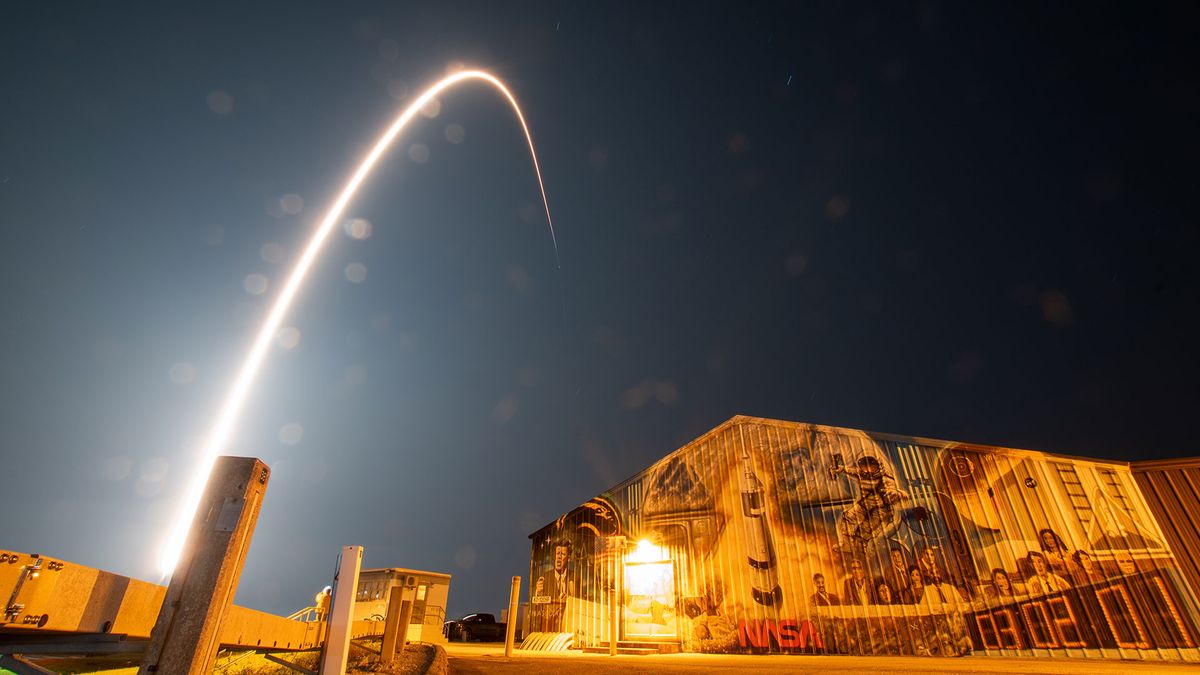
A SpaceX Falcon 9 rocket successfully launched from Kennedy Space Center, carrying both the Athena lunar lander and NASA’s Lunar Trailblazer orbiter on a mission to the Moon. The launch took place at 7:16 p.m. EST from Launch Complex-39A, marking an exciting milestone in the ongoing exploration of the lunar surface. The Athena lander, developed by Intuitive Machines, is designed to conduct detailed investigations of lunar water ice deposits, while the Lunar Trailblazer orbiter, built by NASA, will map these deposits from orbit. Together, the two missions aim to enhance our understanding of the Moon’s water ice distribution, a key component for future lunar exploration and potential resource utilization.

Athena is equipped with a suite of ten scientific instruments, including the Polar Resources Ice Mining Experiment 1 (PRIME-1), which will be central to its mission. Among the tools on board are the Regolith Ice Drill for Exploring New Terrain (TRIDENT) and the Mass Spectrometer for observing lunar operations (MSolo). These instruments will work together to extract and analyze samples from beneath the lunar surface, focusing on the presence of water ice. This data is expected to play a crucial role in advancing in-situ resource utilization (ISRU) technologies, which could enable long-term lunar exploration by utilizing local resources for fuel, water, and other necessities.

In addition to Athena’s on-the-ground research, NASA’s Lunar Trailblazer orbiter will complement the mission by mapping water ice deposits across the Moon’s surface. This data will be particularly valuable in understanding the distribution of ice in shadowed regions like Mons Mouton, where Athena is expected to land. By providing a comprehensive overview of lunar ice, Lunar Trailblazer’s findings will inform future missions and help scientists pinpoint the most promising sites for resource extraction. This coordinated approach between lander and orbiter will create a detailed picture of the Moon’s water ice reserves, which is critical for future sustainable exploration.

The Athena mission is expected to reach lunar orbit in about four to five days, with the actual landing anticipated to occur between 1.5 and three days after entering orbit. The mission is planned to last approximately ten Earth days. To extend its capabilities, Athena carries two secondary exploration vehicles: MAPP, a rover developed by Lunar Outpost, and Grace, a hopping robot created by Intuitive Machines. Grace is designed to explore shadowed lunar craters that are difficult for wheeled vehicles to access, while MAPP will help establish a lunar communications network using Nokia Bell Labs’ Lunar Surface Communications System (LSCS). These innovative technologies aim to support long-term lunar missions and ensure reliable communication between Earth and the lunar surface.

The Athena mission follows the company’s earlier IM-1 mission, which marked the first soft lunar landing by a private company but faced challenges with landing precision that affected data transmission. Intuitive Machines has focused on improving landing accuracy for IM-2, as noted by Trent Martin, the Senior Vice President of Space Systems at Intuitive Machines. The lessons learned from IM-1 will be invaluable in ensuring the success of this mission, which has the potential to lay the groundwork for future exploration of lunar resources and support the broader goals of human space exploration.

Intuitive Machines’ Stock Drops After Second Sideways Moon Landing

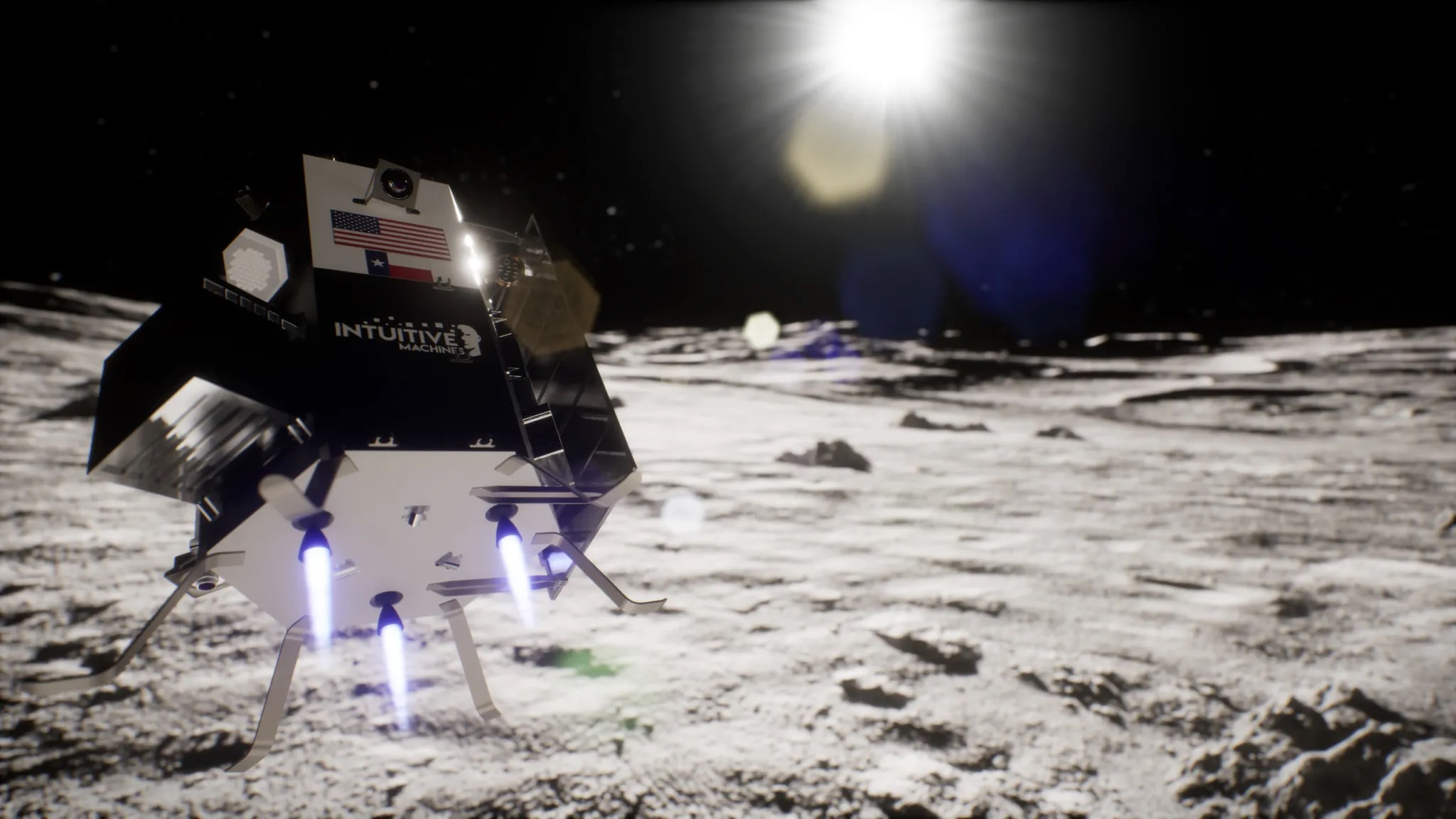
Intuitive Machines’ stock took a sharp 23% dive on Friday after confirming that its second moon lander, Athena, had landed on its side, much like the company’s first lunar attempt last year. The six-legged Athena lander had touched down approximately 100 miles (160 km) from the moon’s south pole, but the mission was declared a failure due to the spacecraft’s tilted position. The company cited the challenges of the lander’s orientation, the impact of the sun’s direction on the solar panels, and the extremely cold temperatures in the crater, which prevented the craft from recharging.

As a result, Intuitive Machines’ stock experienced its most significant drop in over a year. Shares had already fallen 20% the previous day, but the company had seen a considerable rise in value over the past 12 months prior to this setback.

Athena was carrying 11 scientific payloads, including tools for water ice exploration, lunar soil analysis, and the first data center and cellular network on the moon. Despite the failure, the company remains involved in NASA’s plans to reduce the cost of lunar exploration, with Intuitive Machines among the private companies leading the U.S. return to the moon.

Meanwhile, SpaceX’s Starship rocket also faced a setback, exploding minutes after its launch on Thursday. Despite these challenges, industry analysts believe that Intuitive Machines, though impacted by the recent failure, is still well-positioned to capitalize on the growing space exploration industry.

Andres Sheppard, senior analyst at Cantor Fitzgerald, remarked that while the sideways landing might affect the company’s credibility, it doesn’t signal a dire situation for Intuitive Machines. “We still think they are one of the better-positioned companies in the space exploration industry.”

Athena Lunar Mission to Send ‘Gracie’ Hopper for South Pole Crater Exploration

Athena Lunar Mission to Deploy ‘Gracie’ Hopper for Crater Exploration

A groundbreaking lunar mission is set to launch later this month, featuring a rocket-powered hopper designed for unprecedented surface exploration. The mission, named Athena, will carry multiple scientific payloads, including Gracie, a robotic explorer developed through a collaboration between Intuitive Machines and NASA. Scheduled to launch from Florida’s Space Coast within a four-day window starting February 26, Athena aims to land on a plateau roughly 160 kilometers from the Moon’s south pole—a region of high scientific interest due to potential water ice deposits.

Gracie’s Unique Hopping Exploration Strategy

Unlike traditional lunar rovers, Gracie is built for mobility using a series of controlled rocket-assisted jumps across the Moon’s surface. According to Space.com, the robotic hopper will conduct five precision hops, with its first reaching 20 meters in height. Each subsequent hop will increase in altitude and distance, ultimately leading Gracie into a permanently shadowed crater known as Crater H, located about 500 meters from the Athena lander. The crater, approximately 20 meters deep, is believed to contain ice deposits, making it a prime location for scientific study.

Pushing the Limits of Lunar Exploration

Speaking at a NASA press conference, Trent Martin, Senior Vice President of Space Systems at Intuitive Machines, emphasized Gracie’s role in pushing the boundaries of robotic exploration. The final hop, which will take Gracie into the depths of Crater H, presents significant technical challenges, particularly in terms of maintaining communication and navigation in low-light conditions. To overcome these obstacles, the mission will rely on Nokia’s Lunar Surface Communication System, which aims to establish the first 4G/LTE network on the Moon.

Advancing Lunar Science and Future Missions

If successful, the Athena mission and Gracie’s exploration could provide crucial data on lunar ice deposits, aiding future crewed missions and long-term lunar habitation plans. The mission is a testament to the growing role of private space companies in advancing space exploration, as Intuitive Machines continues to develop cutting-edge technologies alongside NASA. With its innovative hopping mechanism and state-of-the-art communication systems, Gracie could pave the way for more dynamic and far-reaching robotic missions across the Moon’s challenging terrain.