Yazılar

Intel Seeks Investment from Apple Amid Turnaround Push, Report Says

Intel has approached Apple about a potential investment, according to a Bloomberg News report on Wednesday citing people familiar with the matter. The discussions, which also cover ways to work more closely together, are still in the early stages and may not result in a deal. Intel shares closed up 6% following the news.

Intel declined to comment, while Apple has not responded to requests.

The report follows Nvidia’s $5 billion investment for roughly a 4% stake in Intel, announced earlier this week. That deal included plans for the companies to co-develop PC and data center chips, though Nvidia will not use Intel’s foundry business to manufacture its chips.

Intel CEO Lip-Bu Tan has been actively pursuing partnerships as part of efforts to revive the struggling chipmaker. Once a dominant force in the semiconductor industry, Intel has fallen behind in the AI boom to rivals like Nvidia and AMD.

Recent backing has boosted investor confidence: Intel secured a $10 billion government stake engineered by the White House, a $2 billion equity investment from SoftBank last month, and Nvidia’s multi-billion-dollar deal. Since mid-August, Intel’s stock has risen more than 40%.

A potential investment from Apple would add another vote of confidence. Apple was once a major Intel customer before shifting to its own custom-designed silicon in 2020. For Apple, a deal could help diversify its reliance on Taiwan’s TSMC, its primary chip manufacturer, particularly given geopolitical tensions with China.

The move would also align with Apple’s broader U.S. strategy, with the company committing $600 billion in domestic initiatives over the next four years. Strengthening ties with Intel could bolster Apple’s relationship with the Trump administration, which has supported efforts to cement U.S. leadership in advanced technology.

The White House said it has not been directly involved in discussions between Intel and Apple, though a spokesperson emphasized: “The taxpayer has an equity stake in Intel succeeding, and the Administration supports iconic American companies like Intel doing what’s best to cement American tech dominance.”

Intel has reportedly reached out to other potential partners as well, as it works to secure outside investment and long-term clients for its manufacturing facilities.
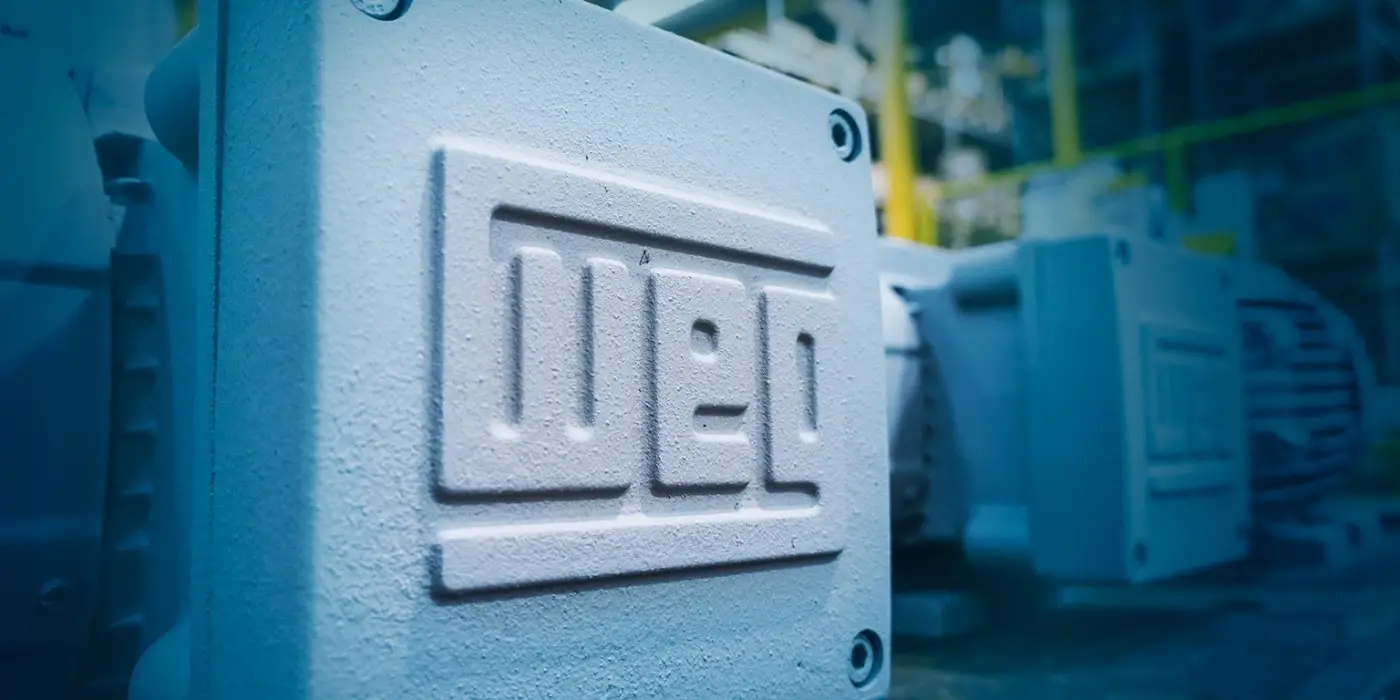
Brazil’s WEG invests $77M to expand U.S. transformer plant amid AI-driven demand

Brazilian motor manufacturer WEG announced Tuesday it will invest $77 million to expand its Washington, Missouri specialty transformer plant, aiming to increase production capacity by 50% as demand surges from AI data centers, industrial manufacturing, and U.S. grid stability needs.

The investment, to be deployed over three years, will bring the additional capacity online no later than 2028, WEG U.S. managing director Peter Barry told Reuters. While the facility previously focused on renewable energy applications like wind power, Barry said the shift toward AI and data center infrastructure is now driving growth.

Despite President Donald Trump’s 50% tariff on Brazilian imports, Barry said the company’s decision was unaffected, citing strong and sustained growth in the North American market. “The North American growth for WEG over the last number of years has been very strong, and I would see that continuing,” he noted.

Key points from the plan:

  • Capacity expansion will be pre-sold, reflecting strong forward demand.

  • Investment will emphasize automation, though around 50 new jobs will still be created.

  • WEG remains open to additional U.S. investments as the AI and energy markets evolve, stressing a strategy of flexibility.

The expansion underscores how the AI boom is reshaping industrial supply chains, with transformers becoming critical components for powering vast data centers and stabilizing electricity grids.

Nvidia takes $5B stake in Intel, forging alliance on future AI chips

Nvidia announced a $5 billion investment in Intel, acquiring roughly 4% of the struggling chipmaker and pledging to jointly develop new chips for PCs and data centers. The deal comes just weeks after the U.S. government took an extraordinary 10% stake in Intel to shore up the company amid mounting concerns about its competitiveness.

Intel shares surged 23% on the news, while Nvidia’s stock rose nearly 4%. Nvidia will pay $23.28 per share, slightly below Intel’s prior closing price but above what Washington paid earlier this month. The investment makes Nvidia one of Intel’s largest shareholders and marks a pivotal moment in the U.S. effort to counterbalance Asia’s dominance in chip production.

Under the pact, Intel will supply central processors and advanced packaging for joint products that combine Intel CPUs with Nvidia GPUs, linked by Nvidia’s high-speed proprietary technology. The companies pledged to build “multiple generations” of such products, though Nvidia stopped short of committing to use Intel’s foundries for its own chips—a key issue for Intel’s turnaround.

The partnership could reshape the competitive landscape. Analysts say it poses the most immediate risk to AMD, which competes with Intel in supplying data center CPUs, and a longer-term threat to TSMC, which currently manufactures Nvidia’s flagship processors. Broadcom, whose chip-to-chip interconnect technology underpins many AI systems, may also feel pressure.

“This is a massive game-changer for Intel and effectively resets its position of AI-laggard into a cog in future AI infrastructure,” said Gadjo Sevilla, senior analyst at eMarketer. Some analysts even speculate the deal could be the first step toward an eventual breakup or acquisition of Intel by U.S. chipmakers.

Intel’s new CEO, Lip-Bu Tan, has vowed to streamline operations and build capacity more cautiously, only when demand is clear. Nvidia CEO Jensen Huang emphasized the administration was not directly involved in the partnership but noted Washington would welcome the collaboration.

For Intel, the deal adds to a growing cash reserve after a $2 billion investment from SoftBank and $5.7 billion from the U.S. government. For Nvidia, the alliance gives it a foothold in Intel’s deep enterprise and government networks, while cementing its dominance in AI infrastructure.