Yazılar

James Webb Space Telescope Spots Enigmatic Planetary-Mass Object Drifting in Space

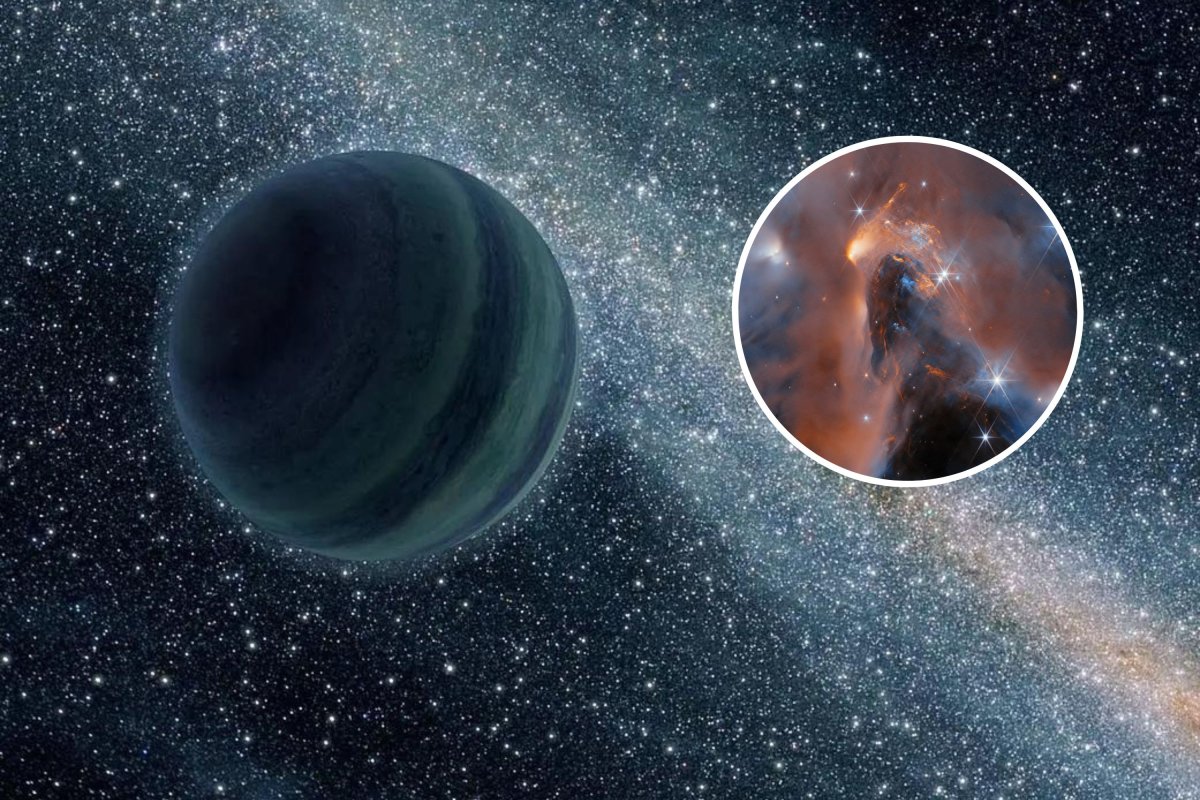
A recent study using the James Webb Space Telescope (JWST) has provided new insights into SIMP 0136, an intriguing planetary-mass object located roughly 20 light-years from Earth. This mysterious celestial body, which drifts freely in space without orbiting a star, blurs the line between planets and failed stars. With an estimated mass around 13 times that of Jupiter but a similar size, SIMP 0136 challenges conventional classifications. Adding to its uniqueness, the object rotates rapidly, completing a full spin in just 2.4 Earth hours, making it one of the fastest-rotating planetary-mass objects ever observed.

The study, published in The Astrophysical Journal Letters, explores whether SIMP 0136 should be categorized as a rogue planet or a brown dwarf. Brown dwarfs are objects that form like stars but lack the necessary mass to sustain hydrogen fusion, leaving them in a transitional state between planets and stars. JWST’s advanced instruments captured data over two full rotations, allowing scientists to analyze the object’s atmosphere in unprecedented detail.

Led by Allison McCarthy from Boston University, the research team focused on detecting variations in brightness, which suggested complex atmospheric activity. By utilizing JWST’s Near-Infrared Spectrograph (NIRSpec) and Mid-Infrared Instrument (MIRI), scientists were able to capture infrared light curves, mapping changes in brightness across different wavelengths. This data revealed fluctuations in atmospheric layers, hinting at dynamic weather patterns, including potential cloud formations and temperature shifts.

The findings from JWST’s observations could provide deeper insights into the atmospheres of both rogue planets and brown dwarfs, helping astronomers refine their understanding of planetary evolution. As researchers continue to analyze SIMP 0136, future studies may uncover more about the nature of these isolated objects and their role in the broader cosmic landscape.

James Webb Telescope Spots Continuous Flares Erupting from Sagittarius A at the Milky Way’s Center

Astronomers have recently observed the supermassive black hole at the center of the Milky Way, Sagittarius A*, emitting continuous flares, revealing new and intriguing behaviors in this cosmic giant. These observations were made using the James Webb Space Telescope (JWST), which provided unprecedented detail and clarity on the black hole’s activity. The flares, which vary in duration and intensity, add to the growing body of research on black holes, their accretion disks, and their interactions with surrounding matter. This discovery sheds light on a level of variability in Sagittarius A* that was previously not well understood, providing new insights into the dynamics of supermassive black holes.

The flares detected by JWST occurred over several observation sessions, totaling two full days of data collected during the past year. Using the telescope’s Near-Infrared Camera (NIRCam), researchers closely examined Sgr A* across multiple eight-to-ten-hour periods. The results were striking: the black hole produced bursts of energy ranging from quick, short-lived flashes to much longer, sustained outbursts. These bursts, occurring up to six times a day, were linked to the accretion disk surrounding the black hole, which is a dense ring of gas and dust spiraling inward. Some of these bursts were even accompanied by smaller sub-flares, further adding to the complexity of the black hole’s behavior.

While flares are a known phenomenon in supermassive black holes, the activity of Sgr A* is particularly unpredictable, setting it apart from other known black holes. The exact causes behind these flares are still being investigated, with scientists considering a variety of mechanisms. Shorter, fainter flares could be the result of small disturbances in the accretion disk, akin to ripples caused by minor disruptions. In contrast, the larger and brighter flares may be driven by more dramatic events, such as magnetic reconnection—an event in which charged particles accelerate to nearly the speed of light, producing powerful bursts of radiation.

Interestingly, the researchers compared the flaring activity of Sgr A* to solar flares, which are driven by magnetic activity on the sun’s surface. However, they noted that the processes near a black hole are far more extreme, with much greater forces at play. The NIRCam’s ability to observe multiple infrared wavelengths has proven invaluable in understanding these flares. It revealed a slight delay in the brightness of longer-wavelength emissions compared to shorter-wavelength ones, offering new clues about the complex mechanisms at work in the vicinity of the black hole. As research continues, these findings are helping scientists piece together a more complete picture of the behavior and characteristics of supermassive black holes.

Exploring the Wonders of Ancient Megalithic Sites: From Stonehenge to Göbekli Tepe and Beyond

Recent findings in cosmology have reignited debates about the rate at which the universe is expanding, suggesting that discrepancies in measurements might point to flaws in current theoretical models. While the expansion of the universe has been a cornerstone of modern physics, data from advanced observational tools, including the Hubble Space Telescope and the James Webb Space Telescope, have revealed inconsistencies that challenge long-standing beliefs. These discrepancies have sparked a renewed focus on understanding whether the current cosmological framework can truly explain the observed data.

A new study published in The Astrophysical Journal Letters has added significant weight to the argument for these inconsistencies, particularly concerning the Hubble constant — a key factor in measuring the universe’s expansion. Using data from the Dark Energy Spectroscopic Instrument (DESI), researchers have found an expansion rate of 76.5 km/s/Mpc from observations of the Coma galaxy cluster, located approximately 320 million light-years away. This result stands in stark contrast to previous measurements from the cosmic microwave background (CMB), which suggested a lower expansion rate of 67 km/s/Mpc. The disagreement between these values has fueled growing concerns that our understanding of the universe’s expansion may require a fundamental reevaluation.

The disagreement stems primarily from two different approaches used to measure the Hubble constant. Early-universe measurements taken from the CMB align with predictions from the standard cosmological model. However, data obtained from later cosmic periods, particularly using Cepheid variable stars and Type Ia supernovae, consistently yield higher expansion rates. The tension between these two methods has deepened over time, with ongoing efforts by teams like DESI to refine measurements, but the discrepancies persist. These contrasting readings have introduced significant uncertainty into the current cosmological framework.

This ongoing debate has profound implications for our understanding of physics and the universe. If these measurements are correct, it suggests that there may be aspects of dark energy, gravity, or the fundamental laws of physics that we have yet to fully comprehend. The mystery of the universe’s expansion rate is one of the most pressing challenges in modern science, and resolving this paradox could lead to groundbreaking shifts in our understanding of both the cosmos and the laws that govern it. As new data continues to emerge, scientists are eagerly working to address these contradictions, hoping to find a unifying theory that can reconcile these findings and advance our knowledge of the universe.