Yazılar

Webb Telescope Reveals Extended Lifespan of Planet-Forming Disks in Early Universe

Webb Telescope Solves Longstanding Mystery of Planet-Forming Disks

The James Webb Space Telescope (JWST), a collaboration between NASA, ESA, and CSA, has confirmed a long-standing mystery surrounding planet formation in the early universe. Findings published in The Astrophysical Journal suggest that planet-forming disks around stars lasted much longer than previously thought, even in environments with minimal heavy elements. This revelation is reshaping our understanding of how planets formed in the early stages of the cosmos, challenging established theories and offering new insights into the processes of planet formation.

Unraveling the Hubble Discovery

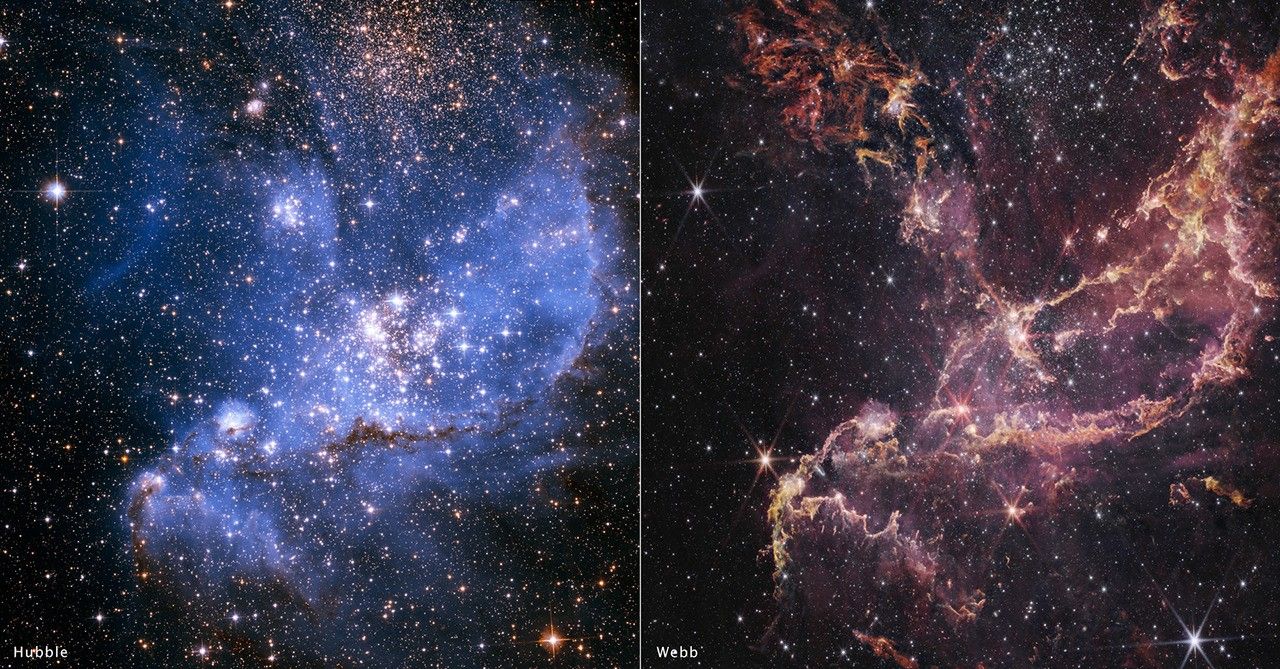
In 2003, the Hubble Space Telescope observed massive planets orbiting ancient stars, which was a surprising discovery. These stars lacked heavier elements such as carbon and iron—elements considered crucial for planet formation. The existence of planets around such stars raised significant questions about how these celestial bodies could form in the absence of the necessary raw materials. The discovery left astronomers puzzled, as the standard model of planet formation suggested that such environments would be unsuitable for planet growth.

Webb’s Investigations in NGC 346

To further investigate this phenomenon, the Webb Telescope focused its attention on NGC 346, a large star cluster located in the Small Magellanic Cloud. As one of the closest neighbors to the Milky Way, NGC 346 offers a unique opportunity to study the conditions that closely resemble those of the early universe. The cluster’s stars, estimated to be only 20 to 30 million years old, were found to retain planet-forming disks far longer than expected. These findings suggest that, under certain conditions, planet formation can occur in environments dominated by hydrogen and helium—elements characteristic of the early universe—extending the timeline for planet development.

Implications for Planet Formation Theory

This new discovery from the Webb Telescope has profound implications for our understanding of planet formation. The fact that planet-forming disks around stars can endure longer than previously thought suggests that the conditions for planet formation in the early universe may have been more favorable than originally believed. This challenges current models and opens up new avenues for research, potentially altering how we think about the development of planetary systems in the distant past. As Webb continues to explore distant star clusters, it promises to provide even more insights into the complex processes that shaped the early universe.
New Webb Telescope Image Reveals Surprising View of the Sombrero Galaxy

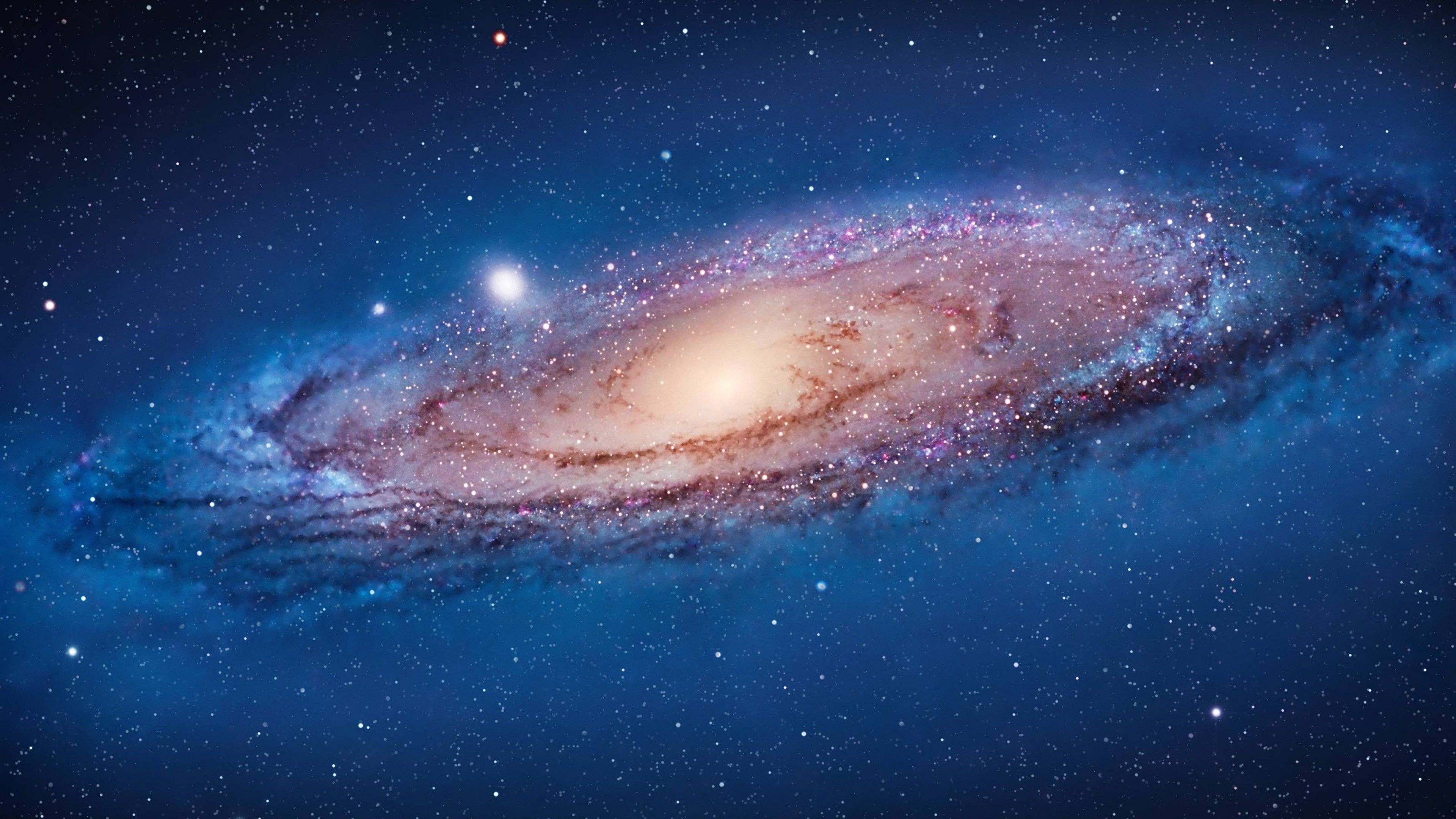
The James Webb Space Telescope (JWST) has provided an unexpected new perspective on the Sombrero galaxy, traditionally known for its resemblance to a wide-brimmed Mexican hat. The latest image, captured using Webb’s Mid-Infrared Instrument (MIRI), reveals the galaxy in a very different light, with its smooth inner disk taking center stage instead of the glowing core seen in visible light images from the Hubble Space Telescope.

In this new view, the “crown” of the sombrero is hidden, transforming the galaxy’s shape to resemble more of a bull’s-eye. Distant galaxies shimmer in the background, further enhancing the cosmic scene. The Sombrero galaxy, also known as Messier 104 (M104), is located about 30 million light-years from Earth in the Virgo constellation. It was first discovered by French astronomer Pierre Méchain in 1781, and named in honor of his colleague, Charles Messier, who cataloged star clusters and nebulae.

Webb’s infrared capabilities allow it to observe celestial objects in wavelengths of light invisible to the human eye, unveiling details that were previously unseen. MIRI’s sharp images highlight the galaxy’s outer ring, offering insights into the structure and distribution of dust within Messier 104. This dust is crucial in the formation of stars and planets, and Webb’s observations show that, unlike previous views from the Spitzer Space Telescope, the dust ring is far more complex and clumpy than previously thought, possibly indicating active star formation.

The discovery of carbon-containing molecules, like polycyclic aromatic hydrocarbons, in the dusty ring suggests that star-forming regions may exist there. However, the Sombrero galaxy is not a prolific star producer; it forms stars at a much slower rate than galaxies like Messier 82. The Sombrero galaxy is estimated to produce less than one solar mass of stars per year, compared to the Milky Way’s two solar masses annually.

At the heart of the Sombrero galaxy lies a supermassive black hole, which, although active, is less so than those in other galaxies. It slowly consumes material and emits a faint jet of radiation. Despite its relatively quiet star formation and black hole activity, the galaxy is home to about 2,000 globular clusters, which contain large numbers of old stars. These clusters provide valuable opportunities for astronomers to study stellar evolution and comparisons between stars of different masses and ages.

As the Webb telescope continues its mission, its ability to detect previously hidden features of galaxies like the Sombrero will greatly enhance our understanding of the universe. Webb, which launched in December 2021, is now preparing for its fourth year of operations, with scientists worldwide eager to use its capabilities to explore exoplanets, stars, and distant galaxies.


How the James Webb Space Telescope Allows Us to See the Past

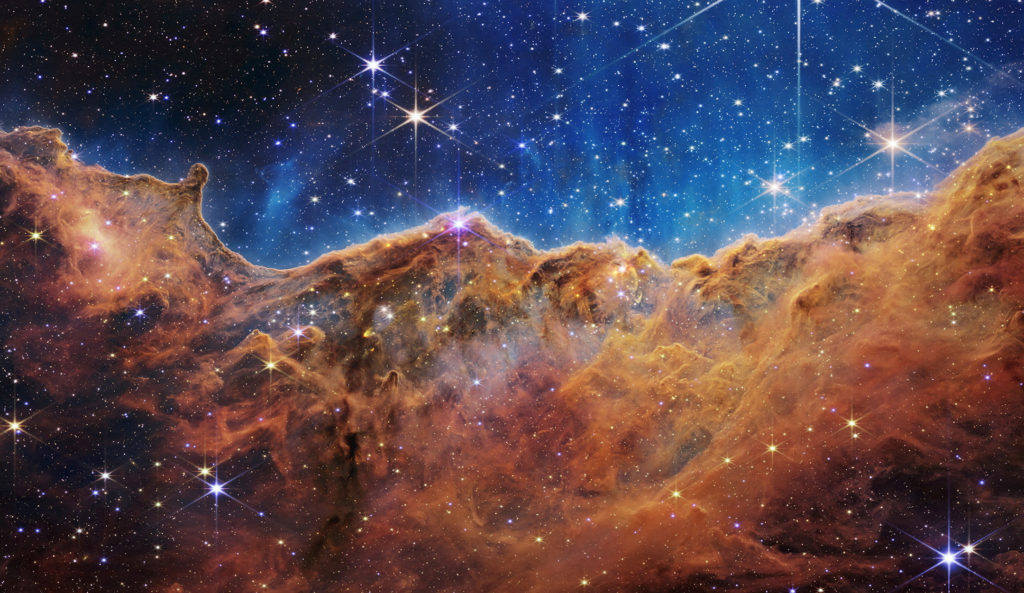
The ability to observe space allows scientists to essentially look back in time, thanks to the way light travels across vast distances in the universe. Telescopes like the James Webb Space Telescope enable us to capture light from distant celestial bodies, acting as time machines that reveal what the universe looked like in the past. This phenomenon is rooted in the fact that light, despite traveling at incredible speeds, still requires time to travel across the vast expanses of space.

Light travels at approximately 186,000 miles (300,000 kilometers) per second, which is incredibly fast in human terms. However, even at this speed, the immense distances between objects in space mean that the light we see today actually left those objects millions or even billions of years ago. For example, light from the Moon takes just 1.3 seconds to reach Earth, while light from Neptune, the furthest planet in our solar system, takes about four hours. This delay in light’s arrival means that when we observe these objects, we are seeing them as they were in the past, not as they are right now.

When we look beyond our solar system, the distances become even more staggering. Within our galaxy, the Milky Way, distances are often measured in light-years—the distance that light travels in one year. For instance, Proxima Centauri, the closest star to Earth after the Sun, is over four light-years away. That means when we observe Proxima Centauri, we are actually seeing it as it was over four years ago. The light that reaches us today from that star began its journey back in time, traveling through space at a constant speed.

The James Webb Space Telescope, with its advanced instruments and capabilities, is able to observe objects that are far further away than ever before. By studying the light emitted from galaxies, stars, and other celestial bodies billions of light-years away, Webb allows scientists to peer into the distant past of the universe. The further the light travels, the further back in time we are able to see, offering a glimpse into the early stages of the universe, helping us understand its origins and evolution over time.