
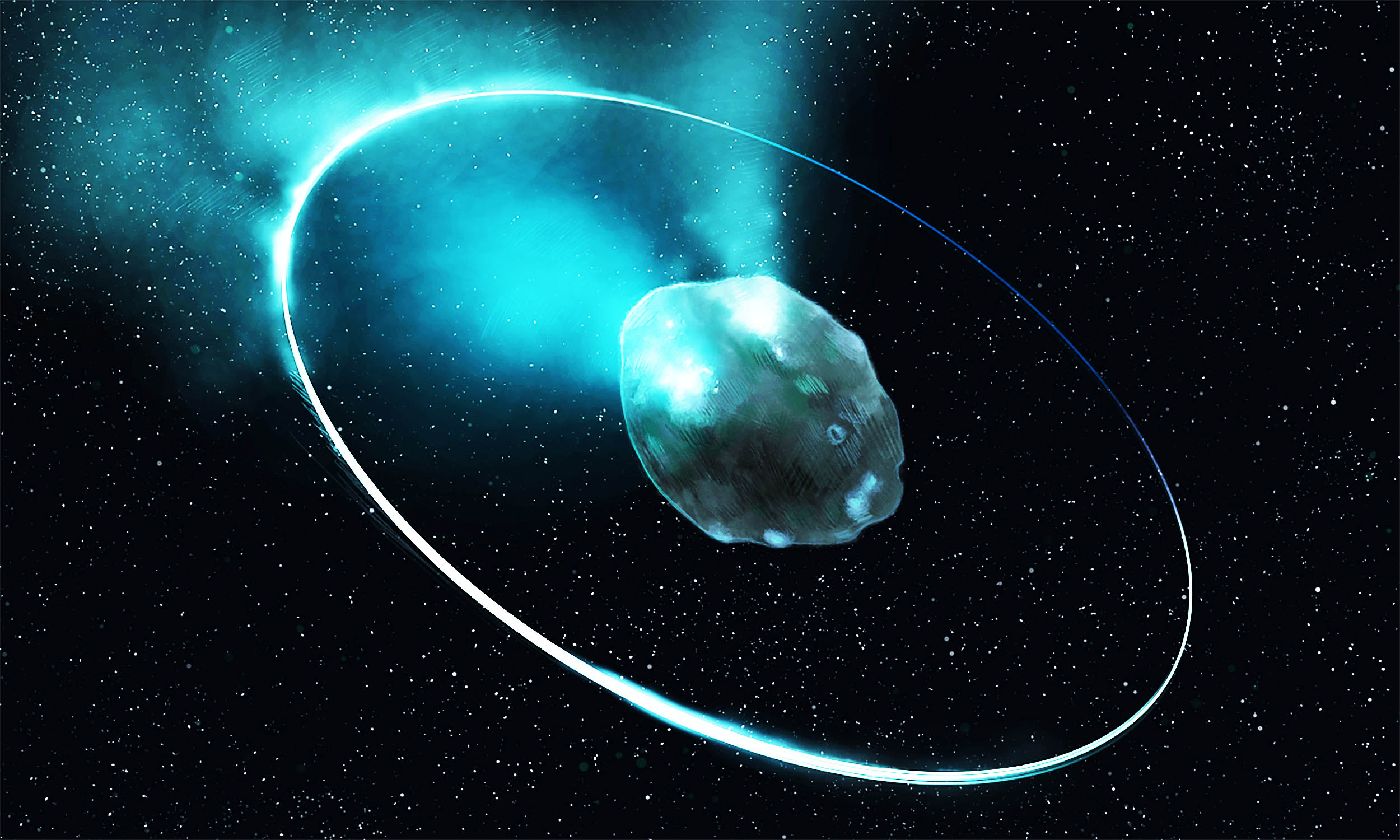
Researchers have recently turned their focus on (2060) Chiron, a celestial object that orbits between Jupiter and Neptune, unveiling new details about its unusual surface and the composition of its coma. A study published in Astronomy & Astrophysics classifies Chiron as a centaur, a category of celestial body that shares characteristics of both asteroids and comets. The James Webb Space Telescope provided critical data on Chiron’s surface, detecting carbon dioxide and carbon monoxide ice, as well as methane and carbon dioxide gases in its coma. This discovery offers valuable insights into the early history and evolution of our solar system, according to the research team from the University of Central Florida (UCF).
Chiron’s surface and coma are unique compared to other celestial bodies, largely due to the presence of volatile ices and gases. Dr. Noemí Pinilla-Alonso, an Associate Scientist at UCF’s Florida Space Institute and the lead researcher, emphasized the importance of these features. She explained that the presence of volatile materials sets Chiron apart from other centaurs, which often undergo active transformations due to solar heating. These changes allow scientists to study how Chiron’s surface composition evolves and how these transformations provide insights into the object’s behavior. The coma, a gaseous envelope surrounding the surface, is particularly important as it gives researchers a direct view of gases originating from beneath the surface—something that is not as easily observed in typical asteroids or trans-Neptunian objects.
The study of Chiron’s surface and coma not only deepens our understanding of this unique centaur but also has broader implications for understanding the dynamics of the solar system. Dr. Charles Schambeau, an Assistant Scientist at UCF with expertise in centaurs and comets, pointed out that Chiron’s unique activity and its potential for debris rings make it a fascinating case. By investigating the interaction between Chiron’s surface ices and its coma gases, researchers hope to uncover thermophysical processes that could explain the behavior of other similar celestial bodies in our solar system.
Chiron’s combination of asteroid-like and comet-like features makes it a crucial subject of study for those looking to understand the fundamental processes that govern the evolution of the solar system. This research highlights how centaurs, with their complex mixtures of ice and gas, can provide valuable clues about the conditions and transformations that shaped early planetary bodies. As more data is collected from missions and observations, scientists expect to further unravel the mysteries surrounding these enigmatic objects, offering a window into the past and future of our cosmic neighborhood.
James Webb and Chandra Telescopes Capture Breathtaking Images of Distant Star Clusters
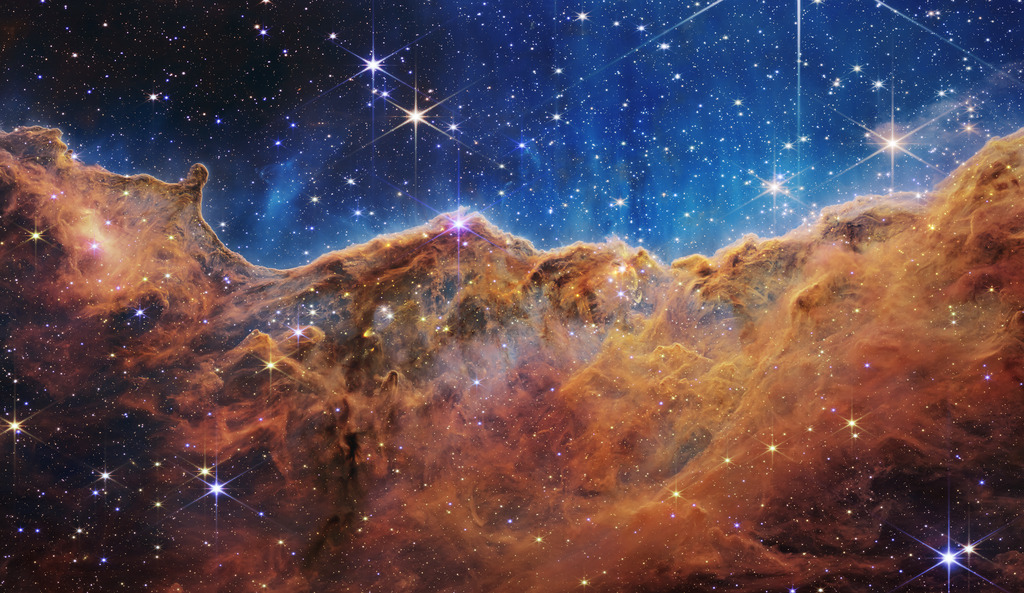
A stunning new image has emerged from the far reaches of the Small Magellanic Cloud, a galaxy located around 200,000 light-years away from Earth. This captivating image showcases the star cluster NGC 602, captured through the combined efforts of the James Webb Space Telescope (JWST) and NASA’s Chandra X-ray Observatory. The cluster, situated in an environment resembling the early universe, is marked by low levels of heavy elements. The surrounding region is teeming with dense dust clouds and ionized gas, offering a glimpse into active star formation processes that unfold under conditions vastly different from those in our own solar neighborhood.
A Wreath of Stars and Dust
The Webb Telescope’s near-infrared and mid-infrared imaging data unveil a striking wreath-like structure encircling the star cluster. This ring of dense dust clouds appears in an array of vivid colors—green, blue, orange, and yellow—while Chandra’s X-ray data paints the image with vibrant red tones, signifying high-energy radiation from young, massive stars. These stars, with their powerful winds, illuminate the surrounding gas and dust, offering a breathtaking view of stellar creation. The combined glow from lower-mass stars extends across the region, creating an image that bears a festive resemblance to a holiday wreath.
Insights Into Stellar Formation
The environment around NGC 602 provides valuable insights into the conditions under which stars are born in the early universe. The low concentration of heavy elements and the ongoing star formation within this region highlight the differences between the star formation processes observed in distant galaxies and those in our own. This discovery adds another layer to our understanding of how stars and galaxies evolve in the vast expanse of space. The remarkable detail captured by both Webb and Chandra offers a unique window into a distant past, shedding light on cosmic events that shaped the universe as we know it.
The Christmas Tree Cluster in Stunning Detail
In addition to NGC 602, another remarkable image has been produced featuring the star cluster NGC 2264, also known as the “Christmas Tree Cluster.” Situated about 2,500 light-years away, this cluster consists of young stars, aged between one and five million years. A composite image, blending Chandra’s X-ray data with optical observations captured by astrophotographer Michael Clow in November 2024, reveals a cone-shaped structure dotted with starlight, resembling a cosmic Christmas tree. The combined data from both the X-ray and optical wavelengths provide a new level of precision, offering an in-depth view of the cluster and its surrounding nebula. These images underscore the power of modern telescopes in unveiling the wonders of the cosmos.