Yazılar

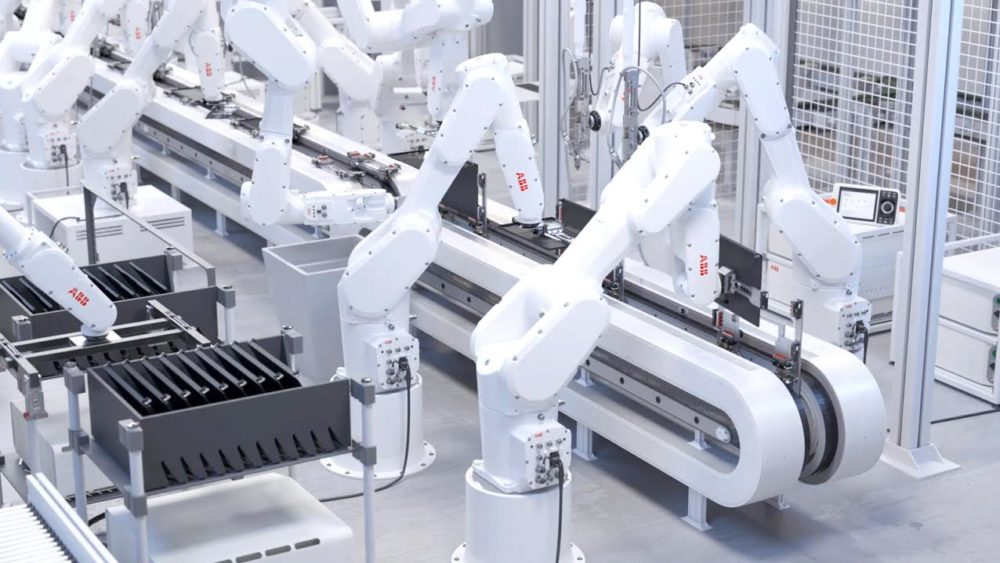
SoftBank to buy ABB’s robot unit for $5.4 billion in AI-robotics merger push

SoftBank Group has agreed to purchase the robotics division of ABB for $5.4 billion, marking a major step in CEO Masayoshi Son’s plan to unite artificial intelligence and robotics into what he calls “Physical AI.” The acquisition, announced Wednesday, gives the Japanese conglomerate control of one of the world’s leading industrial robotics makers as it deepens its bet on AI-driven automation.

The deal signals ABB’s decision to cancel its planned spin-off of the robotics unit, opting instead for a direct sale that delivers immediate liquidity. ABB CEO Morten Wierod said the sale provides stronger financial flexibility to invest in electrification, automation, and potential new acquisitions.

ABB’s robotics arm employs about 7,000 people and generated $2.3 billion in 2024 sales, roughly 7% of ABB’s total revenue. Despite its technological strength, the division struggled with volatile margins and limited overlap with ABB’s core business.

For SoftBank, the acquisition builds on a decade-long robotics journey that began with its humanoid Pepper robot and now extends into advanced factory automation. The company has recently invested in Berkshire Grey, AutoStore, and OpenAI, and earlier this year bought chip designer Ampere for $6.5 billion.

The transaction is expected to close by late 2026, subject to regulatory approvals. ABB shares rose 2% in Zurich after the announcement, while SoftBank’s stock slipped 2% in Tokyo trading.


Nissan tests Wayve-powered assisted driving system for Japan launch in 2027

Nissan Motor announced on Monday that it has begun testing a new driver-assistance system developed in partnership with UK startup Wayve, with a commercial launch in Japan planned for the 2027 financial year.

The system was recently demonstrated in Tokyo using Nissan Ariya electric vehicles, which showcased advanced collision avoidance features tailored for busy urban environments. Unlike highways, city driving poses unique challenges due to pedestrians, parked cars, and delivery traffic.

The prototype vehicles are equipped with a powerful sensor suite:

  • 11 cameras

  • 5 radars

  • 1 lidar sensor

This setup enables Level 2 autonomous driving, meaning the system can handle steering, acceleration, and braking, but requires drivers to keep their hands on the wheel and be ready to intervene.

Wayve, backed by SoftBank and Nvidia, specializes in AI-driven self-learning systems for autonomous driving and recently opened a testing and development centre in Japan.

Nissan has been gradually advancing its driver-assist technology since launching ProPilot in 2016, followed by an upgraded version in 2019 that focused on highway driving. The new collaboration with Wayve represents Nissan’s push to bring advanced autonomy into complex urban environments.

Japan Accelerates Move to Cashless Society, BOJ Pushes for Payment Innovation

Japan is rapidly shifting towards a cashless society, prompting the Bank of Japan (BOJ) to intensify efforts to modernize the country’s payment systems. Cashless payments accounted for 42.8% of transactions in 2024, surpassing the government’s 40% target a year ahead of schedule and marking a significant jump from just 13.2% in 2010.

Traditionally reliant on physical currency, Japan’s growing cashless trend is pushing policymakers to adapt to changing consumer preferences, including the possible introduction of a central bank digital currency (CBDC). While no decision has been made on issuing a digital yen, the BOJ began a pilot program in 2023, collaborating with private firms and the government on its design and implementation.

BOJ Executive Director Kazushige Kamiyama highlighted concerns over potential future declines in banknote usage due to digitalization, emphasizing the need for a retail payment system that is efficient, accessible, and secure. Deputy Governor Shinichi Uchida echoed this, noting that a CBDC could become a crucial infrastructure for Japan’s payment landscape, but said cash is unlikely to disappear soon.

Uchida also warned that the yen’s dominance as a payment instrument depends on public trust in the BOJ’s ability to maintain price stability. Should confidence falter, alternative forms of payment, such as cryptocurrencies, could gain ground.

The focus on CBDCs is part of a global trend amid growing cryptocurrency use and moves by other nations. While the U.S. government banned the Federal Reserve from issuing a digital dollar earlier this year, the European Central Bank advocates for a digital euro to reduce reliance on U.S. payment providers. Meanwhile, China aggressively promotes its digital yuan internationally, with transaction volumes more than tripling from mid-2023 to mid-2024.

Japan’s push signals its determination to modernize payments and keep pace with global developments in digital currency and cashless transactions.