China’s Youth Grapple with Unemployment, Giving Rise to ‘Rotten-Tail Kids’
China’s growing youth unemployment crisis has led to the emergence of a new working class, dubbed “rotten-tail kids,” a term echoing the unfinished and deteriorating buildings that symbolize the country’s troubled economy. Faced with a stagnant labor market and diminished job prospects, millions of college graduates are forced to accept low-wage work or rely on their parents’ pensions to survive.
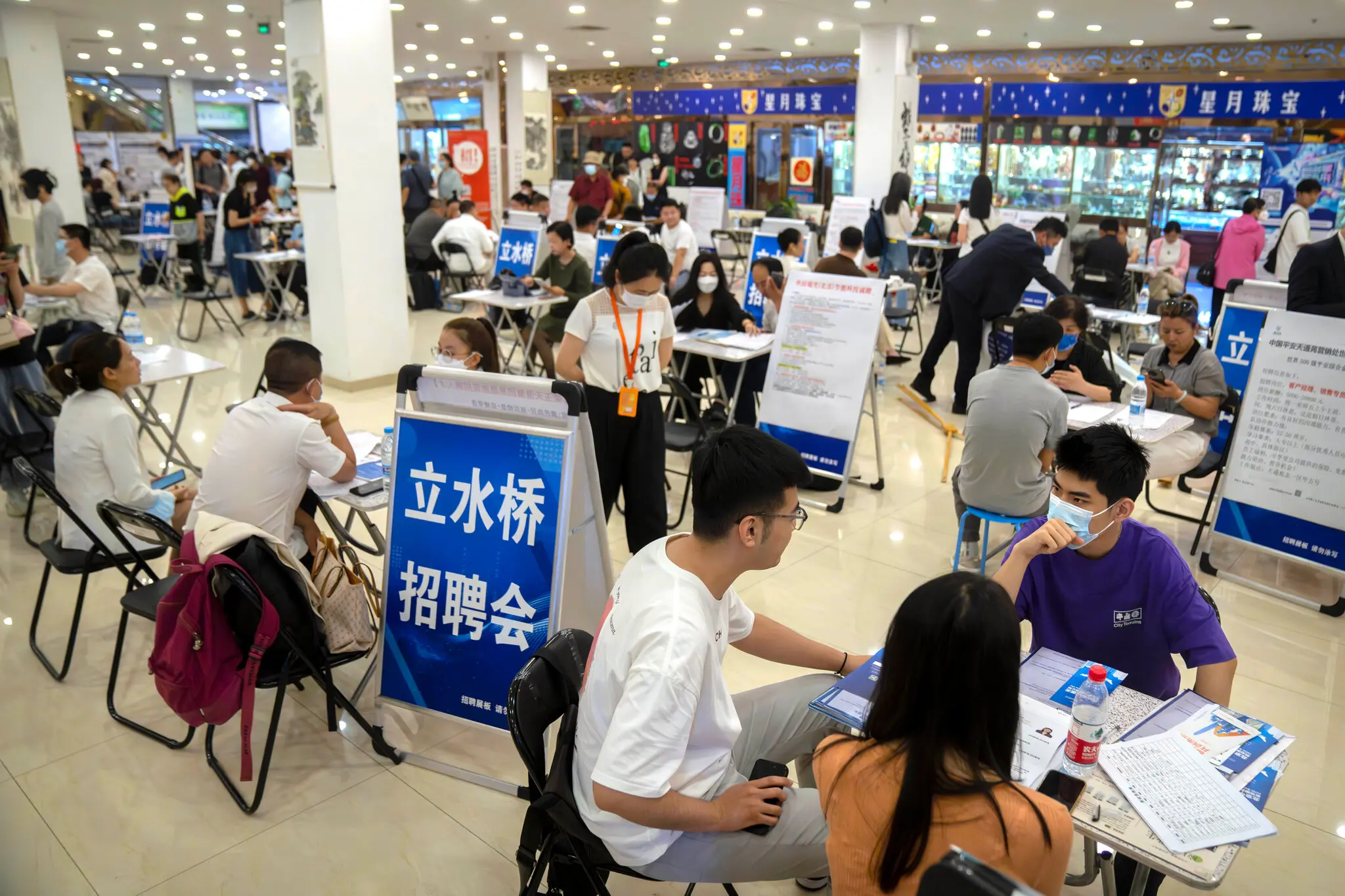
The crisis has escalated since the COVID-19 pandemic, compounded by government crackdowns on the tech, finance, and education sectors. A record 11.79 million college students graduated in 2023, contributing to a youth unemployment rate that hit an unprecedented 21.3% in June of that year. In response, Chinese authorities suspended the release of unemployment data, later revising it to 17.1% by July 2024. Despite efforts by President Xi Jinping to prioritize job creation for young people, the challenge remains immense. Initiatives like job fairs and business support policies have been introduced, yet many young Chinese are unable to find stable employment.

For many, a college degree once symbolized upward social mobility and a brighter future, but those promises have faded. With an oversupply of graduates, even those with post-graduate degrees struggle to secure work in a sluggish economy. Some have resigned themselves to becoming “full-time children,” living at home and relying on their parents’ financial support. Others, disillusioned by low-paying jobs or exploitative work conditions, contemplate shifting career paths entirely, like recent graduate Amada Chen, who left her sales job due to unbearable work culture and unrealistic expectations. Chen, after applying for over 130 jobs, is now considering modeling as an alternative to her degree in traditional Chinese medicine.
This economic dilemma is not new in China. Since the late 1990s, China has expanded its university system to create a highly educated workforce, but the supply of graduates continues to outpace job availability. While some like Zephyr Cao, a master’s graduate, remain optimistic about pursuing further education to improve their chances, others like AI student Shou Chen, who has struggled to secure even an internship, express deep pessimism about their future in a saturated job market.
The outlook remains uncertain as China braces for a long-term mismatch between graduates and job demand. While the fertility rate decline is expected to slow this trend by the mid-2030s, the current generation of young people must navigate a job market that is unlikely to meet their expectations anytime soon.