Yazılar

Chinese Factory Adapts to Tariffs, Keeps Core in China

A Chinese electronics manufacturer has demonstrated how firms are adapting to geopolitical shocks, showing resilience despite tariffs introduced during the Donald Trump administration.

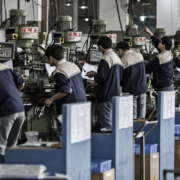
Agilian Technology, a mid-sized exporter based in Dongguan, faced severe disruption in 2025 when U.S. tariffs caused clients—many of whom account for over half its revenue—to freeze orders and push for production relocation outside China. At the peak of tensions, tariffs between the U.S. and China exceeded 100%, effectively halting trade flows.

Despite this, the company ultimately reaffirmed China as its core manufacturing base. Executives cited the country’s unmatched supply chain integration, production speed and component availability as factors that are difficult to replicate elsewhere.

Attempts to diversify production revealed structural challenges. Expansion efforts in India were slowed by regulatory delays and operational inefficiencies, while Malaysia offered a more viable alternative but still lagged behind China in execution speed. Even relocating to the U.S. proved impractical due to higher labor costs and reliance on Chinese-made components.

Meanwhile, China’s countermeasures—including export controls on critical minerals—highlighted Western dependence on its industrial ecosystem. Combined with partial tariff rollbacks following negotiations between Washington and Beijing, these factors helped revive manufacturing activity.

By the second half of 2025, Agilian reported a 29% increase in production hours, marking its busiest period on record. Orders resumed as clients adjusted to a “new normal” of elevated but manageable tariffs.

The case reflects a broader trend: rather than fully exiting China, companies are adopting a “China-plus-one” strategy—maintaining core operations domestically while building secondary capacity abroad as a hedge against future disruptions.

Economists note that tariffs have reshaped global supply chains but have not fundamentally weakened China’s manufacturing dominance. Instead, they have accelerated diversification while reinforcing the country’s central role in global production networks.
Intel Buys Back Ireland Plant Stake for $14.2 Billion

Intel will spend $14.2 billion to repurchase the 49% stake in its Ireland manufacturing facility that it previously sold to Apollo Global Management, regaining full ownership of the site.

The stake was originally sold in 2024 for $11.2 billion as part of a joint venture, providing Intel with liquidity during a period of financial pressure and heavy investment in global manufacturing expansion.

The facility, located in Leixlip near Dublin, is a key production site known as Fab 34. It manufactures advanced chips using Intel 4 and Intel 3 process technologies, including Core Ultra processors for personal computers and Xeon processors for data centers.

Intel’s decision to buy back the stake reflects improved financial conditions and renewed demand driven by artificial intelligence workloads. The company has been restructuring under CEO Lip-Bu Tan, focusing on cost discipline, asset optimization and regaining competitiveness in the semiconductor market.

The transaction will be funded through a combination of available cash and approximately $6.5 billion in new debt. Intel expects the move to enhance profitability and strengthen its credit profile starting in 2027.

The development also signals Intel’s strategic shift toward consolidating control over critical manufacturing assets as it ramps up next-generation technologies such as its 18A process node, which may eventually be offered to external clients.

Following the announcement, Intel shares rose more than 10%, reflecting investor confidence in the company’s turnaround strategy.

Tesla Explores Major China Solar Equipment Deal

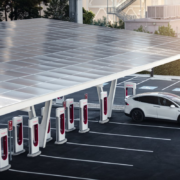
Tesla is in talks to buy about $2.9 billion worth of solar manufacturing equipment from Chinese suppliers as it pushes to build a large-scale solar production base in the United States.

The discussions involve equipment for making solar panels and cells, with Chinese firms seen as key candidates because of their strong position in global solar machinery. Some of the equipment may require export approval from Chinese authorities before shipment.

The reported move supports Elon Musk’s goal of building 100 gigawatts of solar manufacturing capacity in the U.S. by the end of 2028. Most of that capacity is expected to support Tesla’s own energy needs, while part of it could also be used for SpaceX-related operations.

The potential order also highlights the complexity of reducing U.S. dependence on China, as American clean energy expansion still relies heavily on Chinese industrial equipment. Even with tariffs in place on many solar imports, manufacturing machinery remains difficult to source elsewhere at scale.

If completed, the deal would represent a major boost for Chinese solar equipment makers while strengthening Tesla’s position in U.S. solar manufacturing during a period of rising electricity demand driven by data centers and industrial growth.