Israeli Airstrike on Gaza School Kills Over 70, Sparks Outrage
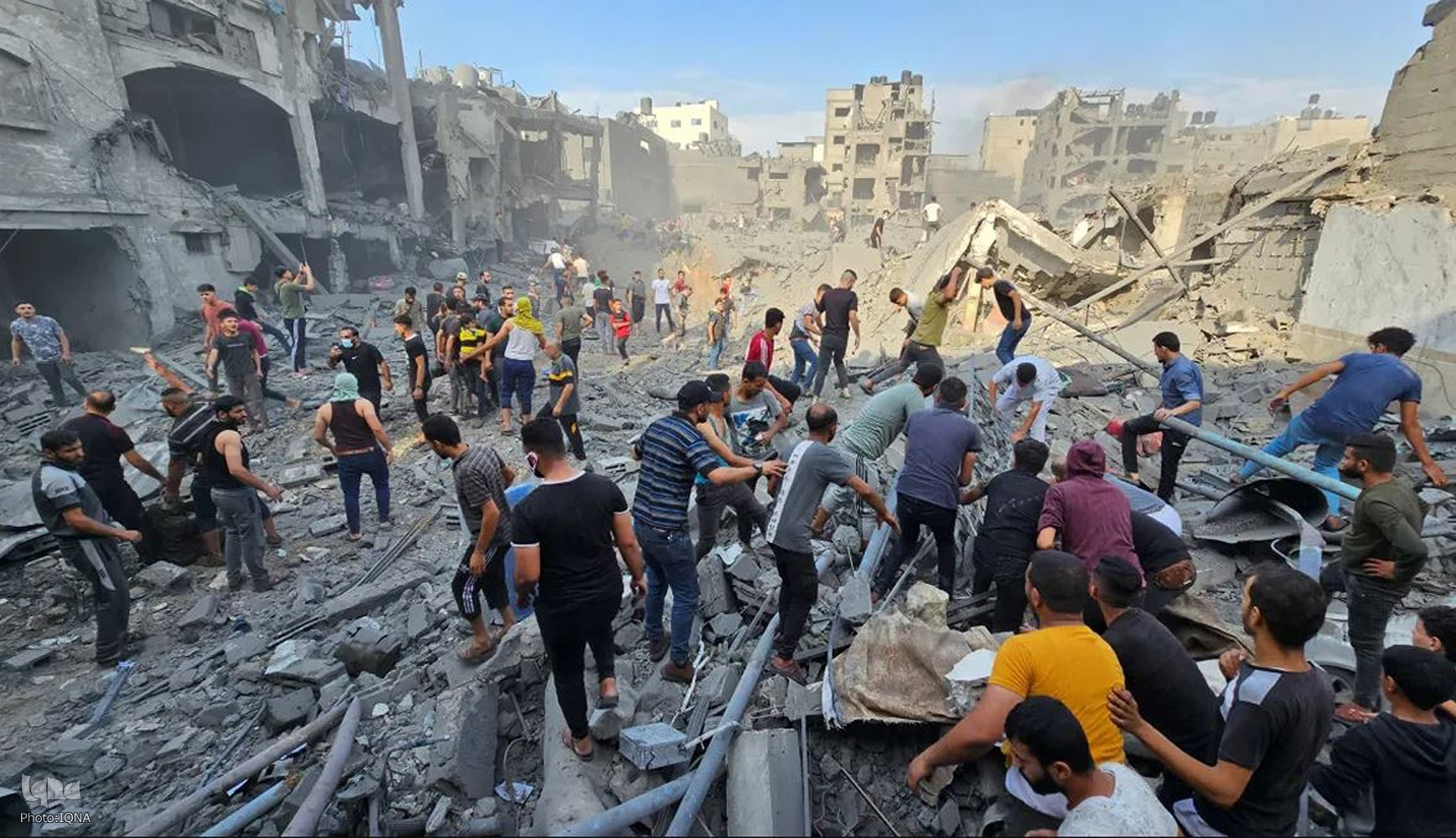
An Israeli airstrike on the al-Taba’een school in Gaza City has resulted in the deaths of more than 70 people, according to Fadl Naeem, the head of al-Ahli Hospital. The hospital has struggled with the overwhelming number of casualties, many of whom are unrecognizable due to the severity of their injuries. The situation has been described as “catastrophic,” with medical staff unable to properly treat the wounded.
The Israeli Defense Forces (IDF) have claimed that the school, which was housing displaced Palestinians, also served as a Hamas and Islamic Jihad military facility. The IDF asserts that around 20 militants were operating from the location. However, Hamas has denied these allegations. Early estimates from Hamas’s health ministry and local civil defense agency vary, with reported deaths ranging from 60 to over 90.
The al-Taba’een school was sheltering over 1,000 people, including those displaced from Beit Hanoun. The building, which also served as a mosque, was struck during dawn prayers. Witnesses described a horrific scene with widespread destruction and casualties. Jaafar Taha, a local student, reported hearing screams for help and witnessing body parts and blood scattered throughout the area.
UNICEF condemned the attack, emphasizing that schools and other civilian shelters are being used by families seeking refuge. Philippe Lazzarini, head of UNRWA, called for an end to the violence. The European Union’s foreign policy chief, Josep Borrell, expressed horror at the images and condemned the massacre.
The IDF maintains that the strike targeted a Hamas command center and claims the casualty figures provided by Hamas do not align with their intelligence. Hamas has labeled the attack as a “horrific crime” and accused Israel of a broader strategy to “exterminate Palestinians.” Fatah, Hamas’s rival, has condemned the action as part of a policy of cumulative killing.
Recent months have seen a troubling pattern of attacks on schools in Gaza, with over a dozen reported since early July. These strikes are part of Israel’s stated aim to dismantle Hamas’s military infrastructure, though this claim is frequently disputed by Hamas.
The escalation in violence has put further strain on ceasefire negotiations, already hindered by the assassination of Hamas leader Ismail Haniyeh. Egypt and Jordan have criticized Israel’s actions as obstructive to peace efforts.
The ongoing conflict, triggered by a large-scale Hamas attack on October 7, 2023, has resulted in significant casualties on both sides. According to Gaza’s health ministry, over 39,790 Palestinians have been killed since the beginning of the Israeli military campaign.