Yazılar

Researchers Discover Strange ‘Failed Star’ Planet Orbiting Double Star System in the Milky Way

Astronomers Discover Rare Polar-Orbiting Planet in Unusual Double-Brown-Dwarf System

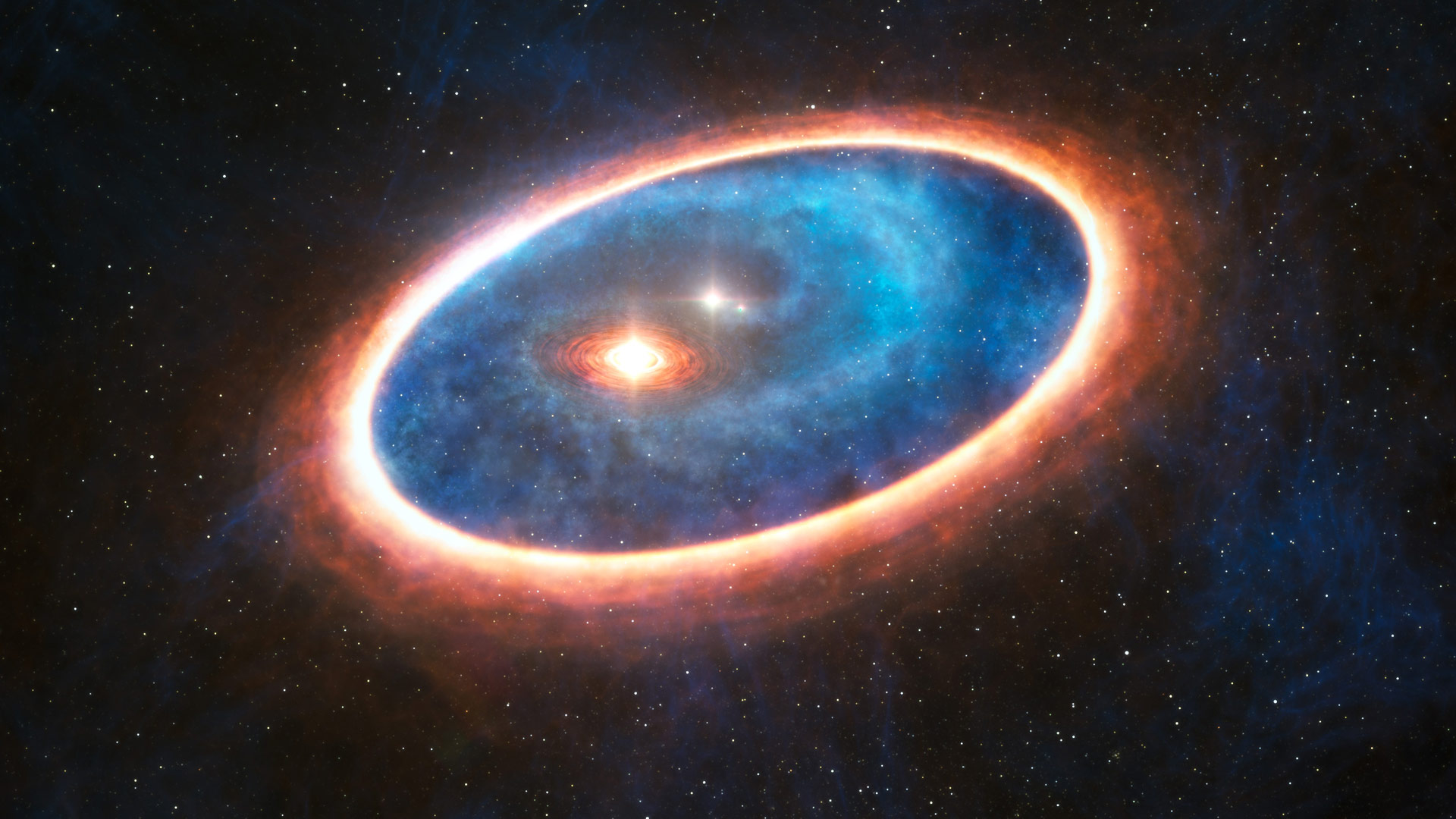
Astronomers have uncovered an extraordinary planet in the Milky Way, orbiting in an unusual way around two failing stars. Unlike most exoplanets, this planet orbits over and under the poles of its parent stars, rather than following the plane of their orbits. Prior to this discovery, only sixteen exoplanets were known to orbit binary star systems, all of which moved in the plane of the stars’ mutual orbits. The discovery of a planet following a polar orbit in such a system has captured the attention of the scientific community, adding a new layer of intrigue to the study of planetary formation.

The two brown dwarfs that the planet orbits had already been identified by astronomers in 2018, using the SPECULOOS Southern Observatory in Chile. Brown dwarfs, often referred to as “failed stars,” are celestial objects that do not possess enough mass to ignite nuclear fusion in their cores. When the researchers turned their attention to the pair using the Very Large Telescope in Chile, they realized that these brown dwarfs, while not full-fledged stars, could still host fascinating systems.

This discovery marks the first time a “polar planet” has been observed orbiting a pair of brown dwarfs. These bodies, which are too small to sustain nuclear fusion, remain a subject of fascination because of their unique characteristics. The planet, designated 2M1510 (AB) b, is the first known exoplanet in such a system, providing solid evidence that fully formed planetary systems can exist around these “failed stars.” The fact that a binary brown dwarf system could support a planet in such an unusual orbit is a breakthrough in our understanding of stellar and planetary formation.

In addition to being a polar-orbiting planet, the system is also only the second pair of eclipsing brown dwarfs ever discovered, where one brown dwarf eclipses the other from Earth’s viewpoint. This rare configuration makes the discovery even more significant. As Amaury Triaud of the University of Birmingham points out, “A planet orbiting not just a binary, but a binary brown dwarf, as well as being on a polar orbit, is rather incredible and exciting.” The discovery was an unexpected bonus, as the team was not originally aiming to find such a system, underscoring the serendipitous nature of astronomical research.
NASA’s Hubble Space Telescope Observes Neutron Star with Unexplained Origins

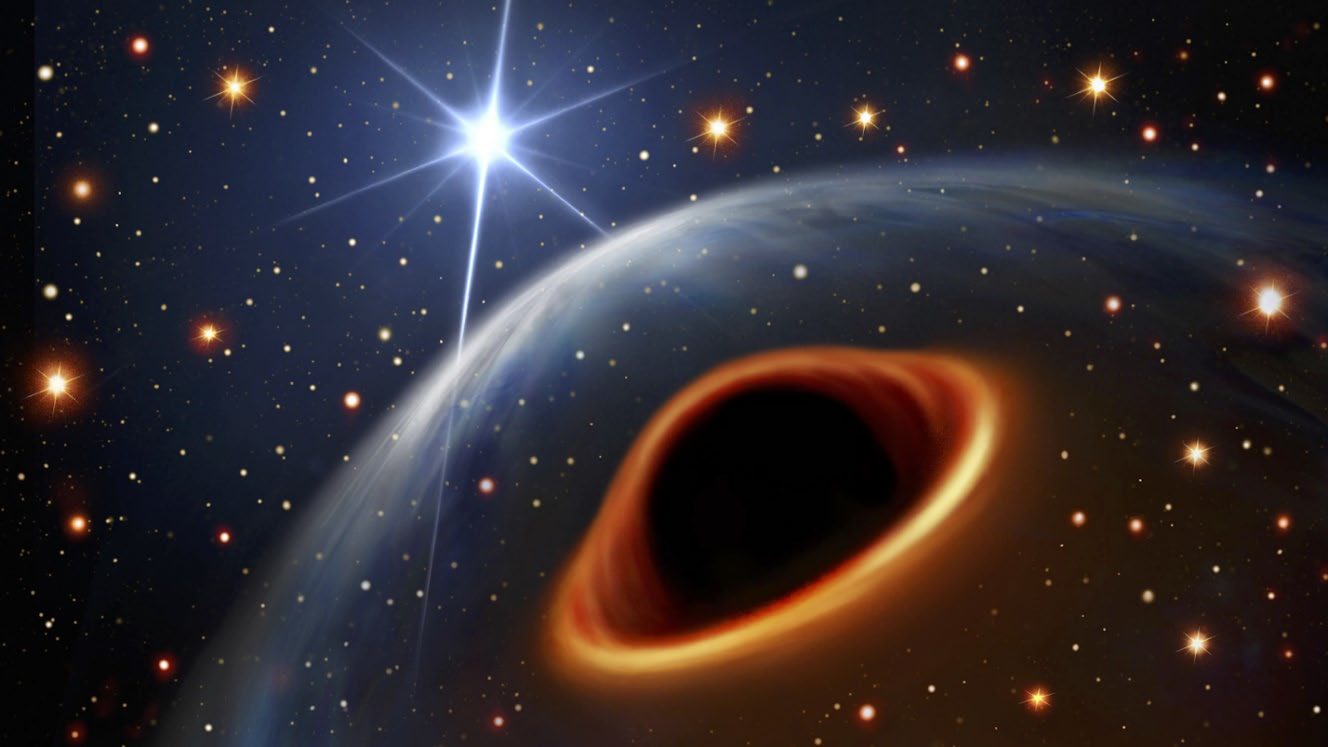
NASA’s Hubble Space Telescope has made an intriguing discovery, tracking a rogue magnetar known as SGR 0501+4516 as it roams through our galaxy. This magnetar was first detected in 2008 by NASA’s Swift Observatory, which identified intense gamma-ray flashes emanating from a distant region of the Milky Way. The unusual behavior of this magnetar suggests that not all magnetars within the galaxy may have been formed through the typical process of supernovae, leading scientists to reconsider their understanding of these extreme celestial objects. This finding could provide important clues about the enigmatic phenomenon of fast radio bursts, which have puzzled astronomers for years.

Magnetars, which are composed entirely of neutrons, are the remnants of massive stars that have exhausted their nuclear fuel and collapsed under their own gravity. What sets magnetars apart from other neutron stars is their incredibly strong magnetic fields, which can be a trillion times more intense than Earth’s magnetic field. Lead author of the study, Ashley Chrimes, explained that the magnetic forces of a magnetar are so powerful that they could potentially erase data on a credit card from a distance half the way between Earth and the Moon. If a person were to approach within 600 miles of a magnetar, the intense magnetic field could tear apart the atoms of their body.

Initially, scientists believed that SGR 0501+4516 had originated from the remnants of a nearby supernova, specifically one known as HB9. However, further observations using Hubble’s sensitive instruments, combined with data from ESA’s Gaia spacecraft, raised questions about this origin theory. Hubble’s long-term tracking of the magnetar’s movement revealed that it did not come from a supernova remnant or any star cluster. This unexpected finding has left researchers rethinking the creation process of this wandering magnetar and suggests that it may have a completely different origin.

The discovery of this rogue magnetar is particularly significant for understanding fast radio bursts (FRBs), high-energy astrophysical phenomena whose origins are still not fully understood. NASA researchers believe that the magnetar’s formation could provide insight into the nature of FRBs, which are thought to come from ancient stellar populations. To further explore this mystery, the research team plans to continue observing the magnetar with Hubble, aiming to uncover more about how magnetars form and how they might be linked to these mysterious cosmic bursts. The ongoing study could shed light on some of the most extreme and unexplained aspects of the universe.

Star and Its Planet May Be Speeding Through the Galaxy at Unprecedented Velocity

A newly discovered exoplanet system could be setting a record for speed, traveling at a staggering 1.2 million miles per hour (540 kilometers per second). This potential record-breaker involves a low-mass star and a planet in orbit, both of which appear to be racing through the Milky Way at an incredible velocity. If confirmed, this discovery would be the first known instance of a planet orbiting a hypervelocity star, with the system moving nearly twice as fast as our own solar system does as it traverses the galaxy. This high-speed movement presents a fascinating new avenue for studying how celestial bodies interact under extreme conditions.

The system was first detected through microlensing, a technique that has proven to be a valuable tool in identifying distant objects in space. Researchers utilized data from the Microlensing Observations in Astrophysics (MOA) project, which recorded a significant lensing event in 2011. Microlensing occurs when the gravitational field of a massive object bends the light from a background star, allowing scientists to detect objects that would otherwise be invisible. Through this method, they were able to infer the presence of two celestial bodies in the system, with a mass ratio of approximately 2,300 to 1. Despite these calculations, the exact masses of the star and planet remain uncertain due to the unknown distance of the system from Earth.

David Bennett, Senior Research Scientist at the University of Maryland and NASA’s Goddard Space Flight Center, explained that while the mass ratio between the two objects is relatively straightforward to determine, calculating their actual masses requires additional observations. The initial analysis suggested two possible scenarios for the system’s composition. In one scenario, the star could have around 20 percent of the Sun’s mass, with a planet that has a mass roughly 29 times that of Earth. Alternatively, the system could consist of a rogue planet that is about four times the mass of Jupiter, accompanied by a smaller moon.

This discovery is significant not only because of the speed at which the system is traveling but also because of the potential implications for our understanding of planetary systems. If this system does indeed feature a planet orbiting a hypervelocity star, it would challenge many current assumptions about how such systems form and evolve. Further research and observations will be necessary to fully understand the dynamics of this high-speed system, but for now, it remains one of the most exciting discoveries in the field of astrophysics.