Binary Star System D9 Discovered Orbiting Sagittarius A Near the Heart of the Milky Way*
Binary Star System D9 Found Orbiting Sagittarius A Near the Heart of the Milky Way*
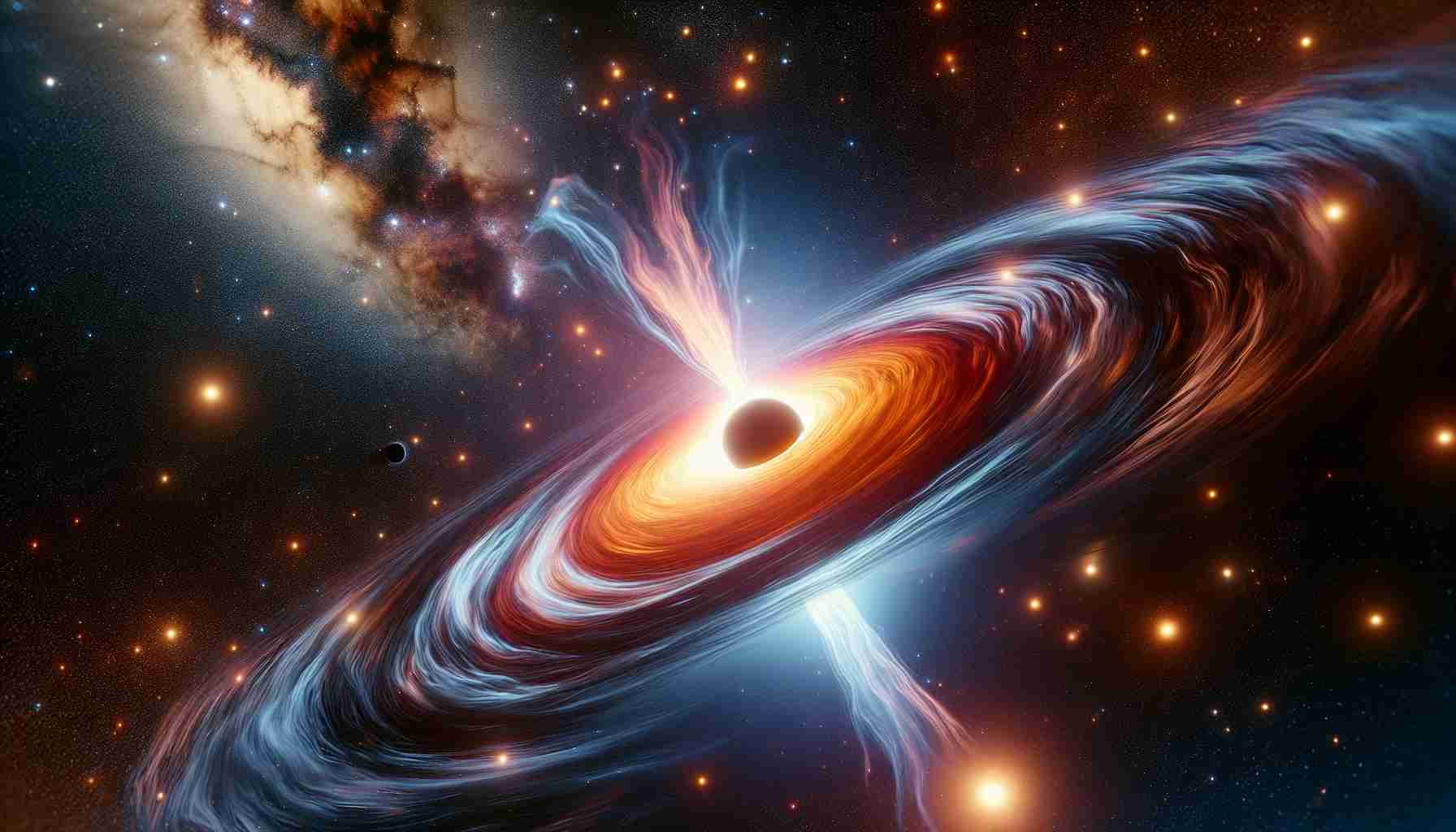
A remarkable discovery has been made with the detection of a binary star system, designated D9, orbiting Sagittarius A*, the supermassive black hole at the center of the Milky Way galaxy. This groundbreaking finding, published in Nature Communications, marks the first time that a binary system has been observed so close to such a powerful gravitational force. The observation was made using data collected from the European Southern Observatory’s (ESO) Very Large Telescope (VLT). The D9 system was found in the S cluster, a densely packed region of stars and objects located near Sagittarius A*. The discovery provides crucial insights into how stars and their systems can persist and even thrive in extreme gravitational environments.
A Challenge to Previous Assumptions About Black Holes
The discovery of D9 challenges previous assumptions about the nature of black holes and their surroundings. Lead researcher Florian Peißker from the University of Cologne explained in the study that black holes might not be as destructive to nearby stars and systems as previously thought. The findings suggest that despite the immense gravitational forces exerted by Sagittarius A*, a binary star system like D9 is capable of surviving and even continuing its orbit for millions of years. This discovery offers a new perspective on the dynamics around black holes and the potential for star systems to form and persist in these regions.
A Rare Phenomenon Near the Supermassive Black Hole
Binary star systems, where two stars orbit each other, are relatively common throughout the universe, but the existence of such a system in close proximity to a supermassive black hole is extremely rare. Previously, it was assumed that the intense gravitational pull from a black hole would disrupt or destabilize any star system within its reach, making it nearly impossible for a binary system to survive in such an environment. The D9 system, however, defies this notion, providing a rare opportunity for astronomers to study stellar dynamics in one of the most extreme gravitational environments in the universe.
The Future of the D9 System
Though the discovery of D9 is fascinating, it is not expected to last indefinitely. The binary system is believed to be approximately 2.7 million years old, and due to the strong gravitational forces from Sagittarius A*, the two stars are predicted to merge into a single star within the next million years. This eventual merger provides further opportunities for researchers to study the long-term effects of a supermassive black hole on nearby star systems. As the system evolves, it will offer valuable insights into the interaction between stars and black holes, shaping our understanding of cosmic environments.