Yazılar

Musk’s xAI to Invest Over $20 Billion in Mississippi Data Center

xAI, the artificial intelligence company founded by Elon Musk, will invest more than $20 billion to build a large-scale data center in Southaven, Mississippi, state Governor Tate Reeves said on Thursday.

The investment comes as booming demand for generative AI drives tech companies to sharply expand computing infrastructure. Data centers have become a focal point for spending by AI startups and hyperscalers seeking to train increasingly powerful models.

According to the governor’s statement, xAI expects to begin operations at the Southaven data center in February 2026. Musk had previously announced on December 30 that xAI had acquired a data center named “MACROHARDRR,” saying the facility would lift the company’s total computing capacity to 2 gigawatts, though he did not disclose the investment size or location at the time.

The Southaven site is located near a power plant recently acquired by xAI and close to its existing data center footprint in Memphis, Tennessee, the statement said. Memphis is home to xAI’s flagship supercomputer cluster, Colossus, which the company has described as the largest in the world.

The expansion highlights xAI’s aggressive push to compete more directly with leading AI developers such as OpenAI and Anthropic, whose ChatGPT and Claude models dominate much of the current generative AI market.

xAI’s spending underscores the heavy cash demands of the AI race. Bloomberg reported earlier on Thursday that the company burned $7.8 billion in cash during the first nine months of the year, reflecting the high cost of advanced data center hardware and large-scale model training.
U.S. Supreme Court Lets Mississippi Social Media Age-Check Law Stand for Now

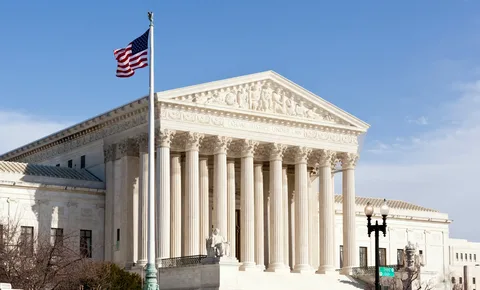
The U.S. Supreme Court on Thursday declined to temporarily block a Mississippi law requiring social media users to verify their age and obtain parental consent for minors, in a challenge filed by NetChoice, a trade group representing companies including Meta (META.O), Alphabet’s YouTube (GOOGL.O), and Snapchat (SNAP.N). The law remains in effect while NetChoice’s broader legal challenge, which argues it violates the First Amendment, continues in lower courts.

Justice Brett Kavanaugh noted in a statement that the Mississippi law is likely unconstitutional but said NetChoice had not met the high standard needed to halt enforcement at this stage. Paul Taske, co-director of the NetChoice Litigation Center, described the Supreme Court’s decision as “an unfortunate procedural delay” but expressed confidence that the challenge would ultimately succeed.

Mississippi’s attorney general welcomed the order, saying it allows “thoughtful consideration” of the law. The legislation, passed unanimously by the state legislature, requires platforms to obtain “express consent” from a parent or guardian before a minor can open an account and mandates “commercially reasonable” age verification. Violations can carry civil penalties of up to $10,000 per incident and potential criminal penalties under state deceptive trade practices laws.

The case comes after U.S. District Judge Halil Suleyman Ozerden initially blocked enforcement for some NetChoice members, but the 5th U.S. Circuit Court of Appeals allowed the law to take effect. Similar measures have been blocked in courts in seven other states. Technology companies maintain that their platforms already include extensive content moderation and parental controls to protect minors.

Mississippi defended the law as a “common” method to safeguard children online, emphasizing parental consent and age verification as key protective measures.