
Yazılar

Moon and Sun Take Center Stage in 2026’s Lineup of Cosmic Events

The moon and the sun will headline a busy calendar of celestial events in 2026, from major eclipses to lunar missions and eye-catching supermoons.

The year begins with renewed focus on the moon as NASA prepares to send astronauts past it for the first time in more than 50 years under its Artemis program. Alongside human missions, a wave of robotic landers is planned, including Blue Origin’s oversized Blue Moon prototype, as well as landers from U.S. and Chinese companies targeting scientifically rich regions of the lunar surface.

Solar activity will also draw attention, highlighted by two major eclipses. A rare “ring-of-fire” annular solar eclipse will occur over Antarctica in February, followed by a total solar eclipse on Aug. 12 that will sweep across parts of the Arctic, Greenland, Iceland and Spain. Several lunar eclipses are also scheduled throughout the year.

Skywatchers can expect planetary spectacles as well. Six planets will line up in late February, with most visible to the naked eye, while Mars joins a similar parade in August. Jupiter, Saturn, Venus and Mercury will be the easiest to spot shortly after sunset, weather permitting.

Three supermoons will brighten the night skies in 2026, including a particularly close and bright one on Christmas Eve. These full moons appear larger than usual as the moon reaches the closest point in its orbit around Earth.

Meanwhile, scientists expect continued bursts of solar activity, increasing the chances of vivid auroras in lower latitudes, though activity should gradually ease as the sun moves into the quieter phase of its 11-year cycle. For astronomers and casual stargazers alike, 2026 promises no shortage of cosmic drama.

Japan’s ispace and U.S.’s Firefly Launch Commercial Moon Landers

In a significant development in the global space race, Japan’s ispace and U.S.-based Firefly Aerospace successfully launched their commercial moon landers on Wednesday. The dual launch, carried out by SpaceX, highlights the growing international interest in lunar exploration.

ispace’s Second Attempt and Firefly’s First

ispace, a Japanese moon exploration company, launched its Hakuto-R Mission 2, marking its second attempt to land on the moon. The company’s initial mission in April 2023 failed due to an altitude miscalculation in its final moments. This time, however, ispace is optimistic about its chances. CEO Takeshi Hakamada expressed the company’s determination to make the mission a success, emphasizing that a successful landing would be a significant milestone for the company.

In parallel, Firefly Aerospace, based in Texas, launched its Blue Ghost lander. This mission makes Firefly the third company to send a lander to the moon under NASA’s Commercial Lunar Payload Services (CLPS) program. Both companies’ landers were deployed successfully from SpaceX’s Falcon 9 rocket about an hour apart, with Blue Ghost separating first, followed by ispace’s Resilience.

Missions and Future Goals

Resilience, ispace’s lander, is carrying $16 million worth of payloads, including its in-house “Micro Rover” that will collect lunar samples. The mission is expected to land on the moon around May or June, taking an energy-efficient path with a series of gravity-assisted flybys to steer its trajectory.

Meanwhile, Firefly’s Blue Ghost aims to reach the moon by March 2, carrying 10 payloads from NASA-funded customers and a payload from Blue Origin-owned Honeybee Robotics. Both missions will last a lunar day (approximately two weeks), with both landers expected to cease operations during the harsh lunar night when temperatures can plummet to minus 200 degrees Fahrenheit (-128 Celsius).

Strategic Importance and Geopolitical Context

The increased focus on the moon stems from its potential to host astronaut bases and provide resources for in-space applications, making it a key target in global geopolitical competition. While NASA’s Artemis program plans to return humans to the moon by 2027, China has set its sights on landing crews by 2030 following a series of robotic missions.

In addition to the government-led initiatives, private companies like Firefly and ispace are taking steps to establish a presence on the moon, with CLPS missions designed to study the moon’s surface and stimulate private lunar demand.


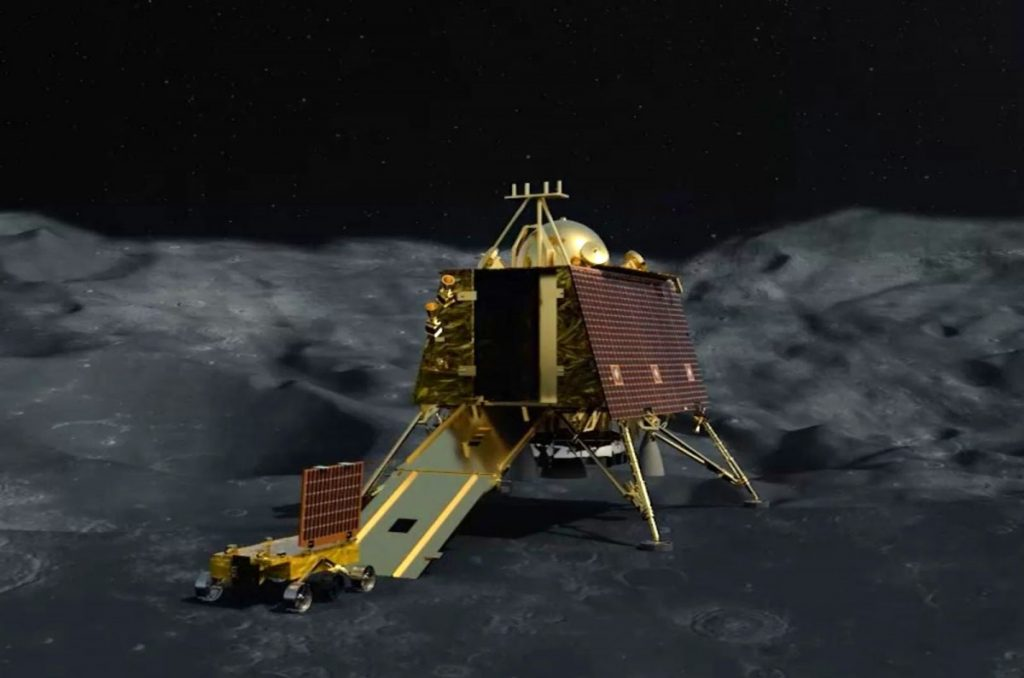
Chandrayaan-3 Rover Uncovers Ancient Moon Crater Predating South Pole-Aitken Basin

Pragyan rover identifies a 160 km crater, potentially older than the South Pole-Aitken basin, enhancing our understanding of lunar geology. Devamını Oku