Yazılar

James Webb Telescope Spots Continuous Flares Erupting from Sagittarius A at the Milky Way’s Center

Astronomers have recently observed the supermassive black hole at the center of the Milky Way, Sagittarius A*, emitting continuous flares, revealing new and intriguing behaviors in this cosmic giant. These observations were made using the James Webb Space Telescope (JWST), which provided unprecedented detail and clarity on the black hole’s activity. The flares, which vary in duration and intensity, add to the growing body of research on black holes, their accretion disks, and their interactions with surrounding matter. This discovery sheds light on a level of variability in Sagittarius A* that was previously not well understood, providing new insights into the dynamics of supermassive black holes.

The flares detected by JWST occurred over several observation sessions, totaling two full days of data collected during the past year. Using the telescope’s Near-Infrared Camera (NIRCam), researchers closely examined Sgr A* across multiple eight-to-ten-hour periods. The results were striking: the black hole produced bursts of energy ranging from quick, short-lived flashes to much longer, sustained outbursts. These bursts, occurring up to six times a day, were linked to the accretion disk surrounding the black hole, which is a dense ring of gas and dust spiraling inward. Some of these bursts were even accompanied by smaller sub-flares, further adding to the complexity of the black hole’s behavior.

While flares are a known phenomenon in supermassive black holes, the activity of Sgr A* is particularly unpredictable, setting it apart from other known black holes. The exact causes behind these flares are still being investigated, with scientists considering a variety of mechanisms. Shorter, fainter flares could be the result of small disturbances in the accretion disk, akin to ripples caused by minor disruptions. In contrast, the larger and brighter flares may be driven by more dramatic events, such as magnetic reconnection—an event in which charged particles accelerate to nearly the speed of light, producing powerful bursts of radiation.

Interestingly, the researchers compared the flaring activity of Sgr A* to solar flares, which are driven by magnetic activity on the sun’s surface. However, they noted that the processes near a black hole are far more extreme, with much greater forces at play. The NIRCam’s ability to observe multiple infrared wavelengths has proven invaluable in understanding these flares. It revealed a slight delay in the brightness of longer-wavelength emissions compared to shorter-wavelength ones, offering new clues about the complex mechanisms at work in the vicinity of the black hole. As research continues, these findings are helping scientists piece together a more complete picture of the behavior and characteristics of supermassive black holes.
Perseverance Rover Investigates Martian Serpentine Lake for Signs of Ancient Water

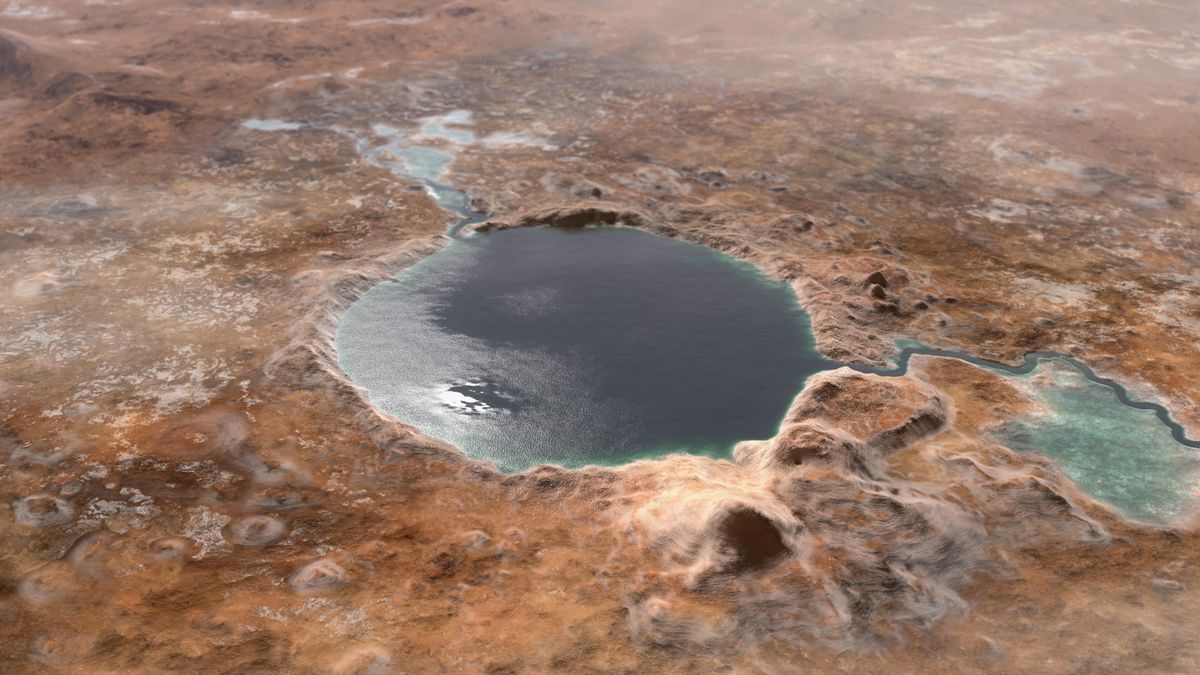
NASA’s Perseverance rover has turned its attention to a striking rock formation on Mars known as Serpentine Lake. Characterized by its pale green hue and dark speckles, this rock has become a focal point for scientists seeking to uncover clues about the planet’s geological past. Using the SHERLOC WATSON camera, Perseverance has captured high-resolution images to analyze surface textures and detect organic materials. The rover’s current exploration along the crater rim aims to investigate ancient rock formations, particularly those that might have formed in water-rich environments, potentially shedding light on Mars’ past habitability.

Preliminary analysis of Serpentine Lake has revealed an abundance of serpentine minerals, which typically develop in the presence of water. The rock’s texture has been likened to a cookies-and-cream pattern, hinting at a complex history of geological processes. This discovery comes after the identification of another significant rock, Silver Mountain, which was found to contain pyroxene—a mineral linked to igneous activity. Such findings are crucial, as they could represent some of the oldest rocks ever studied on Mars, providing valuable insight into the planet’s evolution.

However, not all sampling efforts have gone smoothly. Attempts to extract a core sample from a different site, Cat Arm Reservoir, were unsuccessful due to the rock’s fragile nature. Instead of remaining intact within the sample tube, it crumbled into fine particles, posing a challenge for Perseverance’s collection methods. This isn’t the first time such an issue has arisen, prompting mission teams to refine their approach to ensure that valuable samples can still be gathered.

Despite these obstacles, the Perseverance team remains committed to its mission. Every analysis and sample collected brings scientists closer to understanding Mars’ ancient environment and its potential to have once supported life. As the rover continues its journey across the crater rim, further discoveries are expected, deepening our knowledge of the Red Planet’s history and the role that water may have played in shaping its landscape.

Solar Sail Satellites May Revolutionize Space Weather Forecasting and Early Alerts

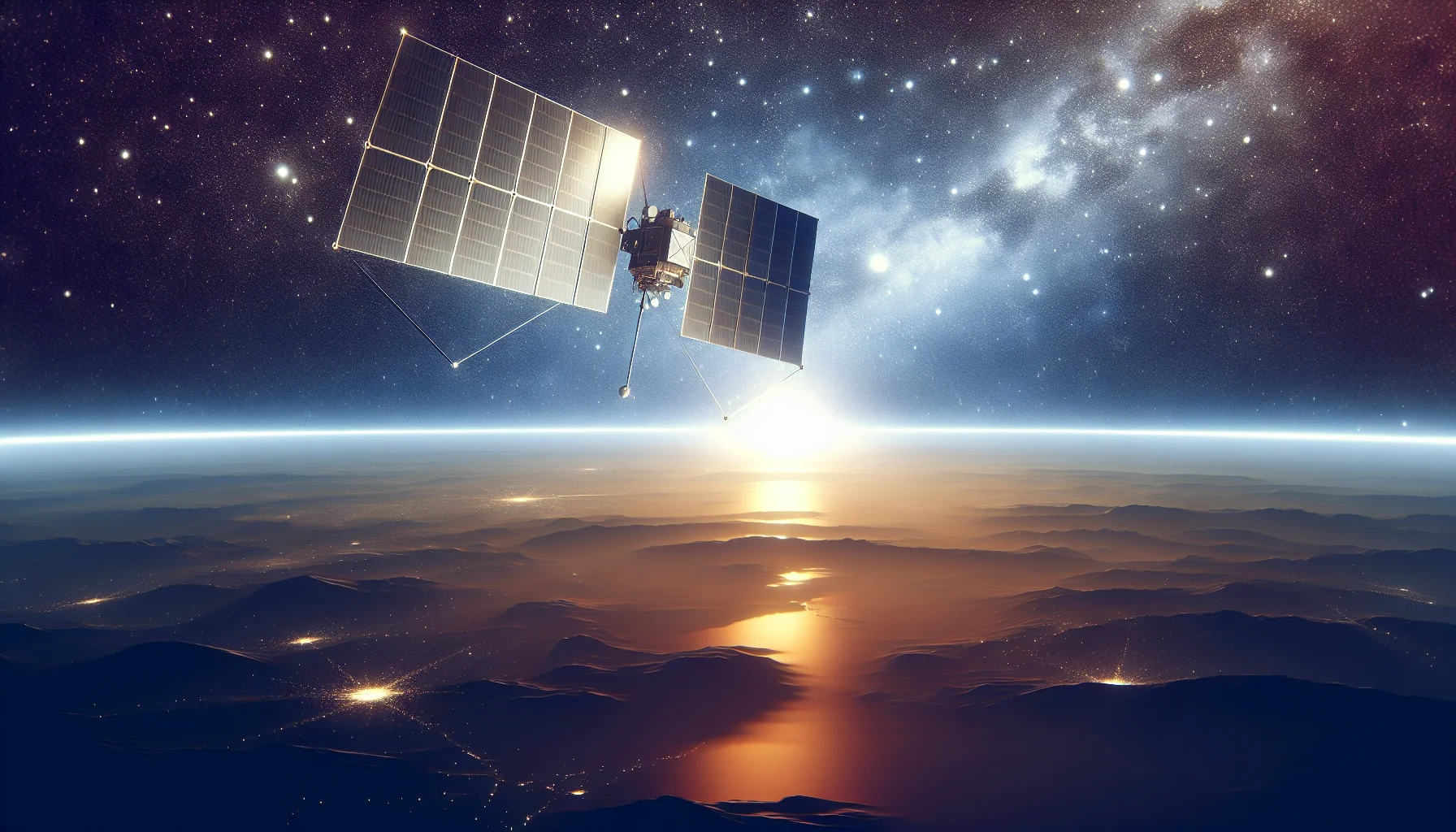
Satellites equipped with solar sails could significantly improve space weather forecasting, offering early warnings for events like geomagnetic storms that can damage critical infrastructure on Earth. Solar sails, which use sunlight for propulsion, are being explored as a more cost-effective and efficient alternative to traditional propulsion systems. Researchers believe that these sails could enhance the monitoring of solar activity, providing quicker and more accurate alerts for space weather events that affect power grids, satellite operations, GPS systems, and even air traffic. Unlike current space weather forecasting systems, which rely on fixed observation points, solar sail technology could offer more flexible positioning for improved data collection.

The potential for solar sail-equipped satellites to revolutionize space weather forecasting lies in their ability to travel beyond traditional locations in space. As reported by Space.com, solar sails could allow spacecraft to venture past the Earth-sun Lagrange Point One (L1), a stable region approximately 1.5 million kilometers from Earth where most solar observation satellites are currently stationed. The National Oceanic and Atmospheric Administration’s (NOAA) Office of Space Weather Observations, which manages these satellite systems, recognizes the advantages of solar sail technology in expanding the range and flexibility of space weather monitoring.

Irfan Azeem, Division Chief at NOAA’s Research to Operations and Project Planning Division, highlighted the key benefit of solar sails in improving space weather forecasts. Solar sails can enable satellites to travel upstream of L1, allowing them to gather data more efficiently than traditional chemical propulsion systems. This improvement in satellite movement would result in faster retrieval of data and the potential to increase the lead time for geomagnetic storm alerts by up to 50 percent, giving industries and agencies more time to prepare for potential disruptions.

As space weather events become an increasing concern due to their potential impact on modern technology, the development of solar sail technology for satellites represents a significant leap forward in our ability to predict and respond to these phenomena. By providing more precise and timely alerts, solar sail-powered satellites could help mitigate risks and safeguard Earth’s technological infrastructure from the damaging effects of space weather.