Yazılar

Artemis IV Powered by NASA’s SLS Block 1B: Greater Payload, Greater Potential

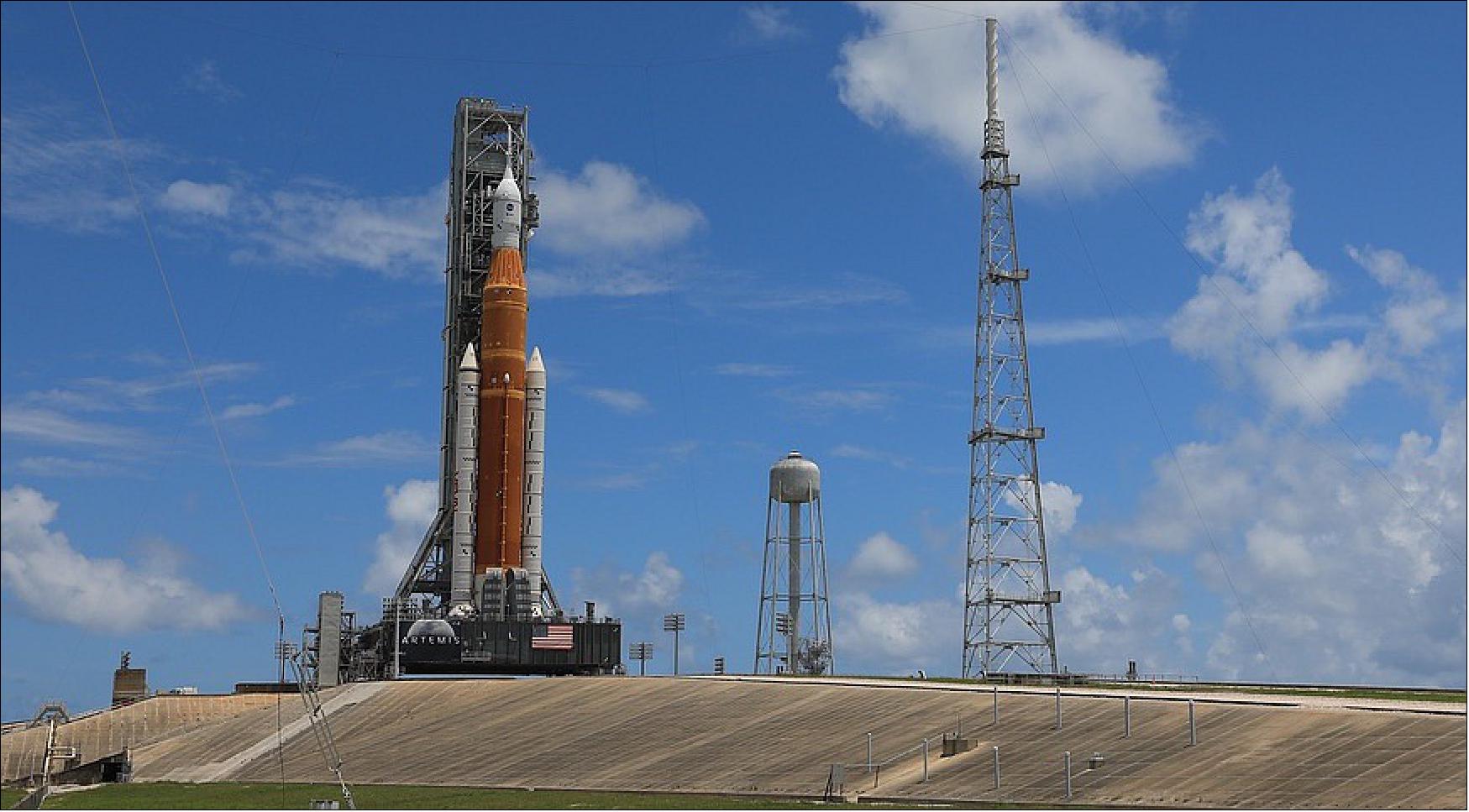
NASA’s Artemis program continues to push the boundaries of deep space exploration, with the upcoming Artemis IV mission set to introduce a significant upgrade to the Space Launch System (SLS). This mission will mark the debut of the SLS Block 1B variant, featuring the powerful Exploration Upper Stage (EUS). The enhanced design significantly increases payload capacity, making it possible to transport heavier and more complex components, such as the Orion spacecraft and the European Space Agency’s Lunar I-Hab module. These advancements are crucial for the Gateway lunar space station, a key element in sustaining long-term human presence on the Moon and beyond.

Advanced Structural Design for Payload Integration

A critical component of the SLS Block 1B is the payload adapter, an essential structure developed at NASA’s Marshall Space Flight Center in Huntsville, Alabama. This adapter facilitates the secure attachment of diverse payloads to the rocket and has undergone extensive innovation to optimize efficiency. Constructed from eight composite panels reinforced with an aluminum honeycomb core and supported by aluminum rings, the adapter is both lightweight and strong. To ensure precise assembly, engineers have employed structured light scanning technology, which eliminates the need for traditional, expensive tooling methods.

Cost-Effective and Adaptive Engineering

NASA has highlighted the advantages of the structured light scanning technique, which significantly reduces manufacturing costs while improving flexibility. This method allows for quick adjustments to the adapter’s dimensions based on mission requirements. According to Brent Gaddes, Lead for the Orion Stage Adapter and Payload Adapter at NASA Marshall, the technology enables rapid design modifications without the need for extensive retooling. This adaptability ensures that the SLS Block 1B can accommodate a wide range of payload sizes, making it a versatile launch system for future deep space missions.

A Step Forward for Lunar Exploration

With its increased payload capacity and adaptable engineering, the SLS Block 1B is set to play a crucial role in the Artemis IV mission and beyond. The successful deployment of this upgraded rocket variant will lay the foundation for more ambitious lunar and deep space missions, bringing NASA closer to its long-term goal of sustained human presence on the Moon and eventual crewed missions to Mars. As Artemis IV takes shape, it represents a major milestone in space exploration, demonstrating the power of innovation and international collaboration in pushing the boundaries of human spaceflight.

Unusual Radiation Belts Formed by May 2024 Solar Storm Spark Space Safety Concerns

A powerful solar storm in May 2024 led to the formation of two temporary radiation belts around Earth, a phenomenon confirmed through satellite observations. The discovery was made when a previously dormant satellite unexpectedly resumed operations, revealing new data about the storm’s impact. This geomagnetic event, one of the most intense since 1989, triggered widespread auroras and injected high-energy particles into Earth’s magnetosphere. While temporary radiation belts have been observed in the past, scientists found that one of the newly formed belts had a unique composition, differing from previous occurrences. Although one of these radiation belts has since dissipated, the other remains, raising concerns for future space missions.

According to findings published in the Journal of Geophysical Research: Space Physics, the Colorado Inner Radiation Belt Experiment (CIRBE) satellite played a crucial role in detecting the anomaly. The satellite, which had experienced a technical failure in April and was unresponsive during the peak of the storm, reactivated in June 2024. Upon analyzing the data, researchers identified two additional radiation belts positioned between the existing Van Allen belts. These temporary belts indicate how extreme solar activity can reshape Earth’s radiation environment, with potential long-term consequences.

Further analysis showed that the first of the two new belts contained high-energy electrons, a characteristic typical of storm-induced radiation belts. However, the second belt exhibited an unusual concentration of high-energy protons, a rare occurrence linked to the storm’s exceptional intensity. The solar event had released an immense stream of charged particles, which became trapped within Earth’s magnetic field. This unexpected proton-rich belt challenges existing models of space weather and suggests that extreme solar activity could create more complex and hazardous radiation environments than previously understood.

With one belt still present in Earth’s magnetosphere, scientists are closely monitoring its effects on satellites and crewed space missions. The presence of additional radiation belts can increase the risk of damage to spacecraft electronics and pose health risks to astronauts. As solar activity continues to intensify with the current solar cycle, researchers emphasize the importance of improved space weather monitoring and protective measures for future deep-space exploration.

Star and Its Planet May Be Speeding Through the Galaxy at Unprecedented Velocity

A newly discovered exoplanet system could be setting a record for speed, traveling at a staggering 1.2 million miles per hour (540 kilometers per second). This potential record-breaker involves a low-mass star and a planet in orbit, both of which appear to be racing through the Milky Way at an incredible velocity. If confirmed, this discovery would be the first known instance of a planet orbiting a hypervelocity star, with the system moving nearly twice as fast as our own solar system does as it traverses the galaxy. This high-speed movement presents a fascinating new avenue for studying how celestial bodies interact under extreme conditions.

The system was first detected through microlensing, a technique that has proven to be a valuable tool in identifying distant objects in space. Researchers utilized data from the Microlensing Observations in Astrophysics (MOA) project, which recorded a significant lensing event in 2011. Microlensing occurs when the gravitational field of a massive object bends the light from a background star, allowing scientists to detect objects that would otherwise be invisible. Through this method, they were able to infer the presence of two celestial bodies in the system, with a mass ratio of approximately 2,300 to 1. Despite these calculations, the exact masses of the star and planet remain uncertain due to the unknown distance of the system from Earth.

David Bennett, Senior Research Scientist at the University of Maryland and NASA’s Goddard Space Flight Center, explained that while the mass ratio between the two objects is relatively straightforward to determine, calculating their actual masses requires additional observations. The initial analysis suggested two possible scenarios for the system’s composition. In one scenario, the star could have around 20 percent of the Sun’s mass, with a planet that has a mass roughly 29 times that of Earth. Alternatively, the system could consist of a rogue planet that is about four times the mass of Jupiter, accompanied by a smaller moon.

This discovery is significant not only because of the speed at which the system is traveling but also because of the potential implications for our understanding of planetary systems. If this system does indeed feature a planet orbiting a hypervelocity star, it would challenge many current assumptions about how such systems form and evolve. Further research and observations will be necessary to fully understand the dynamics of this high-speed system, but for now, it remains one of the most exciting discoveries in the field of astrophysics.