Yazılar

NASA Restores Contact with Voyager 1, But Its Power Supply is Dwindling

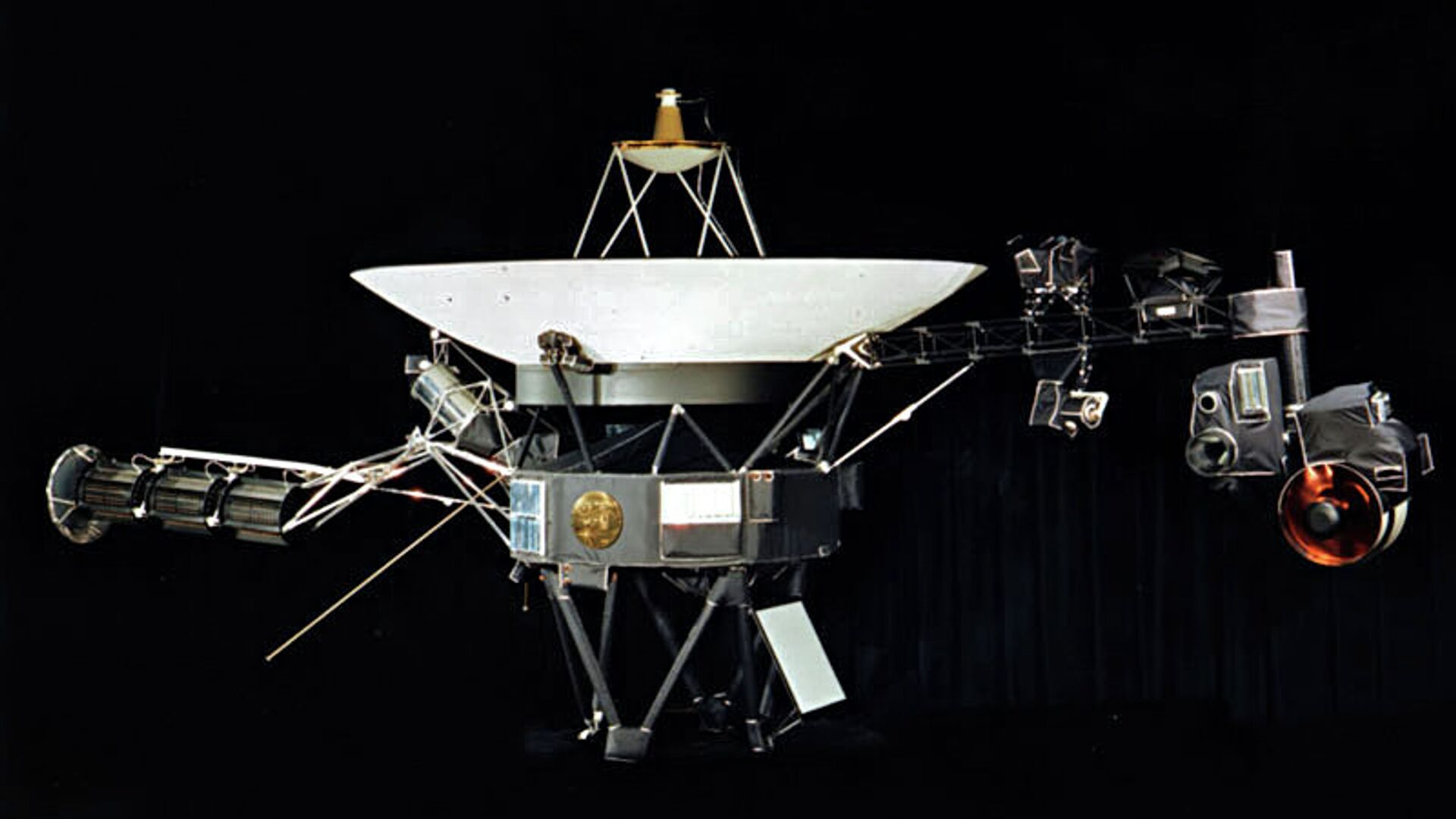
NASA engineers have successfully re-established contact with Voyager 1, which is currently located 15.4 billion miles (24.9 billion kilometers) from Earth, marking a crucial recovery after weeks of communication blackout. The issue began in October when Voyager 1 switched from its primary X-band radio transmitter to a weaker S-band transmitter due to a power shortage. This change, prompted by a command to activate a heater, led to difficulties in receiving data from the spacecraft.

The autonomous transmitter switch caused nearly a month of silence, but NASA engineers managed to restore the X-band transmitter in early November. The spacecraft is now operating normally, resuming its scientific observations and data transmission.

Voyager 1, launched in 1977 as part of NASA’s mission to explore the outer planets, has far outlived its original mission. Now in interstellar space, it continues to send valuable data despite a steadily decreasing power supply. The spacecraft’s plutonium-powered thermoelectric generators lose about 4 watts of power annually, equivalent to the energy used by a small light bulb. This gradual power decline has led the mission team to turn off non-essential systems over the years, ensuring the remaining instruments can continue to operate for as long as possible.

However, challenges persist. The spacecraft’s power situation is increasingly uncertain, as seen when the fault protection system was triggered by the heater command. This issue highlights the limitations of the spacecraft’s power models and suggests that the probe’s ability to maintain its current operations is becoming more precarious.

Despite these hurdles, the Voyager mission team remains determined to keep the spacecraft functioning as long as possible. Both Voyager 1 and its twin, Voyager 2, have far exceeded their expected lifespans, providing unprecedented data from the distant reaches of our solar system and beyond.

Currently, only four instruments remain operational on each probe, studying plasma, magnetic fields, and particles in interstellar space. These observations offer invaluable insights into an uncharted region of space, and while the loss of some science data during the transmitter outage is regrettable, the mission team is more focused on extending the operational life of these instruments.

As Voyager 1 continues its journey into the unknown, the mission team is working to make the most of every remaining watt of power. With each passing year, they are faced with tough decisions on which systems to keep running, as the spacecraft edges closer to the end of its mission.
 

Nasa Unveils AI-Driven Computational Tools to Enhance Scientific Research at SC24 Conference

At the Supercomputing Conference SC24, NASA’s Associate Administrator for the Science Mission Directorate, Nicola Fox, introduced groundbreaking new computational tools designed to push the boundaries of space science. NASA is focusing on integrating artificial intelligence (AI) and large language models into its science divisions, with specialized foundation models for fields including Earth science, heliophysics, astrophysics, planetary science, and biological and physical sciences. One of the key examples presented was a heliophysics foundation model that leverages extensive data from NASA’s Solar Dynamics Observatory, enabling the prediction of solar wind events and the tracking of sunspot activity.

Expanding the Horizons of Space Computing

Fox highlighted the rapid evolution of space computing, drawing a direct line from NASA’s early missions to today’s advanced capabilities. She reflected on the Voyager spacecraft, which were launched in the 1970s and became icons of early space exploration. Despite using basic semiconductor memory, the Voyager missions delivered groundbreaking discoveries, such as identifying Jupiter’s faint ring and adding new moons to Saturn’s known count. These early missions, while technologically modest by today’s standards, demonstrated the potential for future advancements in computational science, laying the groundwork for more sophisticated research tools.

Leveraging Big Data in Modern Space Missions

As space exploration has advanced, so too have the demands for data storage and processing. NASA’s computational infrastructure now handles over 140 petabytes of data, a staggering amount that allows the agency to make vast amounts of research accessible to the global scientific community. Fox emphasized the importance of NASA’s open science policies, which ensure that this data is shared with researchers around the world, fostering collaboration and accelerating scientific discovery. These data-sharing practices exemplify NASA’s commitment to global innovation, ensuring that its findings contribute to a broader understanding of the universe.

Future of AI and Space Science

Looking forward, NASA is poised to continue harnessing AI and advanced computational techniques to enhance its research efforts. The integration of large language models and AI-driven tools represents a leap forward in how the agency will process and analyze complex data sets, aiding in everything from solar wind predictions to understanding distant galaxies. These technological advancements not only promise to improve space exploration but also offer valuable lessons for AI applications in other scientific disciplines. As NASA continues to innovate at the intersection of space exploration and computational science, the future holds exciting possibilities for both discovery and collaboration on a global scale

NASA’s Viking Mission Could Have Eradicated Martian Life During Water Experiments

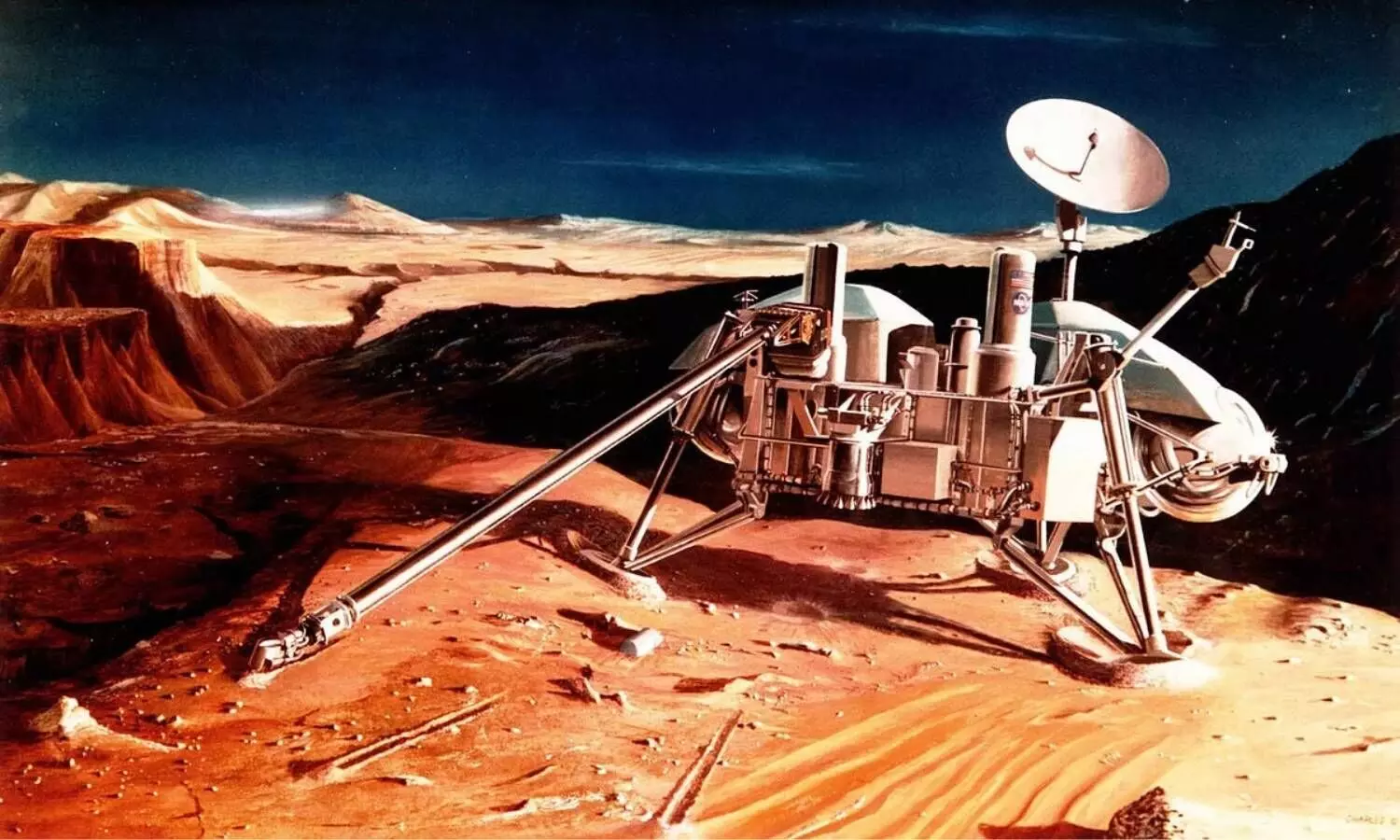
In 1975, NASA’s Viking program made a groundbreaking achievement when its twin landers successfully touched down on Mars, marking the first American spacecraft to reach the Martian surface. These missions were pivotal in the search for life beyond Earth, as the landers conducted a series of experiments aimed at detecting microbial life on the Red Planet. Over six years, the Viking landers analyzed Martian soil samples, attempting to uncover any signs of life. However, a new and controversial theory suggests that the very experiments designed to detect life may have inadvertently destroyed any potential Martian microbes.

Dirk Schulze-Makuch, an astrobiologist from Technische Universität Berlin, has raised concerns about the methods used during the Viking missions. In a recent commentary in Nature Astronomy, he proposed that the addition of liquid water to Martian soil samples may have been too disruptive for any microbes that might have existed. Mars is known for its extreme dryness, more arid than Earth’s Atacama Desert, and it is hypothesized that any potential life forms on the planet would be specially adapted to extract moisture from salts in the atmosphere. Introducing liquid water, Schulze-Makuch suggests, could have overwhelmed these microbes, leading to their destruction rather than detection.

The Viking program’s assumption that Martian life would require liquid water, similar to life on Earth, may have been a key flaw in its approach. The experiments involved adding water and nutrients to Martian soil and monitoring any metabolic reactions, hoping to find evidence of living organisms. While some initial signs of microbial activity were detected, these results were later dismissed as inconclusive. Schulze-Makuch argues that these reactions could have been evidence of life forms adapted to Mars’ extremely dry environment, but the addition of liquid water may have killed them before they could be properly studied.

To avoid repeating this mistake in future missions, Schulze-Makuch advocates for a different approach to life detection on Mars. Instead of focusing on the presence of liquid water, he proposes a “follow the salts” strategy. This would involve searching for organisms that might thrive in environments where moisture is absorbed from salt compounds, potentially offering a more accurate method of detecting life in Mars’ harsh conditions. By rethinking how we search for life, we may be better prepared to recognize the signs of Martian organisms that have adapted to survive in a radically different environment from Earth.