Yazılar

Hubble Detects Size and Speed Changes in Jupiter’s Great Red Spot

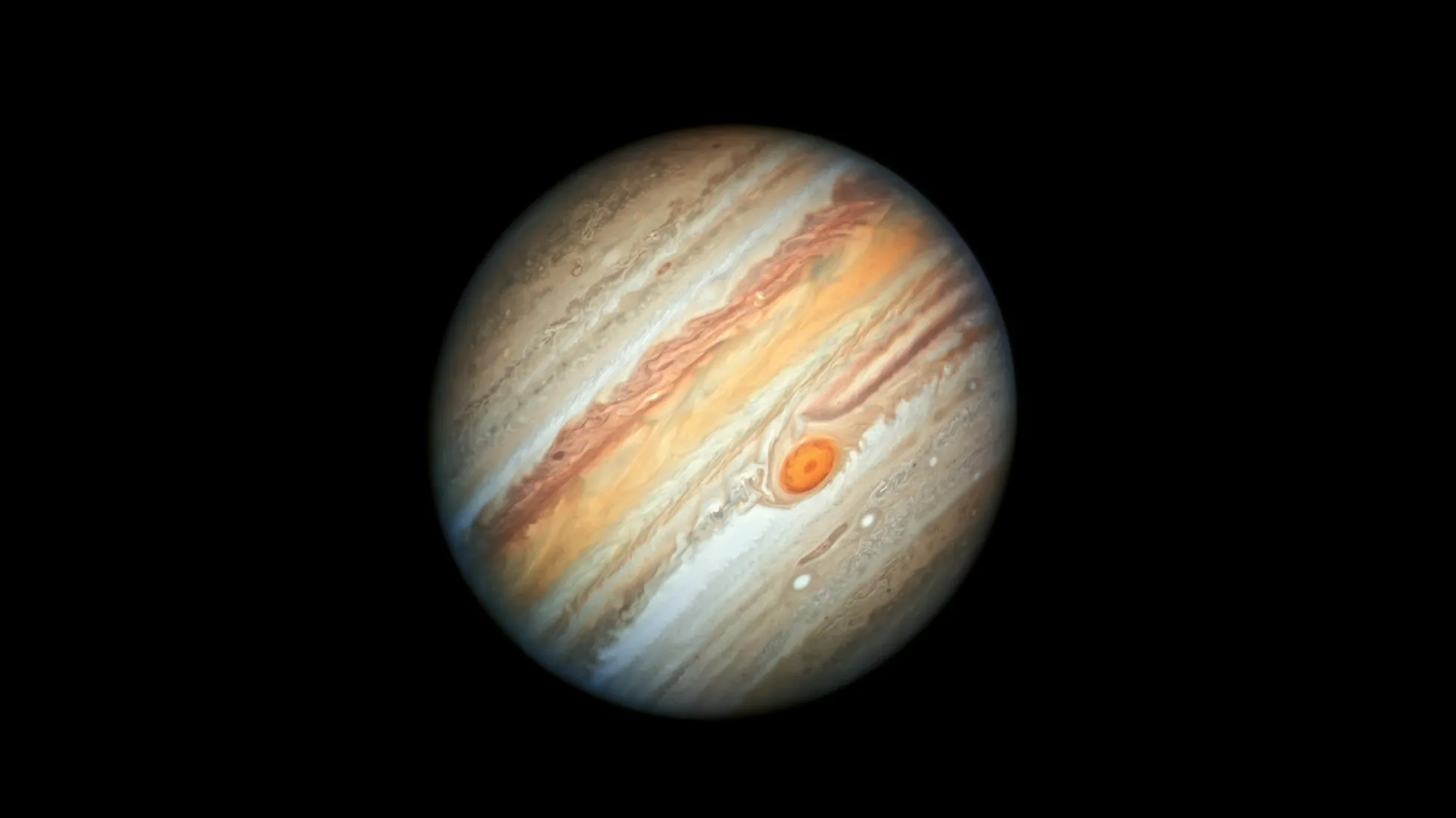
NASA’s Hubble Space Telescope has recently observed unprecedented behavior in Jupiter’s Great Red Spot (GRS), a massive storm system that has raged for centuries. Spanning a size large enough to engulf Earth, the Great Red Spot has drawn attention for its dynamic nature, but never before have scientists documented the storm exhibiting this “jiggling” effect. The oscillations in its size and fluctuations in speed are unlike any changes previously recorded, leaving astronomers both puzzled and intrigued. As the Hubble Telescope captured these unusual shifts, questions have arisen about the potential causes behind this newfound instability.

The Great Red Spot’s surprising movement comes as a major revelation in planetary science. Despite its gradual shrinking over the past decade, recent data reveal unpredictable expansions and contractions that diverge from its historical patterns. A team of astronomers, led by Amy Simon from NASA’s Goddard Space Flight Center, published these findings in The Planetary Science Journal, marking a groundbreaking moment for those studying Jupiter’s atmospheric dynamics. Simon expressed the team’s amazement, noting that while scientists have previously observed slight changes in the storm’s positioning, this ongoing “jiggle” is a completely unexpected development.

In addition to size oscillations, the Great Red Spot is now varying in speed—a feature newly documented through Hubble’s advanced imaging capabilities. According to the team’s analysis, the storm’s changes in velocity could point to fluctuations in Jupiter’s atmospheric conditions, though the exact mechanisms remain unclear. By closely examining the storm’s behavior through the telescope, researchers hope to uncover insights into the atmospheric dynamics at play, which may be driven by factors beyond Jupiter’s traditionally observed forces.

With these findings, astronomers are now exploring theories that could explain this puzzling transformation. One possibility under consideration is that internal atmospheric forces may be causing a disturbance in the storm’s structure. This unanticipated phenomenon highlights the complexity of planetary weather systems and reminds scientists of the vast unknowns within our solar system. As the study continues, further observations may provide clues to help explain the Great Red Spot’s new and mysterious behavior, potentially advancing our understanding of Jupiter’s volatile atmosphere.
NOAA Issues Severe Solar Storm Alert: Auroras Expected Across the U.S. with Potential Power Grid Disruptions

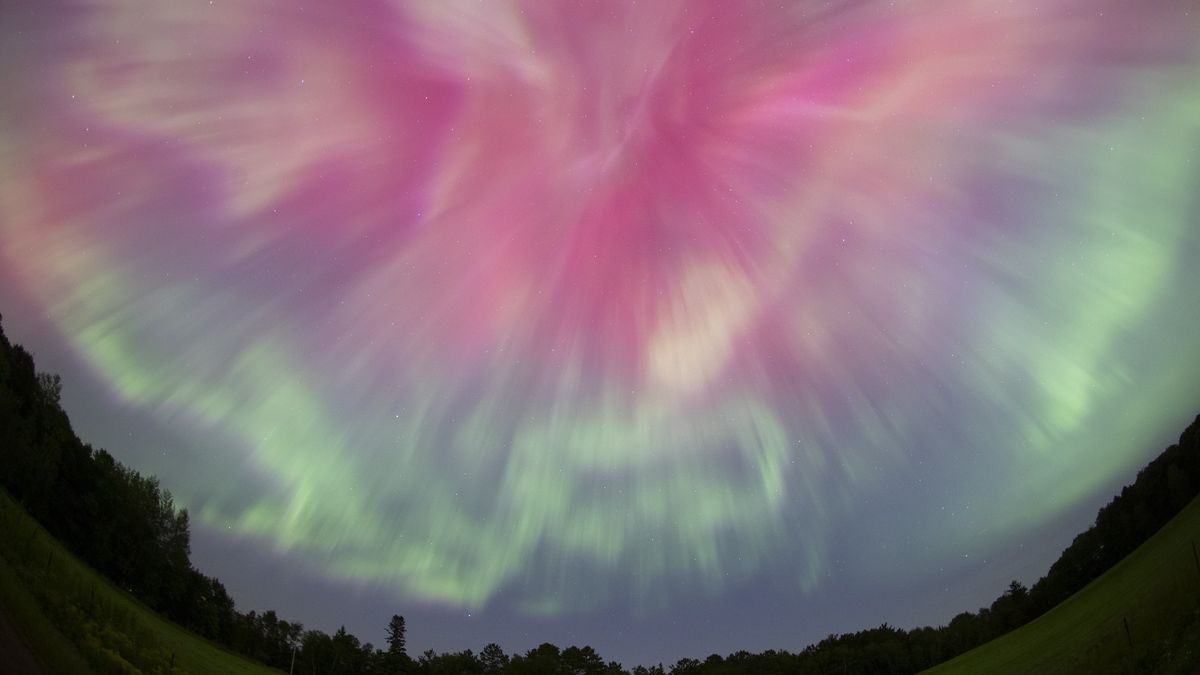
A significant solar storm is set to reach Earth on Thursday, October 10th, as predicted by the U.S. National Oceanic and Atmospheric Administration (NOAA). This geomagnetic event has the potential to create breathtaking auroras across various regions while also posing risks to radio communications, power grids, and satellite operations. The NOAA’s Space Weather Prediction Center (SWPC) has issued a G4-class geomagnetic storm warning, indicating that this storm is one of the strongest to be observed, following a similar event in May that captivated skywatchers with its vivid displays.

The upcoming solar storm is a result of a powerful solar flare classified as X1.8, which erupted from the sun during the night of October 8th. This flare was accompanied by a coronal mass ejection (CME), a massive burst of solar wind and magnetic fields rising above the solar corona. As the CME travels towards Earth, its magnetic field will interact with our planet’s magnetic field, leading to increased geomagnetic activity. Shawn Dahl, a service coordinator at the SWPC, noted that the extent of the storm’s impact will largely depend on the alignment of the CME’s magnetic field with that of Earth. A direct alignment could result in a more intense storm, while a misalignment might reduce the storm’s overall effects.

In addition to the stunning visual effects expected in the night sky, this solar storm poses potential challenges for various technologies. Radio communications, particularly those relying on high-frequency bands, may experience disruptions, impacting aviation and maritime operations. Furthermore, the storm could lead to voltage fluctuations in power grids, prompting utility companies to prepare for possible impacts. The heightened geomagnetic activity might also affect satellites in orbit, potentially leading to signal degradation and operational challenges.

As the solar storm approaches, scientists and enthusiasts alike are preparing for the opportunity to witness the natural beauty of the auroras. The NOAA advises skywatchers to find locations away from city lights for the best viewing conditions. While the storm may bring awe-inspiring visuals, awareness of its potential impacts on technology and infrastructure remains crucial. With advancements in forecasting, experts will continue to monitor the storm’s progress and provide updates, ensuring that communities and industries can adequately prepare for the effects of this powerful solar event.

NASA’s Hubble and New Horizons Team Up to Enhance Understanding of Uranus and Exoplanets

NASA’s Hubble Space Telescope and the New Horizons spacecraft have recently collaborated to explore Uranus, a planet renowned for its enigmatic atmosphere and striking features. Positioned in low-Earth orbit, Hubble was able to capture intricate images of Uranus, revealing details about its clouds and storm patterns. In contrast, New Horizons, situated approximately 6.5 billion miles away, provided a more distant perspective, showing Uranus as a mere dot against the vast backdrop of space. This joint effort not only enhances our understanding of Uranus but also serves as a vital reference point for astronomers studying exoplanets orbiting other stars.

The collaboration between Hubble and New Horizons is particularly significant for exoplanet imaging. According to lead author Samantha Hasler from the Massachusetts Institute of Technology, this partnership acts as a practical test case for observing exoplanets at considerable distances. By comparing Hubble’s detailed observations with New Horizons’ broad view, researchers can better understand how gas giants like Uranus would appear from light-years away. This understanding is crucial as astronomers strive to detect and characterize exoplanets that share similar traits to those found within our own solar system.

One of the noteworthy discoveries from this mission was that Uranus appeared dimmer than anticipated based on New Horizons’ observations. This finding has important implications for our understanding of light reflection on planetary atmospheres at various angles. By clarifying how light interacts with Uranus, scientists gain insights that are directly applicable to future missions, such as NASA’s Nancy Grace Roman Space Telescope and the Habitable Worlds Observatory. Both of these upcoming projects are designed to focus on exoplanets and their atmospheric characteristics, making this research especially timely and relevant.

As astronomers continue to analyze the data collected from this collaboration, they are paving the way for future exploration of not only Uranus but also other distant worlds beyond our solar system. Alan Stern, Principal Investigator for New Horizons at the Southwest Research Institute, emphasized the significance of these findings in understanding planetary atmospheres and preparing for missions aimed at identifying potentially habitable worlds. This collaboration between Hubble and New Horizons exemplifies how teamwork and technology in space exploration can yield valuable knowledge, enhancing our understanding of the universe and its myriad celestial bodies