Yazılar

NASA Astronaut Captures Stunning Timelapse of Auroras from the International Space Station

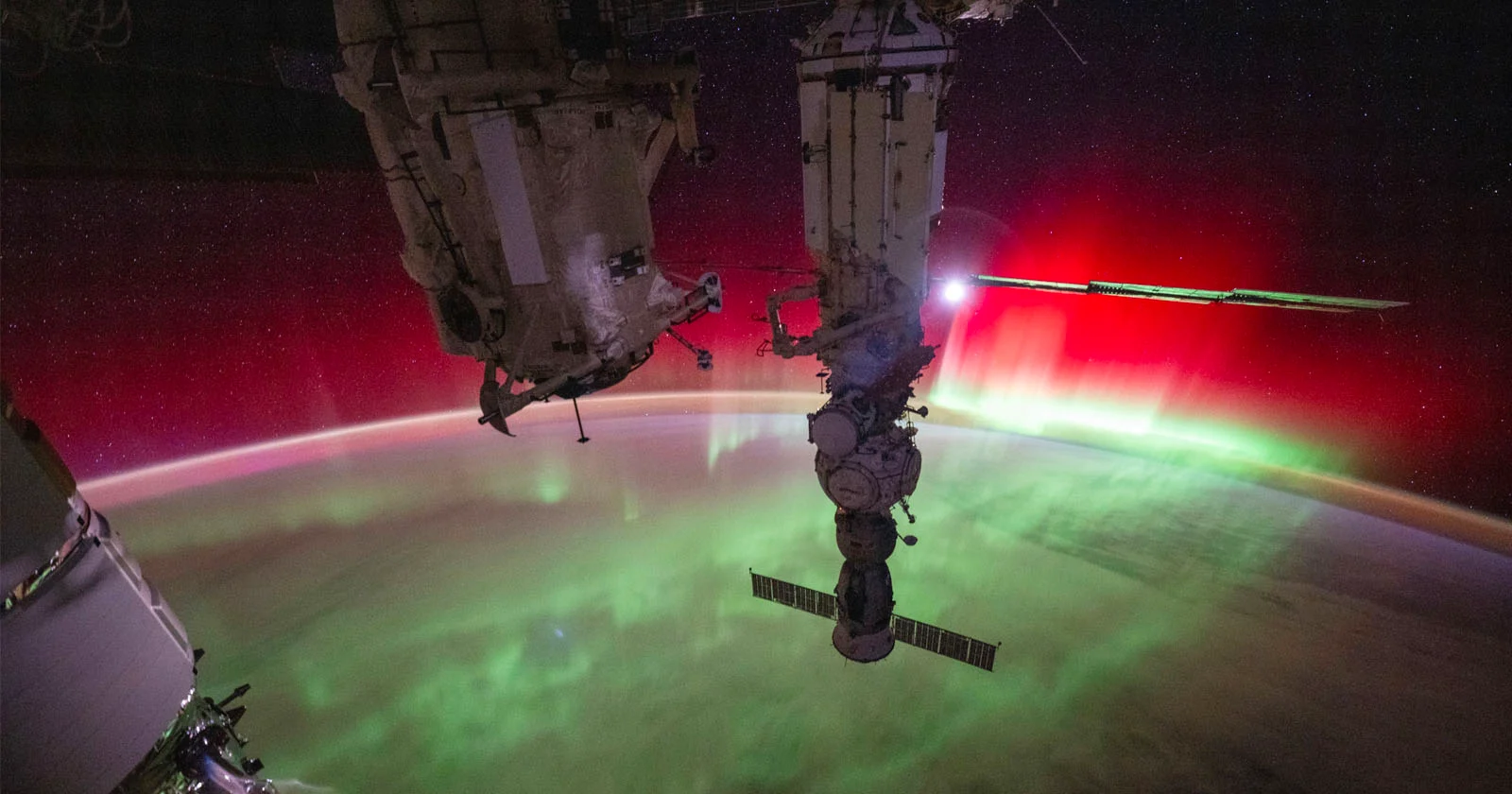
NASA astronaut Matthew Dominick recently unveiled a stunning timelapse video showcasing the vibrant red and green auroras captured from the Dragon Endeavor spacecraft. The footage, recorded on October 8 while orbiting Earth, highlights the breathtaking natural light displays, known as auroras, that result from the interaction between solar activity and the Earth’s atmosphere. These phenomena create mesmerizing visuals visible both from the ground and space, and Dominick’s video offers a unique perspective from high above.

The auroras were filmed through the window of Dragon Endeavor, which was docked near the International Space Station (ISS) at the time. In his post, Dominick noted that the captivating display was further enhanced by the presence of the Dragon Freedom spacecraft in view. The interplay of colors seemed to dance across the sky as he observed from his unique vantage point. “Red and green auroras appear to dance as we fly by Dragon Endeavour’s window with Dragon Freedom in view,” he remarked, emphasizing the surreal quality of the experience. The recent uptick in solar activity contributed to the intensity of the auroras, making the sight even more spectacular.

In addition to sharing the breathtaking auroras, Dominick provided insights into his life aboard the Dragon Endeavor. Since the arrival of Crew-9, he transitioned from his quarters on the ISS to the Dragon Endeavor, which has become his temporary home. He described the living conditions and daily routines aboard the spacecraft, emphasizing the significance of witnessing the auroras during this time. Dominick reflected that the extraordinary visuals made it easy to decide to stay docked longer; undocking earlier would have meant missing out on the once-in-a-lifetime opportunity to witness such an awe-inspiring display.

The timelapse has generated excitement and admiration among space enthusiasts and the general public alike, sparking interest in the science behind auroras and space exploration. As astronauts continue to share their experiences from orbit, viewers are given a rare glimpse into the beauty of our planet from above, fostering a greater appreciation for Earth’s atmosphere and the wonders of the cosmos. Dominick’s footage not only showcases the beauty of auroras but also serves as a reminder of the incredible advancements in space travel and the ongoing exploration of our universe.
SpaceX Crew-8 Astronauts Evaluated at Medical Facility After Splashdown

In an unexpected turn of events, the astronauts from SpaceX’s Crew-8 mission were taken to a medical facility in Florida following their splashdown on Friday morning, instead of returning directly to their base in Houston, Texas. This decision, made by NASA, was described as a precautionary measure.

Splashdown and Immediate Aftermath

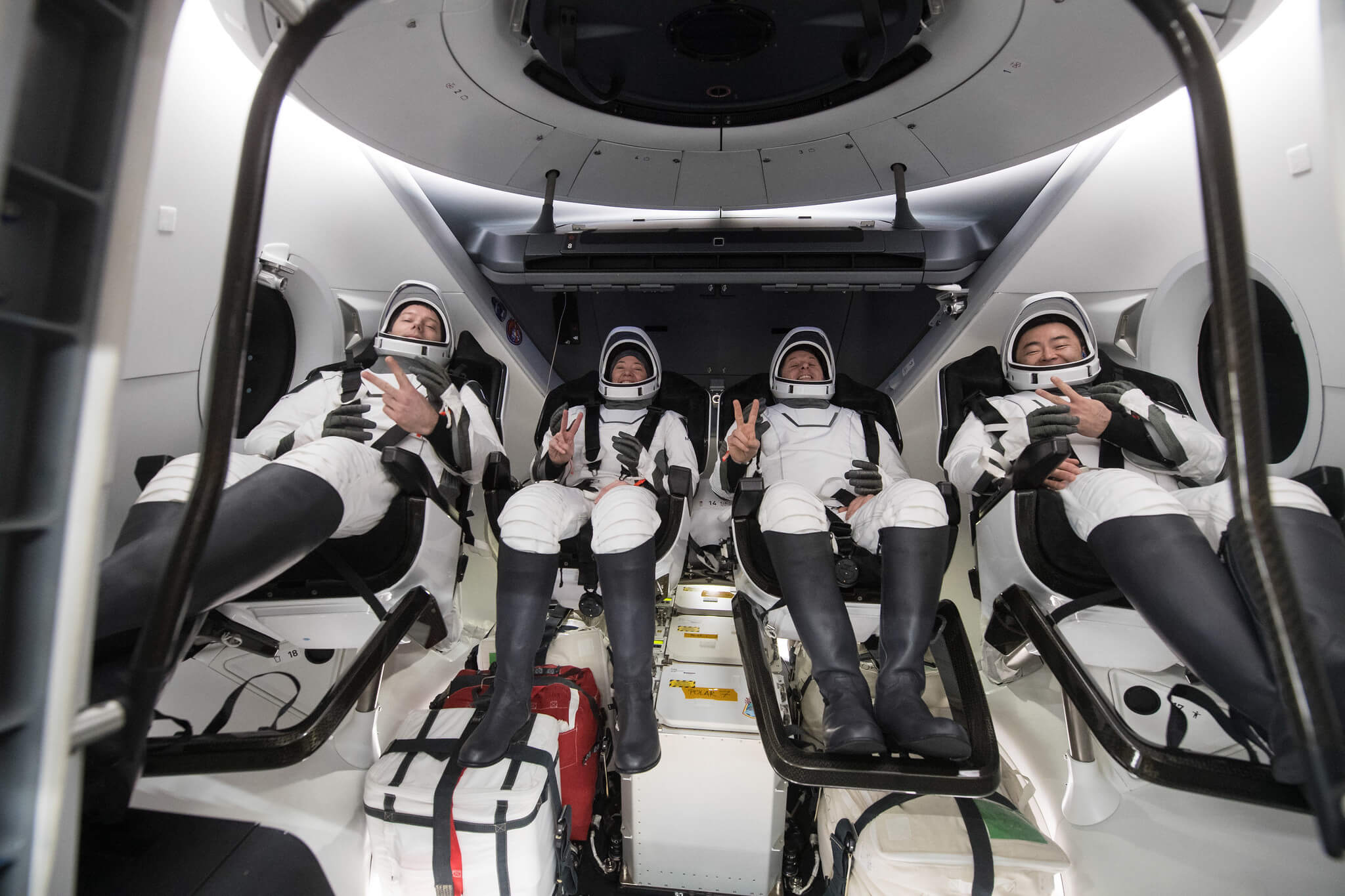
The Crew-8 team, consisting of three NASA astronauts—Matthew Dominick, Michael Barratt, and Jeanette Epps—along with Russian cosmonaut Alexander Grebenkin, successfully landed in the Gulf of Mexico at 3:29 a.m. ET after spending nearly eight months aboard the International Space Station (ISS). NASA reported that the crew had a “safe splashdown and recovery.”

Cheryl Warner, NASA’s news chief, confirmed in a statement at 8 a.m. ET that the crew was evaluated at a local medical facility. “The crew exited the Dragon spacecraft onto a recovery ship for standard post-flight medical evaluations,” she explained. “Out of an abundance of caution, all crew members were flown to the facility together.”

Details on Medical Evaluations

The astronauts were taken to Ascension Sacred Heart Pensacola, a hospital located near their splashdown site. While they remained at the facility, NASA officials did not specify the nature of the medical checks. Warner noted that the crew was still undergoing evaluations by 9 a.m. ET but assured that there were no initial reports of medical issues during a pre-dawn news briefing.

At a 5 a.m. ET briefing, Richard Jones, NASA’s deputy manager for the Commercial Crew Program, stated that the crew was doing well and undergoing routine medical assessments. “They’ll soon be on their way back to Houston after all of those are done,” he added.

Extended Mission and Return Challenges

Crew-8’s mission was notable for its length, marking the longest duration in space for a U.S. crewed vehicle at 235 days. The crew launched into space on March 4, and their extended stay on the ISS was due to a series of delays related to the Boeing Starliner spacecraft, which was grounded due to safety concerns. As a result, NASA opted to return the Starliner crew on a different mission, which subsequently postponed Crew-8’s homecoming.

Weather conditions also played a role in the delays, pushing Crew-8’s return into late October. As astronauts are usually in space for approximately five to seven months, this extended duration necessitated comprehensive post-mission medical evaluations.

Conclusion: A Cautious Return to Earth

The precautionary measures taken following Crew-8’s splashdown highlight the rigorous safety protocols in place for astronauts returning from extended missions. While the crew’s journey back to Houston has been delayed for medical evaluations, they are expected to return home soon, marking the conclusion of their historic mission.

NASA Chooses Two Innovative Astrophysics Missions for X-Ray and Far-Infrared Observations

NASA has officially selected two groundbreaking mission proposals focused on investigating X-ray and far-infrared wavelengths, marking a significant step in a new class of astrophysics missions. These initiatives are part of NASA’s Explorers Programme, each receiving an allocation of $5 million for a 12-month concept study. Following this study phase, a final decision on which mission to pursue will be made in 2026, with the selected mission expected to launch in 2032. This initiative reflects NASA’s commitment to expanding our understanding of the universe by exploring uncharted territories.

The primary goal of these missions is to delve deeper into regions of the universe that have remained largely unexplored. Nicola Fox, Associate Administrator for NASA’s Science Mission Directorate, highlighted the transformative potential of these missions, stating they align with the top priorities outlined in the Decadal Survey. This survey serves as a roadmap for the next decade of astrophysical research, emphasizing the importance of innovative missions in advancing our scientific objectives and facilitating groundbreaking discoveries.

One of the selected proposals is the Advanced X-ray Imaging Satellite, spearheaded by Principal Investigator Christopher Reynolds from the University of Maryland, College Park. This mission aims to investigate supermassive black holes and the phenomenon of stellar feedback, which plays a crucial role in galaxy evolution. By leveraging advanced imaging techniques and providing a wider field of view than previous X-ray observatories, this satellite is expected to enhance our understanding of the dynamic processes occurring in the cosmos.

In addition to the Advanced X-ray Imaging Satellite, the second mission concept will also focus on far-infrared observations, aiming to uncover new insights into the formation and evolution of galaxies, stars, and planetary systems. Both missions represent a collaborative effort among leading scientists and institutions, promising to push the boundaries of our knowledge and open new avenues for exploration in astrophysics. As the scientific community eagerly anticipates the results of the concept studies, the future of space exploration looks poised for exciting developments that could reshape our understanding of the universe.