Yazılar

OpenAI Awarded $200 Million U.S. Defense Contract for AI Development

OpenAI, the creator of ChatGPT, has secured a $200 million contract to develop advanced artificial intelligence tools for the U.S. Department of Defense, the Pentagon announced on Monday.

The contract involves creating prototype frontier AI capabilities aimed at tackling critical national security challenges across both warfighting and enterprise domains. The work will mainly take place in and around Washington, with an expected completion date set for July 2026.

OpenAI recently reported a surge in its annualized revenue run rate to $10 billion as of June, fueled by widespread AI adoption. Earlier this year, in March, OpenAI revealed plans to raise up to $40 billion in a funding round led by SoftBank Group, valuing the company at around $300 billion. The firm also reported having 500 million weekly active users by the end of March.

Separately, the White House’s Office of Management and Budget issued new guidance in April encouraging federal agencies to foster a competitive American AI marketplace, while exempting national security and defense systems from some regulations.
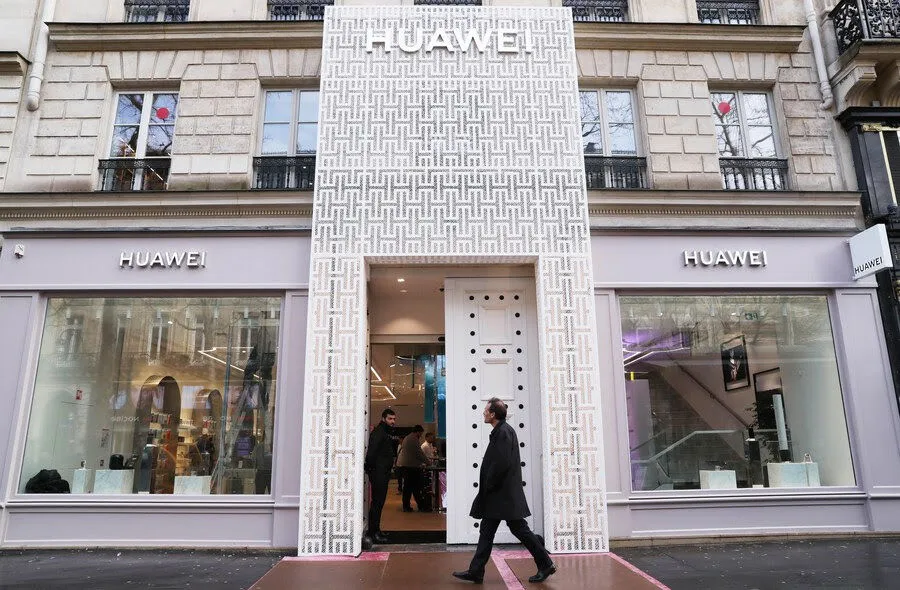
Taiwan Adds Huawei and SMIC to Strategic Export Control List Amid Security Concerns

Taiwan has placed China’s tech giants Huawei Technologies and Semiconductor Manufacturing International Corp (SMIC) on its export control list, requiring Taiwanese firms to obtain government approval before exporting any products to these companies.

The additions were part of a recent update to the Ministry of Economic Affairs’ trade administration strategic high-tech commodities entity list, announced on June 10. Alongside Huawei and SMIC, the update included 601 entities from countries such as Russia, Pakistan, Iran, Myanmar, and China, including groups like the Taliban and al Qaeda.

Taiwan’s trade administration stated the review and update were driven by “prevention of arms proliferation and other national security considerations.” It urged manufacturers to comply with export control regulations, fulfill verification obligations, and carefully assess transaction risks.

Taiwan is home to TSMC, the world’s largest contract chipmaker and a key supplier to AI leader Nvidia. Both Huawei and SMIC are pivotal to China’s ambitions in chips and artificial intelligence and have been striving to close the technology gap.

Taiwan already enforces strict chip export controls on Taiwanese companies that manufacture domestically or supply Chinese firms, reflecting ongoing tensions between Taipei and Beijing, which claims Taiwan as its territory.

Huawei is also subject to U.S. export restrictions barring access to American and foreign-made goods involving U.S. technology, including chips manufactured by TSMC. Last year, TSMC was ordered by the U.S. Commerce Department to halt shipments of certain chips to Chinese customers, including Huawei and Sophgo, a Chinese chip designer linked to Huawei’s AI processor.

Taiwan’s government has repeatedly pledged to combat Chinese efforts to steal technology and attract Taiwanese chip talent, emphasizing the strategic importance of the semiconductor sector.

SMIC, China’s largest chipmaker, continues to invest heavily to expand capacity amid U.S. export curbs, aiming to boost China’s domestic semiconductor capabilities.

White House Reviews SpaceX Contracts Amid Trump-Musk Feud

The White House has directed the Defense Department and NASA to review billions of dollars worth of contracts held by SpaceX following a public conflict between President Donald Trump and Elon Musk, sources told Reuters. This review aims to prepare the administration for potential retaliatory actions against Musk’s companies.

Pentagon officials are also weighing whether to reduce SpaceX’s involvement in a new U.S. missile defense system. Currently, SpaceX holds roughly $22 billion in federal contracts, but it is unclear if any cancellations are imminent.

The review stems from Trump’s recent threat to terminate business and subsidies for Musk ventures during their spat. When asked about Musk’s contracts, a White House spokesperson cited a commitment to a rigorous review process for all bids and contracts. NASA confirmed it will continue working with industry partners to meet presidential space objectives.

Sources describe the contract scrutiny as a political move intended to give the administration flexibility should Trump decide to act. Musk, who formerly served as a senior advisor to Trump and led the Department of Government Efficiency (DOGE), has been at odds with the president after publicly calling for his impeachment and linking him to a convicted sex offender.

Experts warn that politicizing such contracts risks undermining national security and public interest. Scott Amey, from the Project on Government Oversight, noted the irony of Musk’s contracts undergoing political scrutiny similar to what his DOGE team imposed on others. He emphasized that contract decisions should prioritize public and security interests over personal disputes.

SpaceX plays a vital role in U.S. aerospace and defense, launching satellites and cargo, and managing NASA’s Dragon spacecraft—the sole U.S. vehicle currently capable of ferrying astronauts to the International Space Station. The company also builds a classified network of spy satellites for the National Reconnaissance Office, strengthening its ties with U.S. defense and intelligence agencies.

Despite recent tensions, SpaceX remains a critical partner to the government, highlighting the complex balance between politics and strategic partnerships in national security.