US Researchers Uncover Likely Launch Site of Russia’s Controversial Nuclear-Powered Missile
/in Business/tarafından ayaksızTwo U.S. researchers have identified a probable deployment site for Russia’s new nuclear-powered missile, the 9M370 Burevestnik, also known as “Skyfall” by NATO. The missile, which boasts near-limitless range and the ability to evade U.S. missile defenses, has been touted by President Vladimir Putin as an “invincible” weapon. However, Western experts have expressed skepticism about its strategic value, citing both its limited advantages and potential safety risks.
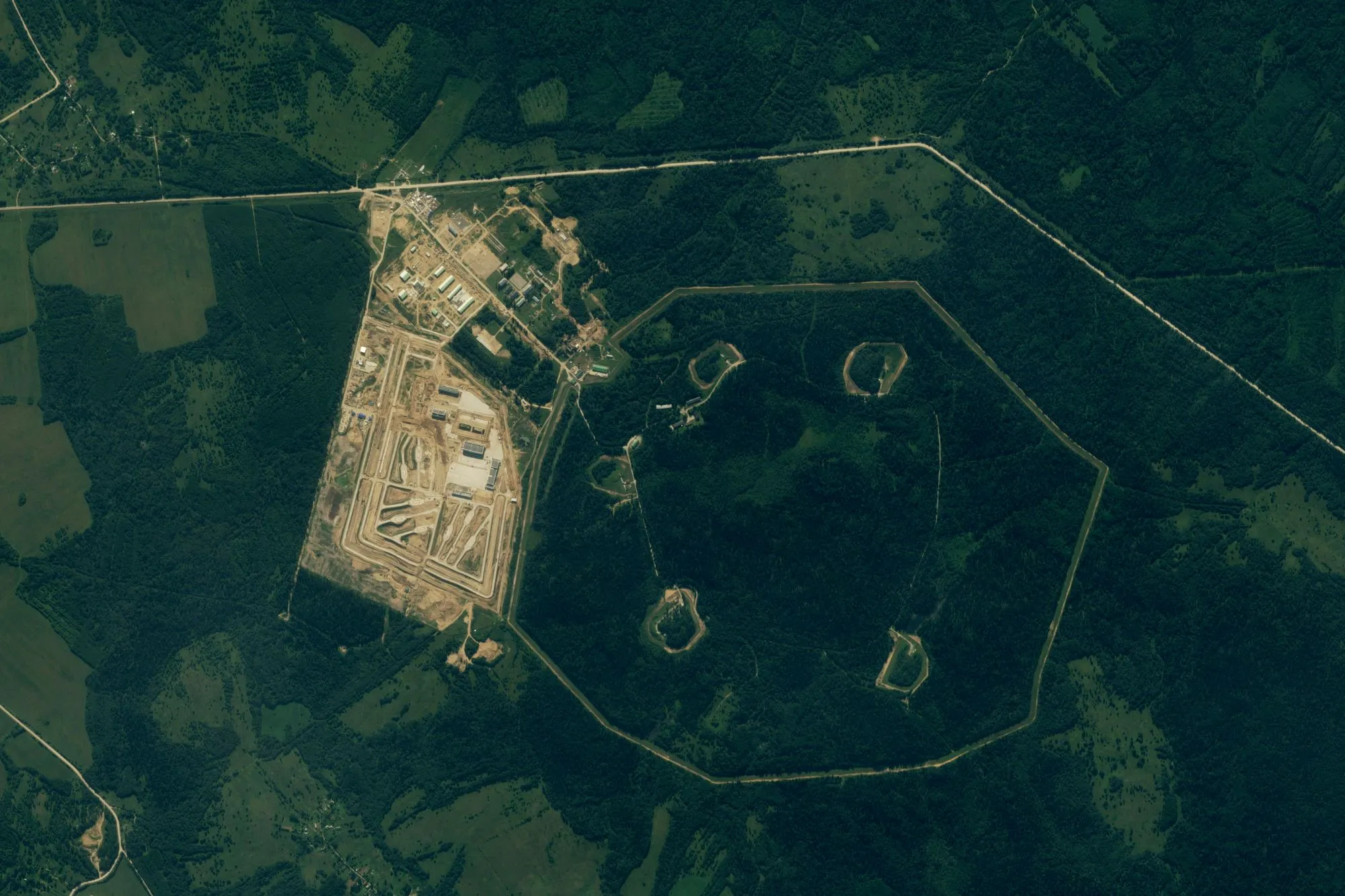
Satellite images taken by Planet Labs on July 26 have revealed a construction project near a nuclear warhead storage facility, Vologda-20, which researchers Decker Eveleth and Jeffery Lewis believe is the missile’s potential deployment site. The facility, located 295 miles north of Moscow, features nine horizontal launch pads, housed within berms for protection, with roads leading to nuclear storage bunkers. This configuration has led the researchers to conclude that Russia is advancing with its deployment of the missile despite a history of problematic test flights.
The missile’s poor performance record has raised doubts about its future. According to the Nuclear Threat Initiative, at least 13 tests since 2016 have only resulted in two partial successes. One of the most concerning failures occurred in 2019 when a nuclear reactor aboard a prototype exploded during recovery, leading to radioactive contamination in the White Sea. While Russia’s state nuclear agency Rosatom acknowledged the death of five engineers in the incident, Putin maintained that the weapon was unparalleled globally.
Despite its shortcomings, some experts believe the Burevestnik could be used as a political tool, enhancing Putin’s image as a strong leader and sending a message to Washington about the limitations of U.S. missile defenses. The missile’s development, which is not banned under the New START treaty, suggests that Russia is determined to expand its nuclear capabilities amidst deteriorating relations with the West, further escalating fears of a new arms race.
While some view the Burevestnik as a unique threat with its nuclear-powered engine capable of emitting radiation along its flight path, others argue it offers little strategic advantage over existing Russian capabilities. Experts like Cheryl Rofer, a former U.S. nuclear weapons scientist, have voiced concerns over its risks, describing the missile as a “flying Chernobyl” that poses more danger to Russia than its adversaries.
With the New START treaty set to expire in 2026, the deployment of the Burevestnik raises significant questions about future arms control efforts between the U.S. and Russia. Some analysts, like Pavel Podvig, speculate that Russia could use the missile as leverage in future negotiations, but with the ongoing war in Ukraine, the prospects for dialogue remain uncertain.
As tensions between Russia and the West continue to grow, the Burevestnik represents both a technological gamble and a potential bargaining chip in the high-stakes world of nuclear diplomacy.