Yazılar

UAE to Build World’s Largest AI Campus Outside U.S. Under Landmark Trump-Era Deal

The United Arab Emirates (UAE) and the United States have signed a historic technology agreement to construct the largest artificial intelligence campus outside the U.S., signaling a major policy shift that clears the way for the UAE to access advanced U.S. AI chips, particularly from Nvidia.

Finalized during President Donald Trump’s visit to Abu Dhabi, the deal marks a significant easing of restrictions that previously barred such transfers over U.S. concerns about China’s access to critical technologies.

Key Components of the Agreement:

  • The AI campus, covering 10 square miles (25.9 km²), will be located in Abu Dhabi and have 5 gigawatts of power, enough to support 2.5 million Nvidia B200 chips, per estimates by Rand Corporation analyst Lennart Heim.

  • The facility will be developed by G42, a UAE state-backed firm, but operated and managed by American companies, ensuring compliance with U.S. security protocols.

  • The UAE has committed to build or finance data centers in the U.S. that are at least as powerful as those in the UAE, reinforcing reciprocal investment and security alignment.

Chip Access and U.S. Industry Involvement:

  • Sources say the UAE could be permitted to import up to 500,000 of Nvidia’s most advanced chips annually beginning in 2025.

  • The agreement includes support from U.S. tech giants:

    • Amazon Web Services will collaborate on cybersecurity and cloud adoption.

    • Qualcomm will help establish an AI engineering center in the region.

American companies will operate the data centers and offer American-managed cloud services throughout the region,” said U.S. Secretary of Commerce Howard Lutnick.

Strategic Implications:

The deal represents a recalibration of UAE tech policy, allowing it to:

  • Deepen ties with the U.S. on strategic technologies like compute infrastructure and cloud services

  • Maintain economic ties with China, while minimizing reliance on Chinese hardware in critical infrastructure

It doesn’t mean abandoning China,” said Mohammed Soliman of the Middle East Institute, “but recalibrating tech strategy to align with U.S. standards where it matters most.”

Geopolitical Context:

  • Under Biden, export controls were imposed to prevent chip diversion to China, limiting UAE access.

  • The Trump administration has reversed course, with AI czar David Sacks stating the Biden-era rules were “never intended to capture friends, allies, or strategic partners.”

  • In recent months, G42 and MGX have cut Chinese hardware use and divested from Chinese holdings to meet U.S. compliance conditions.

Still, Huawei and Alibaba Cloud remain active in the UAE, and past AI chip smuggling routes through Singapore, Malaysia, and the UAE have raised flags among U.S. regulators.

This deal marks a strategic turning point not just for U.S.-UAE relations, but for the global AI infrastructure race, cementing the UAE’s ambition to become a top-tier AI superpowerwith Washington’s blessing.

Trump Announces $200 Billion in U.S.–UAE Deals, Inks Major AI Agreement

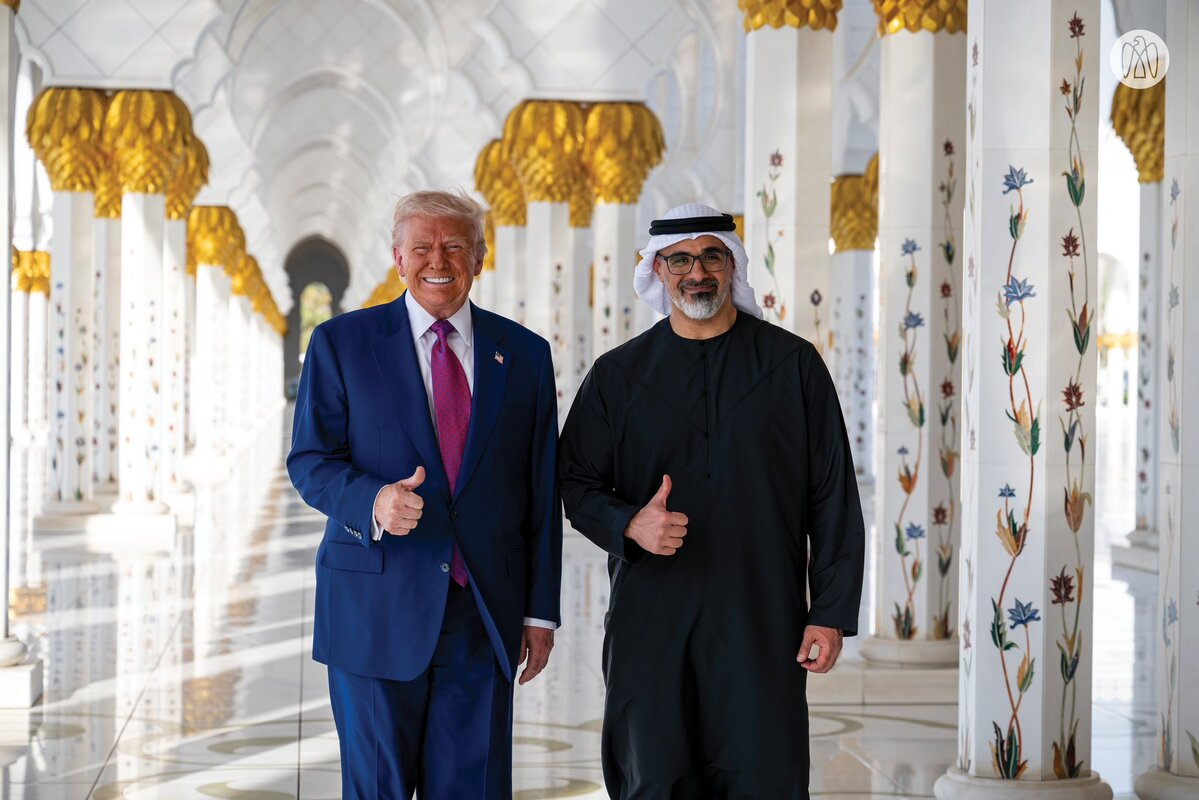
President Donald Trump, during his visit to the United Arab Emirates (UAE) on Thursday, announced over $200 billion in new deals between the two nations, including a landmark agreement to deepen cooperation in artificial intelligence (AI). The visit capped his three-nation Gulf tour, which also included Qatar and Saudi Arabia.

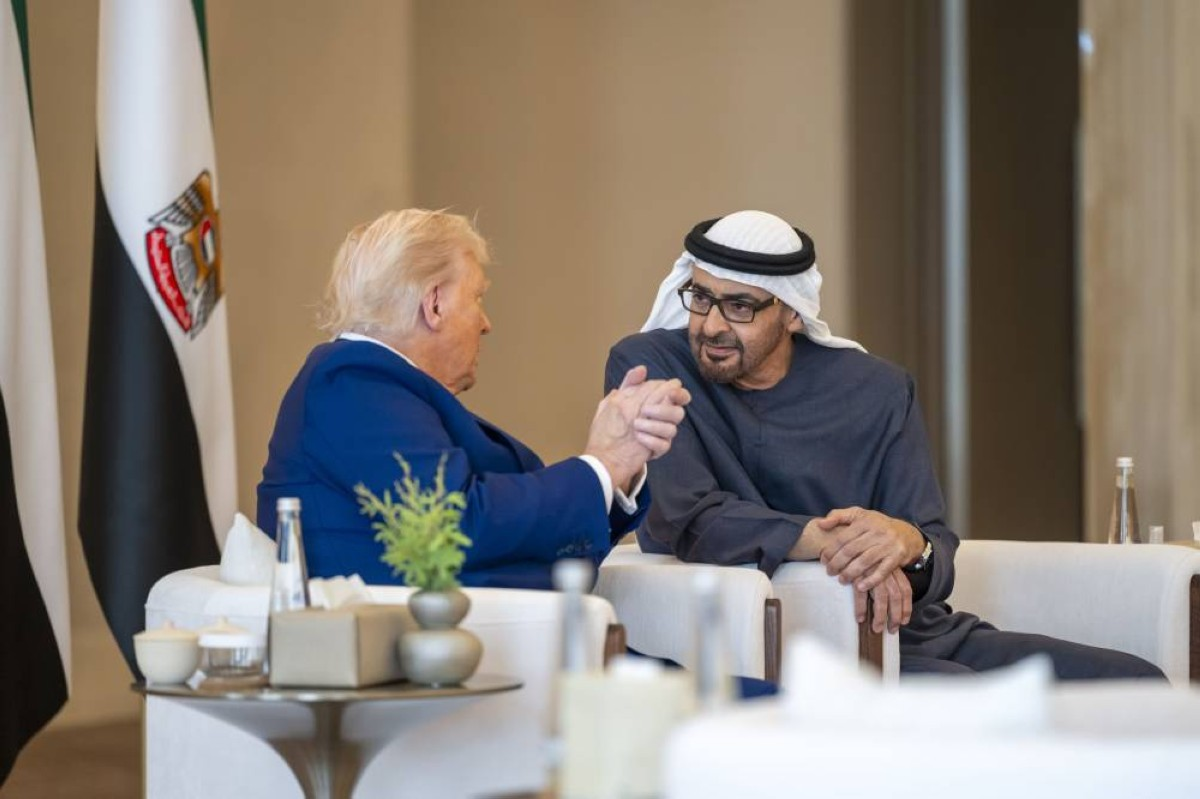
Following a meeting with UAE President Sheikh Mohamed bin Zayed Al Nahyan, the White House detailed major business and technology partnerships, including a $14.5 billion aircraft order by Etihad Airways for Boeing jets powered by GE Aerospace engines.

AI and Tech Cooperation:

Trump and Sheikh Mohamed also unveiled a 5-gigawatt AI campus, which will become the largest AI hub outside the U.S. A centerpiece of the visit was the signing of the U.S.–UAE AI Acceleration Partnership, which includes:

  • A commitment by the UAE to invest in U.S.-based data centers with capabilities matching or exceeding those in the UAE.

  • Import of 500,000 advanced Nvidia AI chips annually, per a prior agreement reported by Reuters.

  • UAE pledging to align its national security regulations with U.S. standards to prevent the diversion of AI technology to adversarial nations, particularly China.

Nvidia CEO Jensen Huang was seen in discussions with the leaders during the announcement.

Additional Economic Deals:

  • Emirates Global Aluminum to build a $4 billion aluminum smelter in Oklahoma.

  • $60 billion energy cooperation between UAE’s ADNOC and U.S. firms ExxonMobil, Occidental Petroleum, and EOG Resources.

  • A reaffirmation of the UAE’s $1.4 trillion, 10-year U.S. investment commitment, originally announced by Sheikh Tahnoon bin Zayed.

Broader Diplomatic and Regional Impact:

Trump’s visit follows major deals in Qatar and Saudi Arabia, including:

  • $600 billion Saudi commitment to invest in the U.S.

  • Qatar Airways’ deal to buy up to 210 Boeing widebody aircraft

  • $142 billion in U.S. arms sales to the Saudi kingdom

Trump also used the trip to announce diplomatic shifts:

  • A potential nuclear deal with Iran reportedly near completion

  • Sanctions lifted on Syria, with a meeting held with interim President Ahmed al-Sharaa

  • Encouragement for Syrian-Israeli normalization

Trump framed his Gulf tour as a strategic effort to solidify U.S. influence and transform the Middle East into a third global power center in AI, alongside the U.S. and China.

Singapore Prosecutors Link $390 Million Fraud Case to U.S. Server Supply

In a significant fraud case involving Singapore-based firms, prosecutors revealed that $390 million worth of transactions are at the center of allegations that the companies falsely supplied U.S. servers to Malaysia. Three individuals have been charged with defrauding Dell and Super Micro by misrepresenting the final destination of the servers, which may have contained sensitive components such as Nvidia’s artificial intelligence (AI) chips.

The case has raised concerns due to potential links to DeepSeek, a Chinese AI firm under investigation by the United States for possibly utilizing banned Nvidia chips. The chips in question, if used by DeepSeek, could be the high-end semiconductors restricted by U.S. export controls. Although Singapore authorities have acknowledged the servers might have contained Nvidia chips, they have not confirmed if the chips were subject to U.S. export restrictions.

The three suspects—Aaron Woon (41), Alan Wei (49), and Li Ming (51)—are facing charges of fraudulent misrepresentation. Prosecutors also allege that Wei paid himself dividends totaling millions of dollars, while Woon reportedly received a substantial bonus. The case forms part of a broader investigation in Singapore into false representation, with 22 individuals and companies under suspicion and six others arrested in connection with the matter.

At this stage, Singapore authorities have not offered further details on whether the chips involved were high-end models, nor have they commented extensively on the potential connection to DeepSeek. Singapore’s Law and Home Affairs Minister K Shanmugam declined to speculate on the link between the two cases.

In response to the charges, Shashi Nathan, Wei’s lawyer, has requested proof from the prosecutors regarding the alleged fraudulent transactions. Lawyers for Li and Woon have not made public comments yet. Malaysia is also conducting its own investigation into whether its laws were violated in the case.