Yazılar

UK Data Centre Spending to Hit £10 Billion Annually by 2029 Amid AI Boom

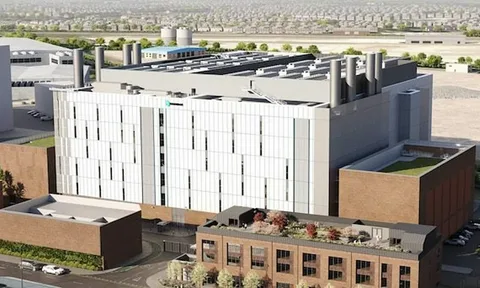
Spending on new UK data centres is set to surge to £10 billion a year by 2029, more than five times higher than in 2024, according to new analysis from construction data firm Barbour ABI.

The report found that £1.75 billion was spent on data centre construction in 2023, with that figure projected to rise to £2.38 billion in 2025 as demand for AI-driven computing power continues to accelerate. Over the next five years, tech giants including Microsoft, Nvidia, and Google are expected to invest a combined £25 billion in the UK’s data infrastructure, with nearly 100 new projects already in the pipeline.

Barbour ABI said the expansion reflects both global AI adoption and UK government initiatives, such as the AI Growth Zones, designed to speed up planning approvals for digital infrastructure.

While London and its surrounding regions remain the country’s data centre hub, development is now spreading nationwide, driven by rising demand for low-latency connectivity and renewable energy sources to power data-intensive AI systems.

The largest upcoming project is a $13 billion hyperscale data centre planned in North East England, led by U.S. private equity group Blackstone—a sign that international investors view the UK as a strategic AI infrastructure hub.

The rise in data centre construction comes amid a global race to expand digital capacity following the release of ChatGPT in late 2022, which sparked an explosion in AI model training, cloud computing, and enterprise automation.

Barbour ABI said the shift marks one of the fastest-growing infrastructure trends in the country’s history. “AI has completely reshaped data demands,” the report noted. “We’re now entering a decade defined by hyperscale expansion.”

Apple Nears $4 Trillion Valuation as iPhone 17 Demand Surges in China and U.S.

Apple shares soared 4.2% to $262.9 on Monday, pushing the tech giant’s market capitalization to $3.9 trillion — within striking distance of becoming the third company ever to hit $4 trillion. The surge follows stronger-than-expected early sales of the iPhone 17 series, which has outperformed its predecessor across key markets.

Data from Counterpoint Research showed that iPhone 17 sales in China and the United States were 14% higher during the first 10 days compared to the iPhone 16 launch, signaling renewed momentum for Apple’s flagship product. The rally places Apple just behind AI-chip leader Nvidia, now the world’s most valuable company.

Brokerage Evercore ISI added Apple to its Tactical Outperform List, predicting that the company will exceed quarterly forecasts and issue optimistic guidance for the December period. Analysts pointed to robust online orders in China, where delivery times suggest particularly strong early demand.

Apple’s September launch introduced an upgraded iPhone lineup, including the slimmer iPhone Air, while keeping prices stable despite U.S. tariff pressures. “The demand trends are clearly on the front foot again,” said Art Hogan, chief market strategist at B Riley Wealth.

After struggling earlier this year due to weakness in China and tariff concerns, Apple’s stock has rebounded since August, buoyed by its $100 billion U.S. investment plan aimed at mitigating trade risks. If the rally holds, Monday will mark Apple’s largest one-day gain in four weeks, setting the stage for its October 30 earnings report.

TSMC lifts full-year revenue forecast on soaring AI demand

Taiwan Semiconductor Manufacturing Co (TSMC) raised its full-year revenue forecast on Thursday, signaling confidence in the ongoing AI megatrend after posting record quarterly profits that beat expectations.

The world’s largest contract chipmaker now expects mid-30% revenue growth in 2025, up from its previous forecast of around 30%. The company cited booming demand for AI chips, which continues to exceed earlier projections.

“AI demand actually continues to be very strong — stronger than we thought three months ago,” CEO C.C. Wei told investors. “We are also receiving very strong signals from our customers requesting capacity to support their business.”

TSMC reported a 39.1% rise in third-quarter net profit to T$452.3 billion ($14.76 billion), surpassing analysts’ estimates of T$417.7 billion, according to LSEG SmartEstimate data. The company said it remains “prudent” in planning for 2026 amid global trade uncertainty.

The Taiwanese chipmaker supplies giants such as Apple, Nvidia, AMD, and Broadcom, all of whom are expanding their investments in AI-driven data centers. Recent multi-billion-dollar partnerships between OpenAI, chipmakers, and infrastructure providers have reinforced expectations of sustained semiconductor demand.

Despite trade tensions and U.S. tariffs, Wei said he remained optimistic: “Even if the China market was not available, AI’s growth will still be very dramatic.”

TSMC’s shares have risen 38% in 2025, outpacing Taiwan’s broader market, reflecting investor confidence that the company remains central to the global AI hardware boom.