Yazılar

ASML poised to benefit from AI megadeals and chip expansion wave

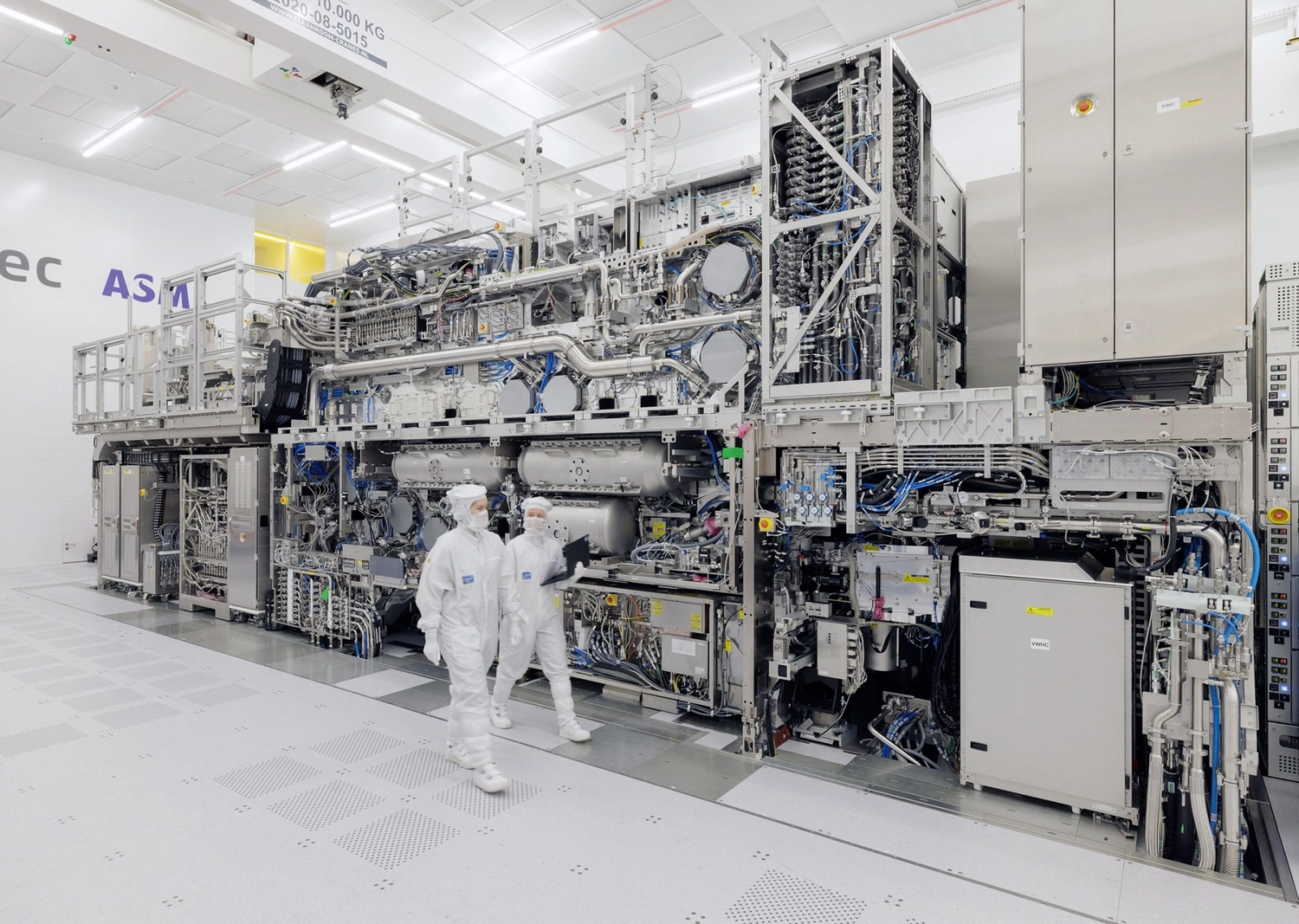
Dutch chipmaking equipment giant ASML is expected to benefit from a surge in AI-related megadeals between major technology firms and semiconductor manufacturers, with investors anticipating a strong outlook when it reports third-quarter earnings on Wednesday.

Analysts believe ASML’s top customers — including TSMC, SK Hynix, and Samsung — are preparing to ramp up production capacity through 2026 and beyond, driven by a global race to expand AI data centres. These expectations have already boosted ASML’s stock by 32% since early September, outpacing the Philadelphia Semiconductor Index, which rose 15% in the same period.

Forecasts compiled by Visible Alpha suggest new bookings — a key industry indicator — will total 5.36 billion euros ($6.21 billion) for the quarter, following 9.48 billion euros in the first half of the year. Meanwhile, net income is projected to rise 1.4% year-on-year to 2.11 billion euros, according to LSEG IBES data.

Recent multi-billion-dollar deals between NVIDIA, AMD, Intel, Samsung, Meta, and Oracle are fuelling optimism for ASML, whose machines — costing more than $300 million each — are essential for producing advanced chip circuitry.

However, analysts note that building fabrication plants can take several years. They want to hear whether ASML’s clients can accelerate these expansion plans amid rising demand. “Every memory chipmaker is likely to increase production capacity for AI,” said Michael Roeg of Degroof Petercam, citing Micron, SK Hynix, Samsung, and Chinese competitors.

Samsung forecasts best profit in three years amid AI-driven chip boom

Samsung Electronics said it expects its largest quarterly profit since 2022, as a global surge in demand for AI and memory chips pushes prices higher and tightens supply. The South Korean tech giant estimated an operating profit of 12.1 trillion won ($8.5 billion) for the July–September quarter, up 32% year-on-year and well above the 10.1 trillion won expected by analysts. This marks Samsung’s best performance in 13 quarters.

Analysts said the surprise earnings were powered by strong demand for commodity memory chips, used in data centre servers, which offset slower-than-expected progress in the company’s high bandwidth memory (HBM) chip sales to Nvidia. Despite slipping 0.5% in morning trade after an early rally, Samsung’s stock has risen around 75% this year, reflecting investor confidence in its chip rebound.

Experts noted that reduced inventories and stronger DRAM and NAND prices have given Samsung an edge. “Samsung is a big beneficiary of growing demand for commodity chips,” said Sohn In-joon from Heungkuk Securities. Meanwhile, narrower losses at its foundry unit helped ease cost pressures.

The company also expects revenue to hit a record 86 trillion won, up 8.7% year-on-year, aided by a weaker won. However, analysts warned that trade tensions between the U.S. and China, potential U.S. tariffs, and China’s export controls on rare earth materials could cloud future performance.

Samsung plans to release full quarterly results on October 30 and has reportedly introduced a stock-based incentive plan for all South Korean employees to align performance with company growth.

China tightens port checks on Nvidia AI chips to enforce U.S. export curbs

China has ramped up inspections on imported U.S. semiconductors, including Nvidia’s artificial intelligence chips, as part of a broader effort to strengthen oversight and promote domestic chip production, the Financial Times reported Friday.

Customs officials have reportedly been dispatched to major ports to scrutinize semiconductor shipments more closely. The inspections initially focused on Nvidia’s H20 and RTX Pro 6000D models — chips specifically designed to comply with U.S. export restrictions — but have since expanded to all advanced semiconductor products that could breach those controls.

Neither Nvidia nor China’s customs agency has commented publicly on the report, and Reuters said it could not independently verify the claims.

The move reflects Beijing’s deepening response to Washington’s tightening export rules, which have cut Chinese access to high-end chips used in artificial intelligence and supercomputing. The FT previously reported that over $1 billion worth of Nvidia’s top AI processors had been smuggled into China in just three months this year.

In recent months, Chinese authorities have also accused Nvidia of antitrust violations and ordered local tech giants to suspend chip purchases. While Huawei and other domestic firms have advanced their semiconductor capabilities, engineers within China’s tech sector acknowledge Nvidia’s chips remain unmatched in performance.

The heightened inspections come amid a geopolitical tug-of-war over AI leadership, with U.S. President Donald Trump signaling in August that he might loosen some restrictions on Nvidia’s exports to China — a move that could reshape the delicate balance in the global chip race.