Yazılar

US Investigates Whether DeepSeek Used Restricted AI Chips

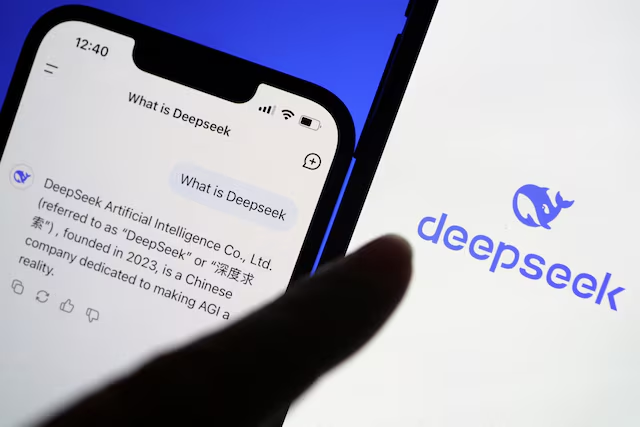
The U.S. Commerce Department is investigating whether DeepSeek, the Chinese AI company behind a disruptive new model, has been using U.S.-made AI chips that are restricted from being shipped to China, according to a source familiar with the situation. DeepSeek’s free assistant, which launched last week, has been widely praised for its cost-effective performance and ability to process less data compared to U.S. models. It quickly became the most downloaded app on Apple’s App Store, raising concerns in the U.S. about its competitive edge in AI and contributing to a significant drop in the stock market, which wiped out around $1 trillion from U.S. tech stocks.

The current restrictions on advanced AI processors, particularly from Nvidia (NVDA.O), are designed to prevent China from accessing the most sophisticated chips that could enhance its AI capabilities. The U.S. has been tracking organized smuggling operations of these chips into China from countries such as Malaysia, Singapore, and the United Arab Emirates.

DeepSeek has reportedly used Nvidia’s H800 chips, which were legally purchased in 2023. However, the legality of DeepSeek’s access to other U.S. chips remains unclear. It is also known to have Nvidia’s H20 chips, which can be legally sold to China. Although there have been discussions within the U.S. government about placing more restrictions on these chips, the Biden administration and new Trump officials are also weighing tighter controls.

In response to these allegations, Nvidia emphasized that it requires its partners to comply with U.S. export laws, noting that many of its clients in Singapore might use the country as an intermediary for products destined for the U.S. and the West. However, the Singapore trade ministry stated that while there was no indication that DeepSeek obtained export-controlled chips from Singapore, it would continue to uphold the rule of law and cooperate with U.S. authorities.

DeepSeek has also been linked to the use of chips that, while not banned, have raised concerns among AI industry experts. Dario Amodei, CEO of Anthropic, expressed doubts over the legality of some of DeepSeek’s chips, suggesting that they could include smuggled or pre-banned processors.

The U.S. has imposed a range of restrictions on AI chip exports to China and is planning to extend these limits to other countries.


Intel’s Quarterly Revenue Tops Expectations, Investors Await New CEO

Intel (INTC.O) reported better-than-expected results for its December quarter on Thursday, surpassing analysts’ low estimates. However, the chipmaker’s forecast for the upcoming quarter fell short, as it faces weak demand for its data center chips. Investors are also awaiting clarity on Intel’s leadership following the ousting of former CEO Pat Gelsinger last month. Currently, two interim co-CEOs are at the helm of the company, which has struggled to compete with rivals like Nvidia (NVDA.O), particularly in the AI chip market.

The quarterly results were overshadowed by concerns about Intel’s long-term strategy and leadership transition. Despite this, the company’s shares rose by 3.8% in after-hours trading, a relief after a challenging year where Intel’s stock lost around 60% of its value.

Intel’s struggle to capitalize on the booming AI market was evident when Co-interim CEO Michelle Johnston Holthaus announced that the company would shelve its upcoming graphics processing unit (GPU) design, Falcon Shores. Instead, Intel plans to use the chip internally as a test product, with a focus on future data center AI chips.

For the first quarter, Intel projected revenue between $11.7 billion and $12.7 billion, below analysts’ average estimate of $12.87 billion. The company cited “normal seasonality” and potential tariffs under the Biden administration as factors contributing to its cautious outlook. According to CFO David Zinsner, the possibility of tariffs may have prompted some customers to buy Intel’s chips ahead of potential price increases.

Intel’s ongoing transition includes a focus on becoming a contract chip manufacturer for other companies, but this shift has raised concerns among investors about its cash flow. Last year, Intel abandoned its forecast of selling over $500 million worth of its new AI chips, Gaudi, which struggled to compete with Nvidia’s products.

For the upcoming quarter, Intel forecasted break-even adjusted per-share earnings, while analysts expected adjusted profits of 9 cents per share. The company has received federal grants under the CHIPS Act, which helped boost its revenue and profit margins for the fourth quarter.

In the personal computer market, which remains Intel’s largest revenue segment, global shipments grew only modestly last year, missing analysts’ expectations for a stronger rebound. Intel has also been losing market share in both the PC and server CPU sectors to competitor AMD (AMD.O), a trend expected to continue into 2025.


SoftBank in Talks to Lead OpenAI Funding Round at $300 Billion Valuation

SoftBank Group is in negotiations to lead a funding round for OpenAI, which could raise up to $40 billion, placing the artificial intelligence developer’s valuation at $300 billion, according to sources familiar with the matter. This potential round, which could set a record for a private company’s single funding round, is in the wake of growing competition from Chinese startup DeepSeek. DeepSeek’s new, affordable AI model has disrupted expectations about the costs of developing and deploying AI.

As part of the funding, SoftBank has valued OpenAI at $260 billion, a significant increase from its valuation of $150 billion just a few months ago. This funding is expected to be in the form of convertible notes, and similar to OpenAI’s previous round, it is contingent upon restructuring the company to remove control from its non-profit arm.

Leading the round would be a bold move for SoftBank, which has roughly $30 billion in cash to invest. While neither SoftBank nor OpenAI has commented on the discussions, it is believed that SoftBank could contribute between $15 billion and $25 billion directly into OpenAI. This money may also go towards OpenAI’s commitment to Stargate, a joint venture with Oracle and SoftBank aimed at helping the U.S. maintain a competitive edge in the global AI race, with plans for up to $500 billion in investments.

Despite the funding talks, DeepSeek’s low-cost AI model has raised concerns within the AI sector. The startup, using Nvidia H800 chips, developed its DeepSeek-V3 model for less than $6 million, spurring questions about whether OpenAI and other labs can retain their dominance as competition intensifies from more affordable alternatives.