Yazılar

OpenAI Launches GPT-5 Amid Industry Push for AI Returns on Investment

OpenAI unveiled GPT-5 on Thursday, the latest iteration of its influential AI technology powering ChatGPT, available now to all 700 million users of the chatbot platform. This launch marks a key moment as the AI sector seeks to justify massive investments by demonstrating clear enterprise value.

While consumer enthusiasm remains strong, with users captivated by ChatGPT’s conversational capabilities, business spending on AI has yet to fully materialize. The industry’s top players—Alphabet, Meta, Amazon, and Microsoft (which backs OpenAI)—are collectively spending nearly $400 billion this fiscal year on AI infrastructure, raising expectations for significant returns.

OpenAI is currently in talks to let employees cash out at a $500 billion valuation, up from $300 billion. The company has attracted high-profile talent with signing bonuses reaching $100 million, underscoring intense competition for AI expertise.

CEO Sam Altman emphasized GPT-5’s advancements in software development, finance, and health queries, describing it as capable of expert-level responses comparable to PhD-level knowledge. A standout feature demonstrated was “vibe coding”—the ability to generate fully functioning software from natural language prompts, highlighting a new era of software on demand.

However, early reviewers suggest that the leap from GPT-4 to GPT-5, while impressive, may not be as large as previous model upgrades. Altman acknowledged GPT-5 still cannot autonomously learn, a critical step toward matching human-like intelligence.

A new capability called “test-time compute” enables GPT-5 to spend extra computational effort on harder problems, improving its reasoning and problem-solving. This technology is now publicly accessible for the first time and is central to OpenAI’s mission to build broadly beneficial AI.

Despite GPT-5’s launch, OpenAI faces challenges, including a shortage of new training data and the complexity and cost of running large-scale AI training. The company sees infrastructure expansion worldwide as essential for broader AI adoption.

Altman remains optimistic about AI’s future impact but stresses that current investments in infrastructure are still insufficient to realize its full potential globally.

OpenAI Eyes $500 Billion Valuation in Potential Employee Share Sale

OpenAI, the creator of ChatGPT, is reportedly in early talks for a private stock sale that would let employees cash out shares, potentially valuing the company at about $500 billion—up significantly from its current $300 billion valuation. The transaction, which would occur before any initial public offering (IPO), aims to allow current and former employees to sell several billion dollars worth of shares.

The move highlights OpenAI’s rapid growth, driven by its flagship ChatGPT product, which has doubled revenue in the first seven months of 2025 to an annualized run rate of $12 billion, with projections to reach $20 billion by year-end. OpenAI now boasts about 700 million weekly active users, up from 400 million in February.

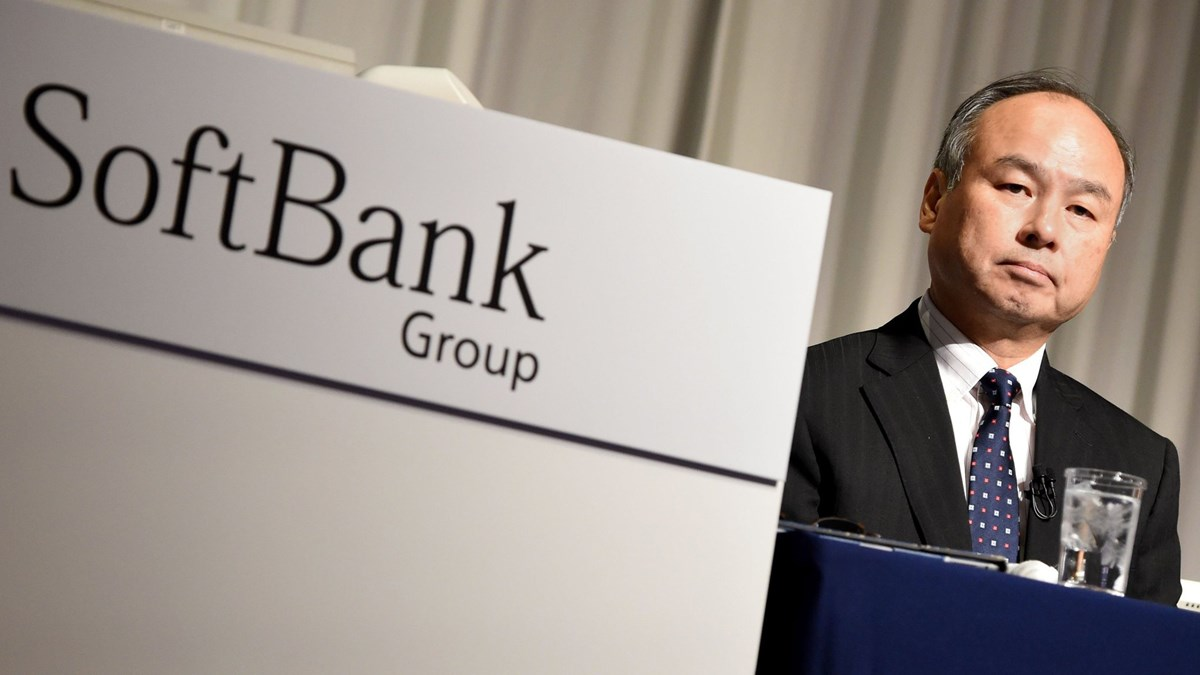
This potential share sale follows a primary funding round announced earlier this year targeting $40 billion, led by Japan’s SoftBank Group, which is obligated to fund $22.5 billion by year-end. The remaining portion of the round has already been subscribed at the current $300 billion valuation.

Amid fierce competition for AI talent, tech giants like Meta are investing billions in startups such as Scale AI to secure top executives, underscoring the high stakes in the AI race. Other private companies like ByteDance and Databricks have similarly used private share sales to refresh valuations and reward employees.

Existing OpenAI investors, including Thrive Capital, are reportedly considering participation in the employee share sale. Thrive Capital declined to comment.

OpenAI is also planning a significant corporate restructuring to move away from its capped-profit model, paving the way for a potential future IPO. However, CFO Sarah Friar emphasized that any public offering would only occur when both the company and market conditions are favorable.

OpenAI’s GPT-5 Model Nears Release Amid High Expectations

OpenAI is on the brink of releasing GPT-5, the next-generation language model succeeding GPT-4, which powered the ChatGPT phenomenon starting in 2022. Industry insiders and early testers express cautious optimism, praising its enhanced coding and scientific problem-solving capabilities, though some say the leap from GPT-4 to GPT-5 feels less dramatic compared to the jump from GPT-3 to GPT-4.

OpenAI, backed by Microsoft and currently valued at around $300 billion, has faced challenges scaling GPT-5 due to limitations in available training data and increased complexity in training runs that can last months and are prone to hardware failures. Unlike GPT-4, which saw significant gains through increased compute power and data, GPT-5 incorporates a novel approach called “test-time compute,” directing extra processing power dynamically to solve complex reasoning and decision-making tasks.

Since the debut of ChatGPT nearly three years ago, generative AI has rapidly advanced. GPT-4 notably outperformed its predecessor by passing the simulated bar exam in the top 10%, setting a new standard in AI capabilities. Meanwhile, competitors like Google and Anthropic have developed rival models, and open-source initiatives such as Meta’s Llama 3 have narrowed the performance gap.

OpenAI CEO Sam Altman noted earlier in 2025 that GPT-5 would blend traditional large model training with test-time compute techniques, reflecting the company’s increasingly sophisticated and multifaceted AI portfolio. The broader AI industry awaits the release with anticipation, expecting GPT-5 to unlock new applications beyond conversational AI toward fully autonomous task execution.