Yazılar

OpenAI Expects Cash Flow to Turn Positive by 2029, Bloomberg Reports

OpenAI is not expecting to achieve cash-flow positivity until 2029, according to a report by Bloomberg News on Wednesday. The San Francisco-based AI leader, despite its strong revenue projections, is grappling with significant operational costs, including expenses for chips, data centers, and talent, necessary for developing advanced AI systems.

Revenue Projections and Growth Plans

Despite the cash flow challenges, OpenAI forecasts significant revenue growth in the coming years. By 2029, the company expects its revenue to exceed $125 billion. The AI firm also predicts a sharp rise in its revenue to $12.7 billion by 2025, more than tripling its current figures. This growth is driven largely by the success of its paid AI software, particularly through the subscription services it offers to consumers and businesses.

In September 2024, OpenAI had already indicated a forecasted revenue of $11.6 billion for 2025, with the company expected to earn $3.7 billion in 2024. These figures align with Bloomberg’s latest reporting.

Expansion of Paid Services

Since the launch of its ChatGPT chatbot over two years ago, OpenAI has rapidly expanded its suite of subscription offerings for both individual and business users. By February of this year, the number of paying business users exceeded 2 million, more than doubling the number of paid users from the previous September.

Financial Challenges Ahead

While OpenAI is positioning itself for rapid growth, it faces an uphill battle in terms of balancing significant upfront investments in technology and infrastructure. The company’s long-term strategy depends on continuing to expand its subscriber base and leveraging its AI innovations to maintain competitive momentum.
Anduril Sees Positive Outlook with Trump Administration’s Defense Strategy

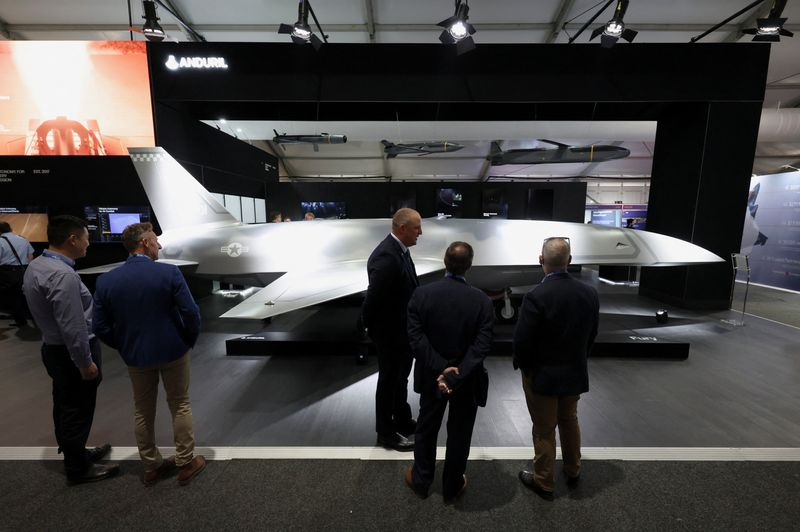
Anduril, the AI-powered defense start-up, is optimistic about its position under the new Trump administration, with its president, Christian Brose, stating that the company feels positive “vibes” from the Pentagon’s recent defense shakeup. Brose, who has previously worked with Republican Senator John McCain, emphasized that Anduril’s focus on low-cost autonomous defense systems aligns well with the Trump administration’s preferences for innovation and efficiency in defense procurement.

Anduril’s Alignment with Trump’s Defense Priorities

Brose noted that Anduril’s approach to autonomous defense technology fits well with the administration’s goals to shake up the military’s traditional procurement processes. The start-up, co-founded by Palmer Luckey—who is a known supporter of Donald Trump—has built strong relationships within the current government. According to Brose, the administration’s willingness to do things differently creates significant opportunities for companies like Anduril.

In December, Anduril announced a partnership with OpenAI to deploy advanced artificial intelligence solutions for national security missions, further aligning itself with emerging defense strategies. Brose also pointed out the Pentagon’s recent $50 billion budget cut directive, speculating that this could be an effort to shift resources into new forms of military capabilities rather than merely reduce spending.

Expansion Plans and International Collaborations

Anduril, which is constructing a mass manufacturing facility for autonomous systems in Ohio, is also eyeing international growth, including potential expansion into Australia. The Australian Defence Force (ADF) is currently trialing Anduril’s AI-driven intrusion detection software at RAAF Base Darwin, where U.S. Marines are stationed.

In addition, Anduril Australia is bidding to produce solid rocket motors for the ADF’s Guided Weapons and Explosive Ordnance Enterprise. The company is also working with the ADF to produce the Ghost Shark underwater autonomous machine, with plans to ramp up production soon. Brose indicated that Anduril could expand its production footprint to other countries if the business case justifies such an investment, with Australia being a potential location.

Defense Technology and the Future of AUKUS

Under the AUKUS treaty, which involves the U.S., the U.K., and Australia, the U.S. and Britain will assist Australia in developing nuclear-powered submarines. Australia plans to spend over A$360 billion on this initiative. Brose emphasized that while autonomous systems like Anduril’s Ghost Shark can be produced faster, in larger quantities, and at a lower cost, they should complement—not replace—crewed submarines in a well-rounded defense strategy.

China’s DeepSeek Releases V3 AI Model, Boosting Competition with OpenAI

Chinese AI startup DeepSeek has launched a major upgrade to its V3 large language model, DeepSeek-V3-0324, marking a significant step in its rivalry with U.S. tech giants such as OpenAI and Anthropic. The new model, available through the AI development platform Hugging Face, showcases notable improvements in reasoning and coding abilities, setting a new benchmark for performance in the AI space.

Benchmark tests indicate that the V3 model has outperformed its predecessor across multiple technical metrics, solidifying DeepSeek’s growing presence in the competitive AI market. DeepSeek, which has quickly become a key player in the global AI landscape, has been pushing forward with a series of model releases, including the V3 launch in December and the R1 model earlier in January.

The company’s rise is seen as part of a broader trend where Chinese AI firms are intensifying competition with Western companies, offering similar capabilities at lower operational costs. DeepSeek’s rapid development positions it as a formidable contender in the global AI race.