Yazılar

OpenAI Unveils “Deep Research” AI Tool for Advanced Web-Based Research

On Sunday, OpenAI launched a new AI tool called “Deep Research,” designed to perform multi-step research tasks by gathering and synthesizing information from various online sources. This tool is powered by an advanced version of OpenAI’s upcoming o3 model, specifically optimized for web browsing and data analysis.

With Deep Research, users provide a prompt, and ChatGPT uses the tool to find, analyze, and compile data from various sources, including text, images, and PDFs, to produce a detailed research report comparable to the work of a research analyst. OpenAI claims that the tool can accomplish in minutes what would typically take a human several hours.

However, OpenAI has noted that Deep Research is still in its early stages and has some limitations. For instance, it may struggle to differentiate between authoritative information and rumors. Additionally, it faces challenges in accurately conveying uncertainty, often failing to present the level of confidence required in certain cases.

Deep Research is now available via the web version of ChatGPT, with plans to roll it out to mobile and desktop apps in February. This launch follows OpenAI’s introduction of another AI tool in January, called “Operator,” which is designed to assist with a variety of tasks, such as creating to-do lists or helping with vacation planning.

 

OpenAI Faces Legal Battle in India Over Jurisdiction in Copyright Case

OpenAI is facing a legal challenge in India as it argues that local courts lack jurisdiction over its U.S.-based business, a stance that legal experts believe is unlikely to succeed. The case, brought by Indian news agency ANI, accuses OpenAI of copyright infringement for allegedly using its content without permission.

India, OpenAI’s second-largest market, has become a key battleground, with media groups—including those backed by billionaires Gautam Adani and Mukesh Ambani—joining ANI in opposition. While OpenAI maintains that its AI models use publicly available data in accordance with fair use principles, it is also contesting jurisdiction, citing its terms of service that specify dispute resolution in San Francisco. The company also argues that it does not maintain servers or data centers in India.

Legal experts, however, suggest that Indian courts are likely to reject OpenAI’s defense. Courts in the country have previously ruled against similar jurisdictional arguments, including in a 2022 case involving Telegram, where the Delhi High Court ruled that server location alone does not exempt a company from Indian law.

If OpenAI wins on the jurisdiction argument, it could avoid facing the copyright lawsuit in India. If it loses, it may be forced to delete ANI’s content from its training data and pay $230,000 in damages. The Delhi court is set to hear arguments on the case in February.

India has a history of holding foreign tech companies accountable to its laws, with past confrontations involving Google, Facebook, and X (formerly Twitter). The Indian government has maintained that global tech firms must comply with local regulations, reinforcing the challenge OpenAI faces in defending its position.

Amid the legal battle, OpenAI CEO Sam Altman and other senior executives are set to visit India on February 5, underscoring the market’s strategic importance.


Chinese State-Linked Accounts Promoted DeepSeek AI Before U.S. Tech Stock Decline, Report Says

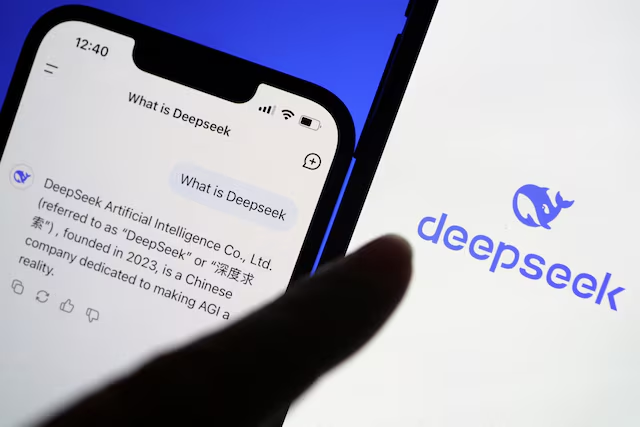
A new report by online analysis firm Graphika reveals that Chinese state-affiliated social media accounts actively promoted the launch of DeepSeek AI ahead of a sharp decline in U.S. technology stocks. These accounts, including those of Chinese diplomats, embassies, and state media, amplified narratives celebrating DeepSeek’s advancements, portraying them as a challenge to U.S. dominance in artificial intelligence.

The promotional efforts appeared on platforms such as X (formerly Twitter), Facebook, Instagram, as well as Chinese services like Weibo and Toutiao. According to Graphika, this coordinated activity is part of China’s broader strategy to shape online narratives and highlight Beijing’s progress in key technological fields.

Graphika also linked DeepSeek-related content to previously identified Chinese influence campaigns, including the Shadow Play operation, which has spread pro-China and anti-Western messaging across YouTube and other platforms. The report found a small spike in discussions about DeepSeek’s AI model on X immediately after its January 20 launch, followed by a significant surge over the weekend.

By Monday, DeepSeek’s AI assistant had surpassed OpenAI’s ChatGPT in Apple App Store downloads, coinciding with a sell-off in U.S. tech stocks that erased $593 billion from Nvidia’s market value in a single day—the largest loss in Wall Street history.

The U.S. government has raised concerns over DeepSeek’s access to restricted AI chips. The Commerce Department is currently investigating whether the company has used unauthorized U.S. technology, amid allegations—so far unproven—that it improperly accessed advancements from OpenAI and other industry leaders.