Yazılar

Authenticity of Mosasaur Fossil Discovered in Moroccan Mine Under Scrutiny

Authenticity of Mosasaur Fossil Sparks Debate

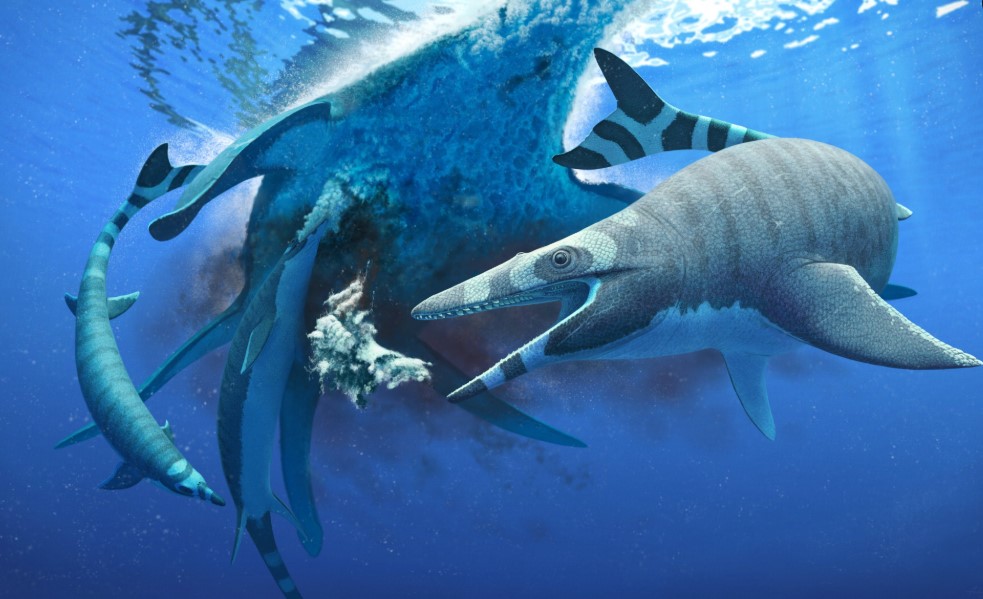
Questions have emerged regarding the authenticity of a fossil used to describe Xenodens calminechari, a mosasaur species believed to have existed between 72 and 66 million years ago. Discovered in a phosphate mine in Morocco, the fossil formed the basis for identifying the unique marine predator, notable for its saw-like teeth. However, researchers have pointed out structural inconsistencies in the fossil that undermine its credibility. Published in The Anatomical Record, a recent study highlights anomalies in the jawbone and teeth, raising suspicions about the specimen’s integrity. Notably, two teeth were found sharing a single socket—a feature at odds with typical mosasaur anatomy. Dr. Michael Caldwell from the University of Alberta explained that mosasaurs replace their teeth continuously, with individual sockets formed by surrounding bone, making this anomaly particularly concerning.

Evidence Suggesting Possible Tampering

Further scrutiny has revealed additional irregularities in the fossil’s structure. Overlapping material around the teeth suggests that the specimen may have been altered or tampered with. This revelation casts doubt on the conclusions drawn in the 2021 study that introduced Xenodens calminechari to the scientific community. Given Morocco’s reputation as a hotspot for fossils with fabricated elements, researchers argue that rigorous verification methods, such as computed tomography (CT) scans, are essential to confirm the fossil’s authenticity.

Access Issues and Ethical Concerns

The fossil’s current inaccessibility has compounded the controversy. Held by Nick Longrich, a paleontologist at the University of Bath and the lead author of the 2021 study, the specimen has not been made available for independent verification. Henry Sharpe, the lead author of the recent paper questioning the fossil, criticized this lack of access as unethical. Sharpe emphasized that holotype specimens, which serve as the definitive reference for species classification, must be open to scientific examination to ensure transparency and accuracy in research.

Implications for Paleontology

The debate surrounding Xenodens calminechari highlights broader challenges in paleontology, particularly the need for stringent verification of fossil specimens from regions prone to forgeries. Without access to key specimens or advanced imaging methods like CT scans, the scientific community risks drawing conclusions based on compromised data. The controversy underscores the importance of collaboration and transparency in ensuring the integrity of paleontological discoveries, especially when new species are introduced.

Larger Mesosaur Fossils Discovered in Ancient Uruguayan Seas

Giant Mesosaurs Discovered in Uruguay: A New Chapter in Aquatic Reptile Evolution
Recent fossil discoveries in Uruguay have unveiled a surprising aspect of mesosaur evolution: the existence of much larger specimens than previously known. These aquatic reptiles, which thrived in the Early Permian epoch over 280 million years ago, are now understood to have reached sizes more than double those of earlier documented adults. The fossils include skull fragments and bones that suggest some mature mesosaurs grew between 1.5 to 2.5 meters in length, shedding new light on the species’ evolutionary potential and ecological role.

Exceptional Finds from the Mangrullo Formation
The fossils were unearthed from the Mangrullo Formation in northern Uruguay, a site renowned for its remarkable fossil preservation. Led by Dr. Graciela Piñeiro of Universidad de la República, researchers analyzed two fragmented skulls and associated bones, comparing them with over 1,000 previously studied mesosaur specimens. These new finds, with skulls measuring 15–20 cm, point to significantly larger adults than previously observed. This discovery not only redefines mesosaur size estimates but also raises questions about their life history and environmental adaptations.

Reevaluating Mesosaur Growth and Mortality Patterns
Earlier studies suggested that the smaller sizes of previously discovered mesosaurs might represent typical adults. However, this new research posits that these smaller specimens were likely juveniles or subadults. The researchers also examined environmental factors, such as Bergmann’s rule—which links larger body sizes to colder climates—but found that growth patterns and age stages better explain the size variation. This indicates that past mass mortality events may have skewed earlier data, focusing on younger individuals rather than showcasing the species’ full growth potential.

Implications for Understanding Early Aquatic Ecosystems
The discovery of larger mesosaurs expands our understanding of their role in Early Permian ecosystems. As apex or near-apex predators, these larger individuals could have exerted significant influence over their aquatic environments. This finding also highlights the importance of continued fossil exploration in regions like Uruguay, where well-preserved specimens can unlock critical insights into the evolution of ancient life. As research progresses, mesosaurs may offer further clues about the dynamics of early aquatic ecosystems and the evolutionary pathways of reptiles.

Remarkably Well-Preserved Baby Mammoth Remains Unveiled by Scientists

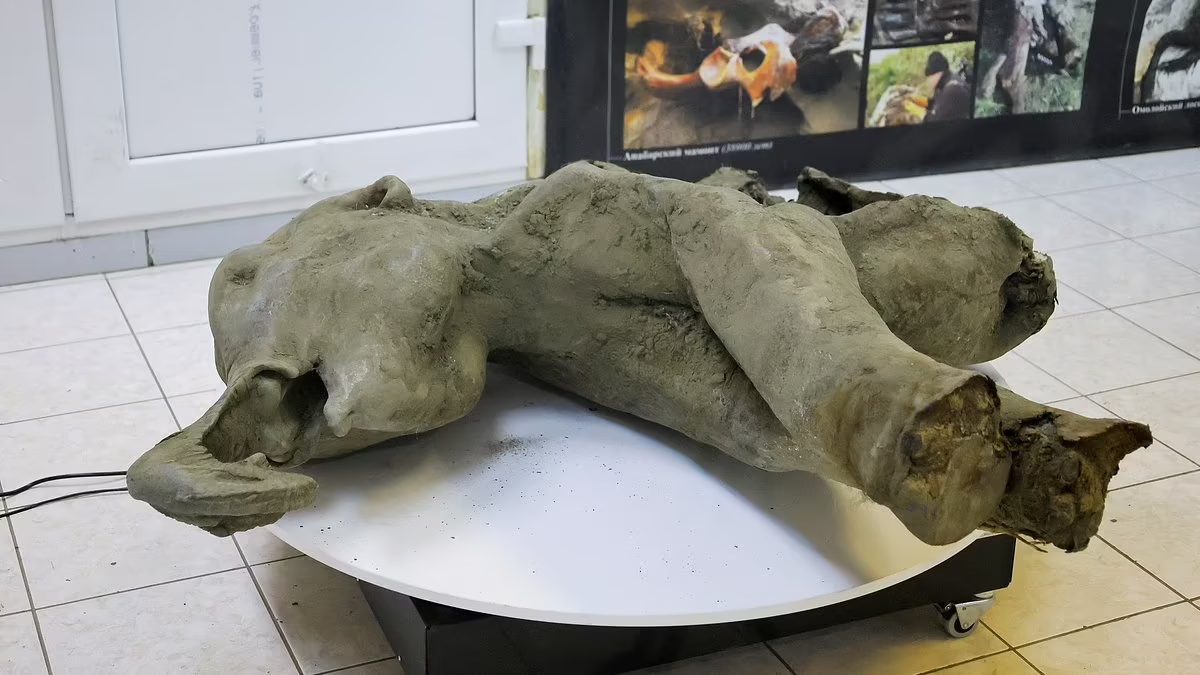
Scientists have uncovered the preserved remains of a juvenile mammoth, believed to be over 50,000 years old, after it was thawed from permafrost in Russia. The discovery, made in the Batagaika crater in the Sakha Republic (Yakutia), marks another extraordinary find as climate change causes the region’s permafrost to melt.

The mammoth’s carcass, weighing over 110kg (240lbs), was carefully brought to the surface on an improvised stretcher, according to Maxim Cherpasov, head of the Lazarev Mammoth Museum Laboratory in Yakutsk. Cherpasov estimates that the mammoth was likely just over a year old at the time of its death, though further testing will provide more precise information.

One of the most remarkable aspects of the find is the preservation of the mammoth’s head and trunk. Typically, the thawing process causes these parts, especially the trunk, to be consumed by predators or scavenging birds. However, this specimen’s head is unusually well-preserved, even though the forelimbs have been eaten by animals.

This discovery adds to a series of remarkable paleontological finds in Russia’s permafrost. In the same region, scientists recently uncovered the remains of a 32,000-year-old sabre-toothed cat cub and a 44,000-year-old wolf carcass earlier this year, offering unprecedented insights into ancient species.