Fossilized Poop Reveals Secrets of How Dinosaurs Came to Dominate Earth
A study published in Nature on Wednesday sheds new light on the evolution of dinosaurs, revealing insights into why they came to dominate the planet. By analyzing fossilized droppings—known as coprolites—scientists discovered key factors that contributed to the rise of these ancient giants, whose ancestors were initially insignificant players on Earth’s evolutionary stage.
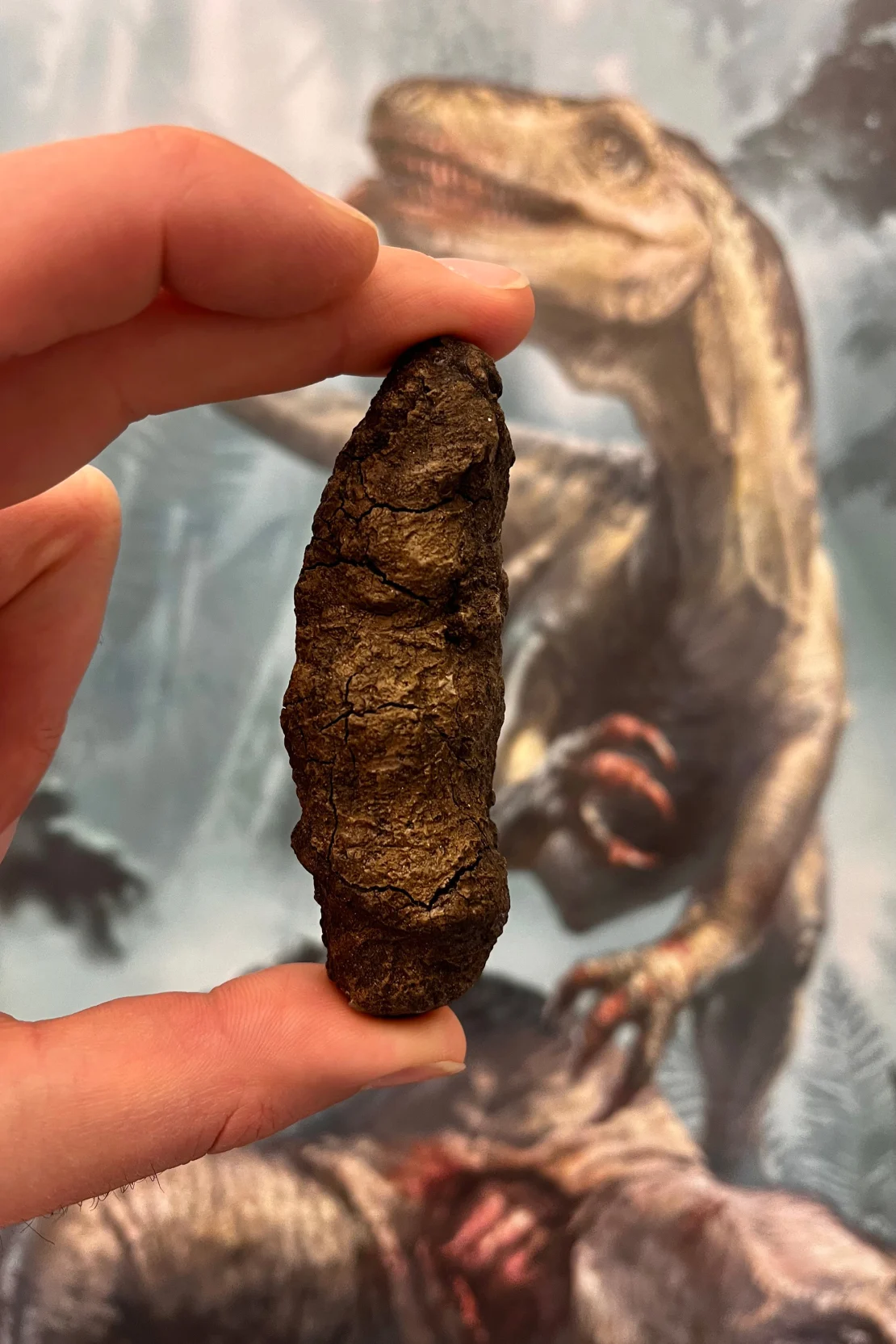
The research, led by Martin Qvarnström, a paleontologist at Uppsala University, focuses on over 500 coprolites collected from multiple sites in the Polish Basin, dating back 247 to 200 million years ago, covering the Late Triassic and early Jurassic periods. Qvarnström’s team discovered that the size, diversity, and contents of these fossilized remains increased over time, paralleling the emergence of larger and more varied dinosaur species.
Revelations from Ancient Poop
The analysis of coprolites and regurgitalites (fossilized vomit) provided valuable information about the diets of dinosaurs and other ancient vertebrates. Through a combination of physical inspection and high-tech 3D scanning at the European Synchrotron Radiation Facility, scientists were able to identify what the animals consumed, such as fish, plants, and other prey. This offered a window into the paleoecology of the time.
Interestingly, some coprolites showed evidence of animal remains, including tiny beetles and fish, while others contained crushed bones from predation. These fossils provided a series of “temporal snapshots” illustrating the transition from a world with few dinosaurs to one dominated by them.
The Rise of Dinosaurs
The study identifies five phases in the evolutionary history of dinosaurs. Initially, their ancestors were omnivorous, consuming both plants and animals. Over time, they evolved into both carnivorous and herbivorous forms. Key events, such as increased volcanic activity, likely spurred the growth of more diverse plant life, which in turn supported the emergence of larger herbivorous dinosaurs. This led to the rise of the giant carnivorous species that would define the Jurassic period.
Scientists argue that a combination of physical advantages and climate adaptability allowed dinosaurs to outcompete other reptilian species. The research suggests that dinosaurs’ upright posture and agile movement gave them a significant edge over rivals with less efficient body structures, while their ability to diversify their diets helped them thrive through changing environments.
What This Means Today
Qvarnström’s senior colleague, Grzegorz Niedźwiedzki, emphasized that the evolutionary success of dinosaurs boils down to a simple yet timeless message: “Eat your veggies and live longer.” This adaptability to different diets and environments was a crucial factor in their ability to thrive, offering valuable lessons about survival even today.
The study not only highlights the evolutionary advantages of dinosaurs but also underscores the importance of fossilized remnants in understanding the natural world. As researchers continue to decode the past through fossilized poop, they may uncover even more secrets that explain the rise of these ancient creatures.