Yazılar

Intel’s Interim Co-CEO Highlights Foundry Experience as Key for Next CEO Amid Turnaround Challenges

Intel’s next chief executive will need a strong background in manufacturing and product development, according to interim co-CEO David Zinsner. Speaking at the UBS Technology Conference on Wednesday, Zinsner emphasized the importance of foundry expertise as the chipmaker navigates a critical phase in its turnaround strategy.

The leadership search comes after CEO Pat Gelsinger announced his resignation earlier this week, following growing impatience with Intel’s progress on its ambitious and costly restructuring efforts. Sources indicate that Intel is evaluating several external candidates, including former board member Lip-Bu Tan, to steer the company forward.

“I’m not directly involved in the selection process, but I believe the next CEO will bring capabilities in both foundry operations and product innovation,” Zinsner noted, underscoring that Intel’s core strategy remains unchanged.

Cultural and Strategic Shifts Needed

Intel faces significant hurdles, particularly in transforming its culture to excel in the foundry and semiconductor businesses. Naga Chandrasekaran, Intel’s head of foundry manufacturing and supply chain, highlighted the need for this cultural overhaul, calling it essential for the company’s long-term success.

Chandrasekaran also reported steady progress on Intel’s 18A advanced node manufacturing process, with milestones being met despite initial challenges. “The remaining obstacles involve yield and defect density improvements, but there are no fundamental roadblocks at this stage,” he said.

Intel plans to deliver 18A chip samples to customers in the first half of 2024 and ramp up production at its Oregon facility in the second half of the year.

Struggles and the Path Forward

Intel’s share price has plummeted by more than 55% this year, as the company lagged behind competitors like Nvidia in the artificial intelligence (AI) chip market. The company was removed from the Dow Jones Industrial Average in October, replaced by Nvidia, further reflecting its challenges in maintaining a leadership position in the semiconductor industry.

Intel’s Lunar Lake processors, central to its foundry revival strategy, are expected to begin improving the foundry division’s margins by next year. Zinsner stated that cost reductions and a shift toward higher-margin wafers will also contribute to strengthening the foundry business.

Despite these efforts, Intel continues to trail industry giant Taiwan Semiconductor Manufacturing Co. (TSMC), which dominates advanced chip manufacturing and serves competitors such as Nvidia.

Outlook

Zinsner reiterated Intel’s optimism about its PC and server businesses, maintaining the revenue guidance provided in October’s earnings report. The company’s leadership transition and focus on cultural and technical transformations are viewed as critical to regaining its competitive edge in the semiconductor market.

As Intel moves forward, its manufacturing investments and product diversification will be under scrutiny, with hopes that the next CEO can deliver the expertise needed to restore the company’s standing in the industry.
Intel CEO Pat Gelsinger Steps Down Amid Board’s Lack of Confidence in Turnaround Plan

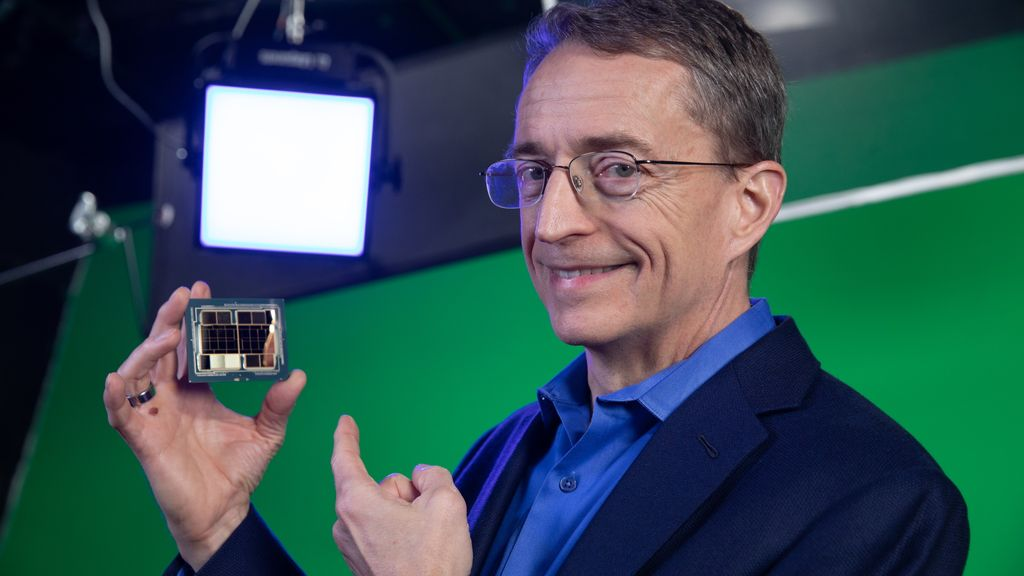
Intel CEO Pat Gelsinger has resigned after nearly four years in office, following a board decision to replace him due to dissatisfaction with his ambitious turnaround strategy. The decision comes at a pivotal time for the chipmaker as it struggles to regain its competitive edge in the semiconductor market.

Key Details

  • Departure Circumstances: Gelsinger was asked to step down after a recent board meeting where his progress was deemed insufficient. The board offered him the option to retire or be removed, and he chose to resign.
  • Interim Leadership: Intel has appointed CFO David Zinsner and senior executive Michelle Johnston Holthaus as interim co-CEOs while a search for a permanent successor is underway.
  • Challenges During Tenure: Gelsinger inherited significant operational issues and faced market setbacks, including a failed AI-chip strategy and declining stock performance. Intel shares have fallen by over 60% under his leadership, losing its position in the Dow Jones Industrial Average to rival Nvidia.
  • Spending Spree and Fallout: Gelsinger’s ambitious $20 billion investment in new factories coincided with a downturn in the PC and laptop markets. The spending spree led to margin pressure, layoffs, and consideration of asset sales.

Strategic Missteps

  • Lagging AI Initiatives: Gelsinger’s Intel failed to deliver a viable AI chip competitor to Nvidia, a leader in the booming artificial intelligence sector.
  • Foundry Business Struggles: While the company pursued a shift to contract manufacturing, it secured only a few clients like Microsoft and Amazon, falling short of generating the volumes needed for profitability.
  • Board Tensions: Disagreements over Gelsinger’s strategy caused friction among board members, leading to the departure of Lip-Bu Tan, a key director with a track record of turning around chip firms.

Market and Industry Impact

  • Stock Performance: Intel’s shares fell by 0.5% following the announcement, while rivals AMD and Nvidia saw gains amid broader semiconductor index growth.
  • Competitor Dominance: Nvidia continues to dominate the AI-chip market, while AMD advances in innovative chip solutions, leaving Intel trailing in a competitive industry.

Next Steps

The board, chaired by Frank Yeary, has emphasized its commitment to restoring investor confidence and ensuring Intel’s manufacturing competitiveness. However, Gelsinger’s departure leaves questions about the future of Intel’s strategic direction and its ability to compete in a rapidly evolving semiconductor landscape.


Intel’s AI Chip Sales Fail to Meet Projections Despite Optimistic Forecasts

Intel’s (INTC.O) revenue forecast exceeded market expectations on Thursday, but the results highlighted a weak spot for the tech giant: sales of its AI-focused Gaudi chips have significantly missed targets. Initially projecting sales of over $500 million for Gaudi AI accelerator chips in 2024, Intel has now abandoned that forecast. CEO Pat Gelsinger attributed the slow sales to issues with software compatibility and the ongoing transition from Gaudi’s second to third generation.

Despite Intel’s promising overall revenue, which boosted its stock by 5% in early trading on Friday, the company’s shares are still down by over 50% for the year. Intel continues to face challenges in capitalizing on the AI market, where its main competitor, Nvidia (NVDA.O), has consistently led. After the 2022 launch of the AI tool ChatGPT, powered by Nvidia’s GPUs, Intel hoped its AI offerings could capture more market share. Gelsinger had pushed for higher projections, advocating for a $1 billion revenue goal in 2023, as Nvidia’s sales soared in comparison.

Intel faced obstacles early on in its AI strategy. In July, Gelsinger announced a “pipeline of opportunities” worth over $1 billion for Gaudi, though Reuters sources indicate Intel did not secure adequate chip supplies from contract manufacturer TSMC (2330.TW) to fulfill this target. Intel defended its high projections, stating that not all pipeline opportunities translate into revenue but emphasizing its drive for ambitious internal goals.

In 2023, Intel assured investors it had the potential to secure over $2 billion in AI-chip deals, with an expectation of generating over $500 million in AI revenue for 2024. On Thursday, however, Gelsinger confirmed that this forecast had been withdrawn, shifting focus to longer-term opportunities in AI.

Analysts expressed skepticism regarding Intel’s future in AI. Vivek Arya of Bank of America asked Intel about its AI strategy in light of potentially losing CPU market share and lacking a competitive AI product. Gelsinger replied that CPUs were increasingly significant in AI data centers and that customer interest in Gaudi remained promising, especially with the improved benchmarks of the chip’s third generation.

In the broader picture, Intel reported $13.3 billion in third-quarter revenue, surpassing analysts’ expectations, although it posted a loss of $16.6 billion due to impairment and restructuring charges. According to Michael Ashley Schulman, Chief Investment Officer of Running Point Capital, Intel’s focus on cost-cutting and growth has potential, though he noted concerns over Gelsinger’s management approach, suggesting Intel’s leadership might be overestimating its progress and market position.