Yazılar

Quantum Computing Firm Infleqtion to Go Public via $1.8B SPAC Deal

Infleqtion, a quantum computing and precision sensor company, announced Monday it will go public through a merger with Churchill Capital Corp X, a SPAC led by Wall Street dealmaker Michael Klein, valuing the startup at $1.8 billion pre-investment.

The transaction is expected to provide Infleqtion with over $540 million before costs, including $416 million from the SPAC’s trust account and more than $125 million in PIPE funding from investors such as Maverick Capital, Counterpoint Global, and Glynn Capital.

The merged company will list under the ticker “INFQ” on a North American exchange, with closing expected by late 2025 or early 2026.

Founded in 2007, Infleqtion has raised $283 million to date and employs about 185 staff. Its quantum systems and sensors are already in use by Nvidia, NASA, the U.S. Department of Defense, and the UK government. The company reported $29M in trailing 12-month revenue as of June 30 and projects $50M in booked and awarded business by end-2025.

Proceeds from the deal will accelerate product development and expand quantum applications in AI, national security, and space exploration.

Quantum peers IonQ, Rigetti, and D-Wave have also gone public via SPACs in recent years, though with mixed results amid challenges scaling the technology commercially. Infleqtion hopes its government partnerships and enterprise clients give it an edge in bridging R&D with practical deployment.

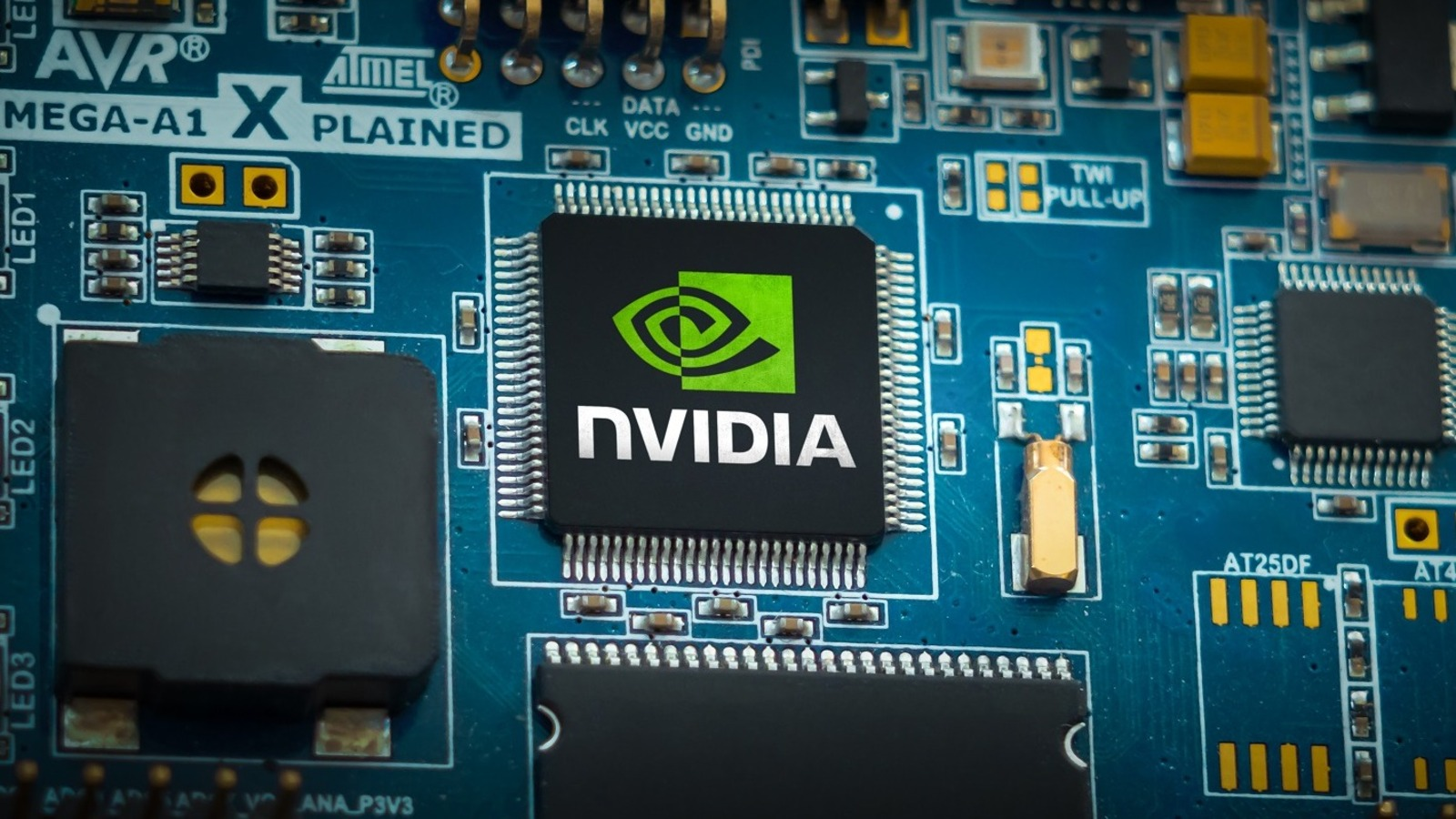
Nvidia to Build Germany’s First Industrial AI Cloud, Boosting Europe’s AI Infrastructure

Nvidia announced plans to develop its first artificial intelligence cloud platform for industrial applications in Germany, CEO Jensen Huang said Wednesday at the VivaTech conference in Paris. The AI cloud will combine artificial intelligence with robotics to support automotive giants like BMW and Mercedes-Benz in tasks ranging from product design simulation to logistics management.

Huang also detailed a broader Europe-focused strategy including expanding Nvidia technology centers across seven countries, launching a compute marketplace for European companies, and advancing AI models in multiple languages. The company is supporting drug discovery efforts with partners like Novo Nordisk.

“In just two years, we will increase the amount of AI computing capacity in Europe by a factor of 10,” Huang declared during his nearly two-hour presentation.

Europe is embracing the concept of “AI factories,” large-scale infrastructures dedicated to AI model development, training, and deployment. Huang announced plans for 20 such AI factories across the continent.

Huang is scheduled to visit Berlin Friday and is expected to meet with German Chancellor Friedrich Merz, signaling political support for the initiative.

Though specifics about the plant’s location, cost, and construction timeline were not disclosed, the move could be a win for Germany’s ruling coalition following recent setbacks with Intel and Wolfspeed suspending factory plans.

While Europe trails the U.S. and China in AI development, the European Commission revealed a $20 billion investment plan to build four AI factories earlier this year.

Additionally, Nvidia is partnering with European AI startup Mistral to power AI computing using 18,000 latest Nvidia chips for European enterprises.

“Sovereign AI is an imperative—no company, industry or nation can outsource its intelligence,” Huang said.

He emphasized the importance of AI adoption to avoid falling behind globally and expressed optimism about quantum computing’s near-term impact, noting it could solve complex problems beyond even advanced AI systems.

This announcement reinforces Nvidia’s role as a global AI infrastructure leader and marks a significant step in strengthening Europe’s AI ecosystem.

IBM Targets Practical Quantum Computer by 2029, Reveals Roadmap for Larger Systems

IBM announced on Tuesday its goal to deliver a practical quantum computer by 2029, detailing the steps it will take to achieve this milestone. The company also plans to develop a much larger quantum system by 2033.

Quantum computers utilize principles of quantum mechanics to solve complex problems that classical computers could take thousands of years to address. However, current quantum machines dedicate significant resources to error correction, limiting their overall speed advantage.

IBM aims to build the “Starling” quantum computer at a new data center under construction in Poughkeepsie, New York. The system is expected to feature about 200 logical qubits—units of quantum information—enough to demonstrate computational advantages over classical systems.

Competing alongside tech giants Microsoft, Google, Amazon, and various well-funded startups, IBM confronts the challenge of qubit errors by innovating in error-correction algorithms. Since 2019, IBM has adopted a novel approach by designing error-correction methods suited to practical, buildable chips rather than purely theoretical designs.

Jay Gambetta, IBM’s vice president of quantum initiatives, emphasized that the company has resolved the fundamental science questions and now faces a significant engineering challenge to scale up quantum systems. “We’ve answered those science questions. You don’t need a miracle now,” he said. “Now you need a grand challenge in engineering.”

IBM plans to release a series of quantum systems between now and 2027, paving the way toward the more powerful machines targeted for 2029 and beyond.