Yazılar

Nvidia to Launch Quantum Computing Lab in Boston in Partnership with Top Universities

Nvidia has announced plans to open a quantum computing research lab in Boston, aiming to collaborate with leading academic institutions such as Harvard University and the Massachusetts Institute of Technology (MIT). CEO Jensen Huang revealed the initiative during Nvidia’s annual software developer conference in San Jose, California, where the company held a dedicated day for quantum computing discussions.

The new lab, named the Nvidia Accelerated Quantum Research Center (NVAQC), will foster partnerships with prominent quantum computing firms, including Quantinuum, Quantum Machines, and QuEra Computing. The center is set to begin operations later this year. Huang’s announcement followed his earlier statement in January, where he suggested that practical quantum computers could still be two decades away—comments he sought to clarify during the event.

The quantum computing industry, which is still in its early stages, sees companies like Quantinuum and IonQ exploring commercial applications of quantum technology. Even though some quantum machines may eventually outperform Nvidia’s renowned graphics processing units (GPUs) in tasks like simulating atomic interactions, industry leaders emphasized that quantum computers are unlikely to replace classical systems. Instead, quantum and classical computing will likely work in tandem.

Huang highlighted the continued importance of Nvidia’s GPUs in current computational tasks, with quantum machines complementing traditional systems, not replacing them. He expressed optimism about the future of quantum computing, indicating that Nvidia’s involvement would further accelerate the industry’s growth.

French Quantum Computing Firm Pasqal Partners with NVIDIA to Boost Quantum Applications

Pasqal, a rapidly growing French quantum computing startup, has announced a strategic partnership with Nvidia (NVDA.O) to enhance its quantum applications development tools. Through this collaboration, Pasqal’s customers will gain access to NVIDIA’s open-source platform, CUDA-Q, for improved quantum computing capabilities.

The partnership aims to integrate Pasqal’s quantum computing units and cloud platform with CUDA-Q, providing a powerful interface and programming model for high-performance computing. This move is expected to accelerate the development of quantum applications, benefiting both the high-performance computing community and the broader quantum industry.

Loic Henriet, CEO of Pasqal, emphasized that the collaboration would provide a much-needed interface for developers and further fuel innovation in the quantum computing space.

Founded in 2019, Pasqal has already secured over 140 million euros ($151.8 million) in funding, marking it as a significant player in the growing quantum computing sector.

Breakthrough: First Room-Temperature Modular Quantum Computer Operates Without Cooling

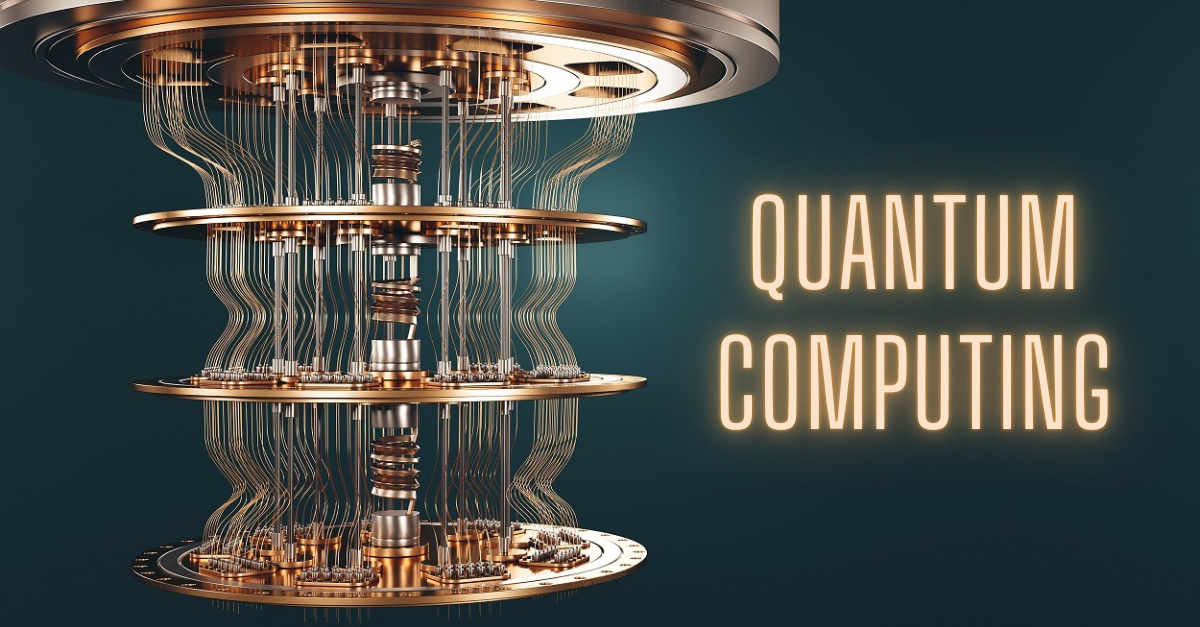
Scientists have made a groundbreaking achievement in the realm of quantum computing with the development of Aurora, a modular quantum computer that operates efficiently at room temperature. This monumental advancement eliminates the need for expensive and complex cooling systems, which have long been one of the major obstacles in quantum computing. The system is designed to work through interconnected modules, making it highly scalable and potentially a game-changer for the future of quantum networks.

Aurora utilizes photonic qubits, which rely on light instead of the traditional superconducting qubits commonly used in quantum computing. Superconducting qubits, which need near absolute zero temperatures to function, have limited scalability and pose significant challenges in terms of cost and infrastructure. Photonic qubits, on the other hand, offer the potential for higher efficiency, less energy consumption, and the ability to maintain quantum coherence at ambient temperatures. This could significantly accelerate the development of quantum computers that can be deployed on a much larger scale.

The breakthrough was detailed in a study published in Nature, highlighting Aurora’s ability to scale effectively by linking multiple processors through fiber optic cables. This innovative architecture enhances the system’s fault tolerance and enables improved error correction—two of the most pressing challenges in quantum computing today. The modular design of Aurora also opens up new possibilities for building large quantum systems that can be connected to form powerful quantum data centers.

Christian Weedbrook, the CEO and founder of Xanadu, the company behind the development of Aurora, emphasized that overcoming the limitations of error correction and scalability is critical for the practical application of quantum computers. In a statement, Weedbrook noted that this breakthrough represents a key step toward making quantum computing more accessible and useful in a wide range of industries, from cryptography to artificial intelligence, and could pave the way for the next generation of quantum technologies.