Yazılar

Tesla Profit Misses Expectations Despite Record Sales and Revenue

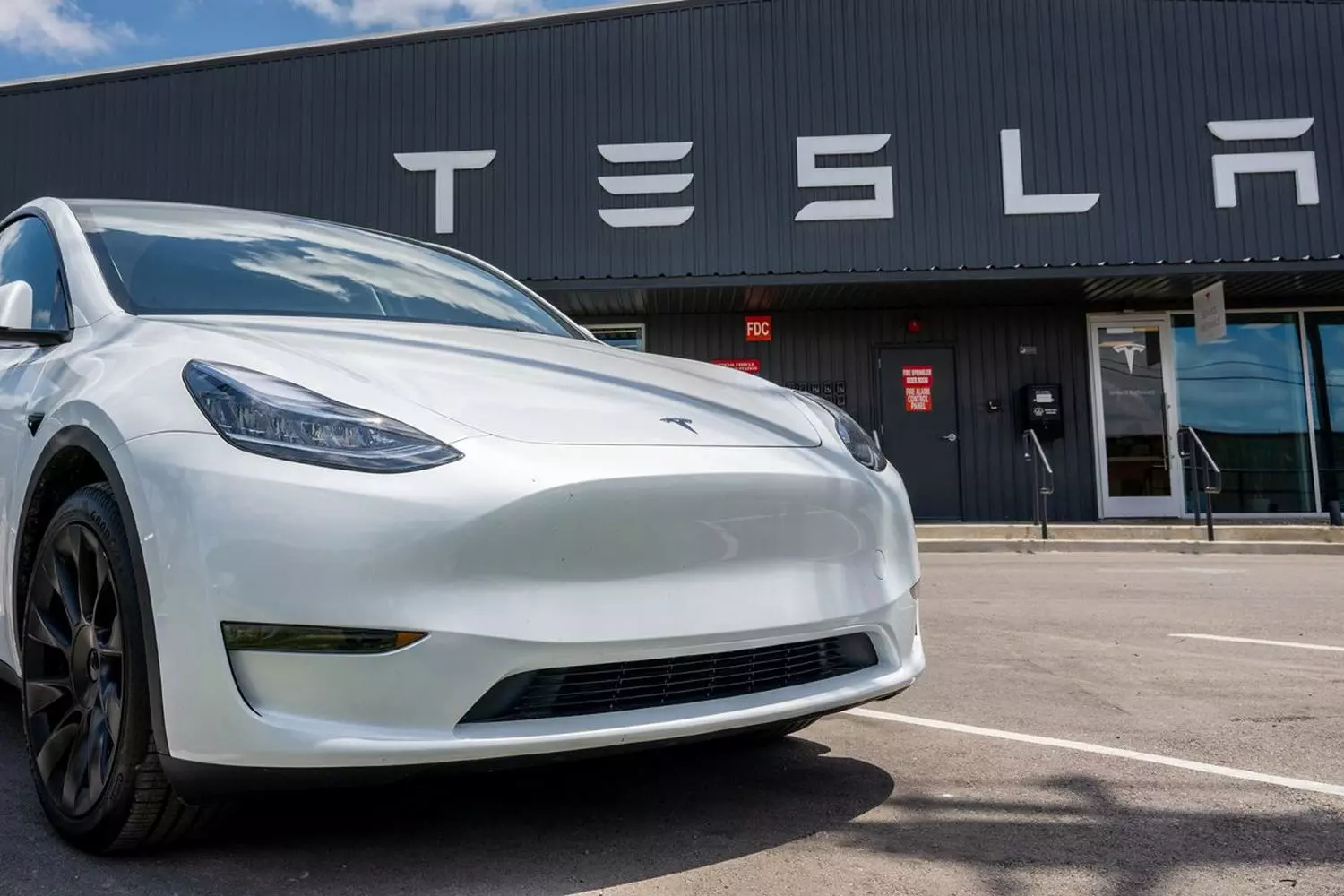
Tesla posted record third-quarter revenue of $28.1 billion, surpassing analyst estimates of $26.37 billion, but profits fell short due to rising costs, tariffs, and shrinking regulatory credit income. Shares dropped 4% in extended trading as investors reacted to the weaker earnings and fading government incentives that have long supported electric vehicle demand.

Profit per share came in at 50 cents, below the expected 55 cents. The company cited over $400 million in tariff-related costs and a 50% increase in R&D spending, largely tied to AI and robotics projects. Regulatory credit sales fell to $417 million from $739 million a year earlier, signaling continued decline.

Tesla’s gross margin stood at 18%, slightly above estimates, while automotive margins excluding credits reached 15.4%. To sustain demand amid expiring U.S. tax credits, Tesla launched lower-cost “Standard” versions of its Model 3 and Model Y, though analysts warned the move could compress profits further.

Despite the short-term challenges, Tesla remains focused on expansion. CEO Elon Musk said production of the Cybercab robotaxi, Semi truck, and Megapack 3 battery is set for 2026. The company’s energy division grew 81% in storage deployments, and Musk confirmed plans for mass production of the humanoid robot Optimus by late 2026.

Rivian and Lucid Warn of Challenges Ahead Amid Policy Shifts and Supply Chain Disruptions

Electric vehicle makers Rivian (RIVN.O) and Lucid (LCID.O) reported disappointing quarterly earnings and issued cautious outlooks, citing impacts from changing U.S. policies, trade tensions, and supply chain issues. Rivian’s shares dropped about 4% after hours, while Lucid’s shares fell 7%.

Both companies are grappling with multiple headwinds under the Trump administration, including the removal of consumer tax credits, imposition of high tariffs on auto parts imports, and the elimination of emission fines for gas vehicle manufacturers. Additionally, China’s restrictions on exporting heavy rare earth metals—critical for EV motors—have disrupted supply chains and increased production costs in the U.S.

Rivian revealed rising costs in Q2 due to rare earth supply disruptions and raised its adjusted core loss forecast for 2024 as revenue from regulatory credit sales dwindles. The cost per vehicle rose approximately 8% year-over-year to about $118,375, largely reflecting lower production volumes rather than operational inefficiencies, CEO RJ Scaringe explained. Lower production contributed to a $14,000 increase in cost of goods sold per vehicle.

The company plans a three-week production pause in September (following a one-week pause in Q2) to integrate components and prepare for the critical launch of its smaller, more affordable R2 SUV next year.

Lucid said it largely avoided rare earth supply issues by using inventory magnets but faced tariff-related costs that pressured profit margins. The luxury EV maker also lowered its annual production forecast.

The expiration of the $7,500 federal EV tax credit at September’s end removes a key demand driver. Analysts expect a sales surge in Q3 as buyers rush to benefit from the incentive before it ends, followed by a possible softening in Q4. Lucid’s interim CEO Marc Winterhoff noted the company is planning countermeasures to mitigate the expected demand slowdown.

The Trump administration’s removal of fuel economy penalties has severely reduced demand for regulatory credits, a significant revenue source for Rivian and Lucid. Rivian said it now expects about half of its initially forecasted $300 million in credit revenue this year and does not anticipate any revenue from credit sales in H2 2024.

Rivian raised its adjusted core loss forecast to between $2 billion and $2.25 billion for 2024, up from prior guidance of $1.7 billion to $1.9 billion, but expects to roughly break even on gross profit. The company also anticipates record deliveries in Q3 across consumer and commercial segments, including its electric delivery vans for Amazon, its largest shareholder.