Yazılar

Cyborg Cockroaches: The Future of Search and Rescue Robots

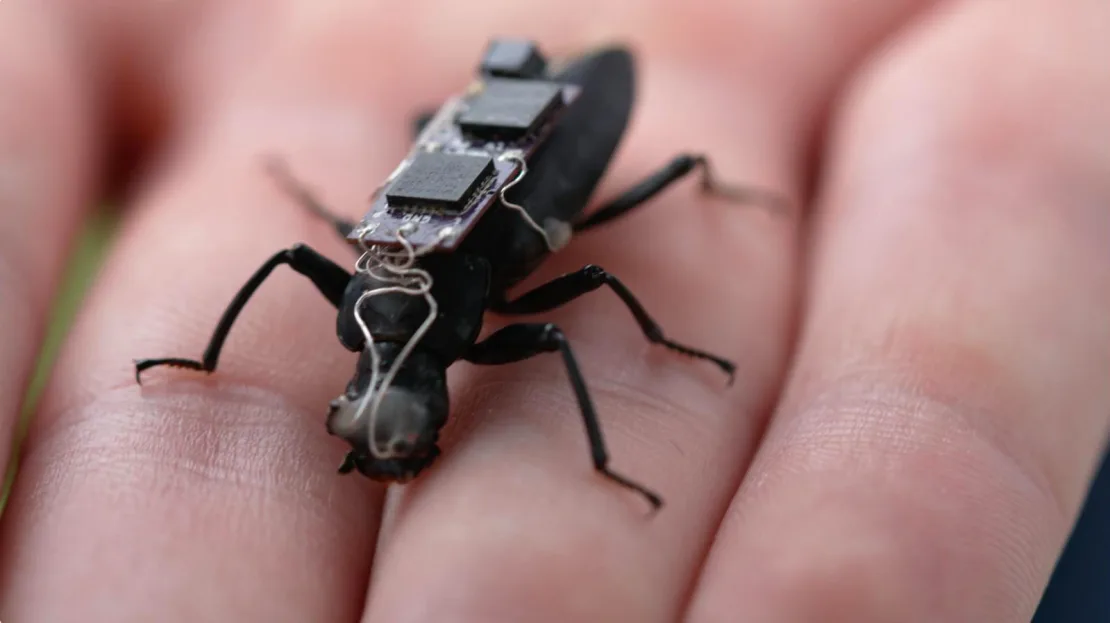
Researchers at the University of Queensland are creating cyborg insects that could revolutionize search and rescue operations. By implanting tiny circuits into the backs of beetles, they are crafting biohybrids—part-living, part-machine robots that could help in situations where human access is impossible, such as after natural disasters like earthquakes or bombings.

Lachlan Fitzgerald, a student studying mathematics and engineering, is leading the project. The beetles are outfitted with backpack-like devices that send electrical pulses to their antennae, allowing Fitzgerald to control their movements. This technology harnesses the insects’ natural agility, enabling them to navigate tight and hazardous environments with ease. Fitzgerald envisions a future where swarms of cyborg beetles could be deployed in disaster zones to find survivors or deliver life-saving drugs before human rescuers can safely enter.

The project also involves implanting control backpacks on giant Australian burrowing cockroaches and darkling beetles. These species are chosen for their adaptability and ability to navigate complex environments, making them ideal candidates for disaster response. Unlike traditional robots, insects can navigate with little computational effort, making them more efficient in unpredictable, real-world situations.

Despite their small size, cyborg insects could play a significant role in saving lives by quickly locating survivors in disaster zones and delivering essential aid. However, Fitzgerald acknowledges that there are still challenges to mastering the control of these insects, and it may take years before this technology is fully operational.

Fitzgerald is not the only researcher experimenting with biohybrid robots. At the California Institute of Technology (Caltech), researchers have implanted pacemakers into jellyfish to control their swimming and gather data from the deep ocean. Meanwhile, researchers at Cornell University have used king oyster mushrooms to control robots, which could be used for environmental sensing, like detecting soil chemistry for crop management.

While the rise of biohybrid robots sparks debates about ethical concerns, Fitzgerald and his team argue that the potential benefits, such as saving lives in urban disaster zones, outweigh the risks. He also assures that the beetles used in the project have normal life expectancies and aren’t harmed by the technology. However, he acknowledges the need for ongoing ethical discussions and proper regulation in this emerging field.

 

MIT Engineers Develop Miniature Zinc-Air Batteries for Cell-Sized Robots, Advancing Autonomous Technology

MIT Engineers Unveil Zinc-Air Microbatteries: Tiny Powerhouses for Cell-Sized Robots Devamını Oku

Meet ‘Eve’: The Robotic Fish Revolutionizing Ocean Studies

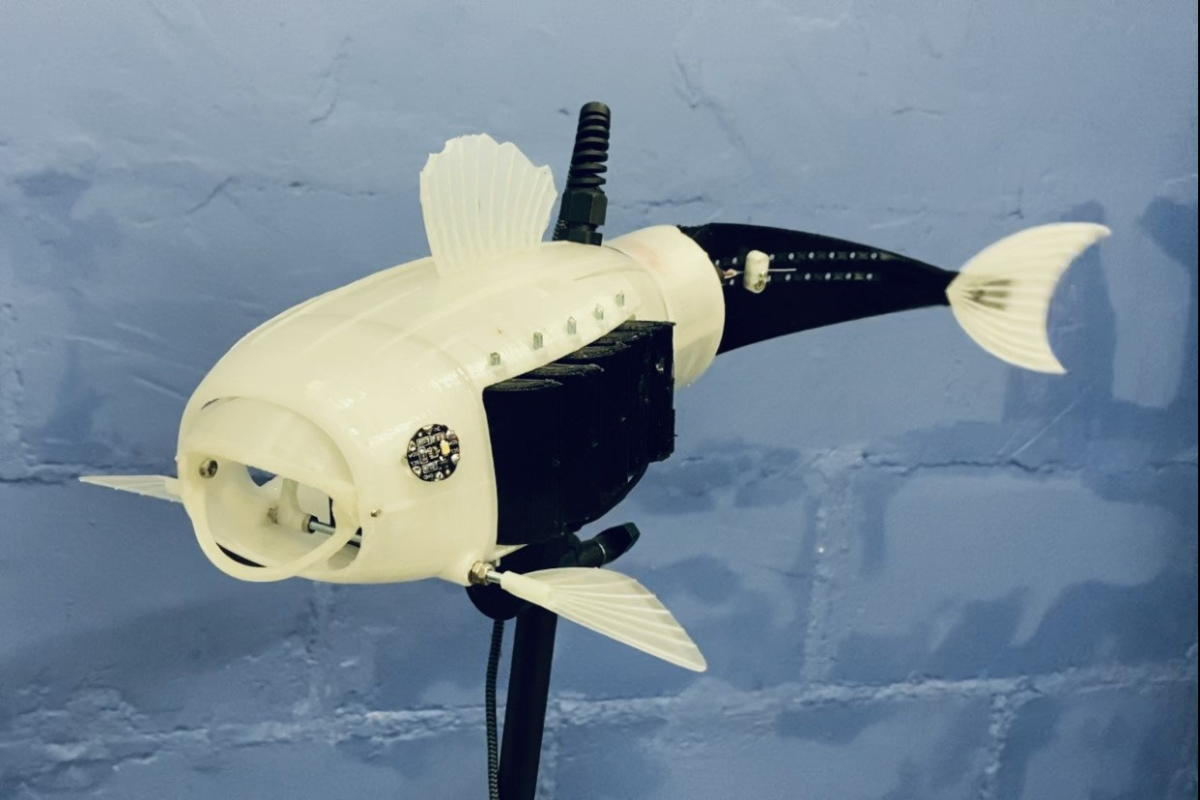
In a groundbreaking development from ETH Zurich, engineering students have introduced “Eve,” a sophisticated robotic fish designed to enhance ocean research. Although stationed 400 kilometers from the nearest sea, Eve is being tested in Lake Zurich by the student-led SURF-eDNA group, which aims to advance how we study aquatic ecosystems.

Eve, with its biomimetic design, mimics the movements of a real fish with a silicone tail and internal pumps that propel it smoothly through the water. This design minimizes disturbance to the local ecosystem, allowing Eve to blend seamlessly with its surroundings, as noted by master’s student Dennis Baumann. The robot’s ability to remain unobtrusive is key to gathering accurate environmental data without disrupting the habitat.

Beyond its lifelike appearance, Eve boasts several high-tech features. It is equipped with a camera for underwater filming, sonar for obstacle navigation, and a specialized filter for collecting environmental DNA (eDNA). This eDNA, shed by organisms in the water, is collected and analyzed to identify the species present in the area, providing a deeper understanding of aquatic biodiversity.

Martina Lüthi, a postdoctoral researcher at ETH Zurich, explains that eDNA can reveal the variety of life forms in a given water body by capturing the genetic material shed by animals. This approach, combined with Eve’s autonomous capabilities, represents a significant leap from traditional methods of collecting eDNA, which often involve manually scooping water samples.

The advancement of tools like Eve is crucial for exploring and protecting the world’s oceans, which cover over 70% of the Earth’s surface yet remain largely unexplored. Innovations such as Aquaai’s clownfish-like drones and deep-sea rovers demonstrate the growing trend towards using advanced technology to monitor and study marine environments.

As climate change, overfishing, and other human activities threaten ocean habitats, sophisticated tools like Eve could become essential for more effective conservation efforts. Baumann and his team hope that by refining their technology, they can offer a reliable, scalable tool for biologists worldwide. Their goal is to help prevent species endangerment and extinction, thereby contributing to the preservation of marine biodiversity.

Eve represents a promising step towards more precise and less invasive environmental monitoring, underscoring the potential of robotics to transform our understanding and protection of the natural world.