Yazılar

Linkerbot Eyes $6 Billion Valuation as China’s Robotic Hand Leader Accelerates

Chinese robotics startup Linkerbot is seeking to double its valuation to $6 billion following fresh investor enthusiasm around humanoid robotics, positioning itself as one of the fastest-rising players in a sector increasingly focused on precision dexterity rather than full humanoid systems alone.

The Beijing-based company dominates the global market for highly dexterous robotic hands, reportedly controlling more than 80% of the high-degree-of-freedom robotic hand segment. Its specialization reflects a strategic industry shift: rather than building entire humanoid robots immediately, many manufacturers are prioritizing advanced hands and manipulation systems as the most technically difficult and commercially valuable component.

Linkerbot’s technology is designed around replicating sophisticated human craftsmanship — from threading needles to precision assembly and industrial tooling — and its proprietary LinkerSkillNet platform aims to convert real-world human dexterity into scalable robotic capability. This focus on practical manipulation gives Linkerbot a major edge in manufacturing, research, and specialized automation markets.

The company’s growth also reflects broader momentum in China’s robotics sector, where investor interest has surged amid rising national ambitions in AI, industrial automation, and humanoid development. Backing from major institutions including Ant Group, HongShan, and state-linked capital reinforces how strategically important advanced robotics has become within China’s technology ecosystem.

A key commercial advantage is deployment flexibility: instead of requiring companies to purchase costly full humanoid robots, Linkerbot’s hands can be integrated directly into existing robotic arms, significantly lowering adoption barriers for factories seeking productivity gains.

This positions Linkerbot at a critical frontier in robotics economics. While full humanoids remain expensive and complex, dexterous robotic hands may emerge first as the practical bridge between current industrial automation and future general-purpose humanoid systems.

If successful, Linkerbot’s valuation push could signal that the next major robotics battleground may center less on humanoid appearance and more on mastering the mechanics of human-level dexterity.

Tesla invests $2 billion in xAI, confirms Cybercab production this year

Tesla said it will invest $2 billion in xAI, the artificial intelligence company founded by its chief executive Elon Musk, while reaffirming that production of its Cybercab robotaxi remains on track to begin this year. The move underscores Tesla’s strategic shift from a traditional electric vehicle maker toward an AI- and autonomy-focused business model.

The investment supports Tesla’s push into self-driving technology and robotics, areas central to its long-term valuation. Management said factory investments tied to Cybercabs, humanoid robots, Semi trucks, and the Roadster will drive capital expenditures above $20 billion this year, more than double prior levels. Shares rose after the announcement but pared gains as investors weighed the scale of spending.

Tesla said it will stop selling the Model S and Model X, reallocating factory space to robotics production. While its core EV business remains under pressure from competition and pricing incentives, the company highlighted progress in margins and strong growth in its energy generation and storage segment.

Musk reiterated expectations for broader autonomous deployment, though regulatory hurdles remain for the Cybercab, which is designed without a steering wheel or pedals. Investors are watching rollout milestones closely as Tesla seeks to convert long-promised autonomy into tangible revenue.

UBTech Agrees Airbus Deal to Expand Robot Use in Aviation Manufacturing

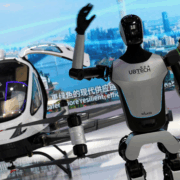
Chinese robotics company UBTech has signed an agreement with aircraft manufacturer Airbus to supply robots for use in aviation manufacturing, as humanoid robotics gains traction in industrial settings.

UBTech said Airbus has already purchased its latest industrial humanoid robot, the Walker S2, and that the two companies will work together to expand the application of humanoid robots across aerospace manufacturing scenarios. Airbus confirmed the cooperation but said it is currently in an early concept-testing phase.

Humanoid robots, designed to mimic human movement and behaviour, have become a strategic focus in China as policymakers and companies look to address challenges such as labour shortages, population decline and trade frictions with the United States. In recent years, Chinese-made humanoid robots have demonstrated advanced capabilities, including complex athletic movements and autonomous tasks.

The partnership with Airbus follows UBTech’s earlier agreement with Texas Instruments, highlighting growing international interest in the firm’s robotics technology. UBTech said total order value for its humanoid robots exceeded 1.4 billion yuan in 2025, and production capacity for industrial humanoid robots is expected to surpass 10,000 units in 2026.