Yazılar

Samsung Electronics Faces 39% Drop in Q2 Profit Amid Weak AI Chip Sales

Samsung Electronics is expected to report a 39% decline in its second-quarter operating profit, largely due to delays in supplying advanced memory chips to AI chip leader Nvidia, industry analysts said. The South Korean tech giant is forecast to announce an operating profit of 6.3 trillion won ($4.62 billion) for April to June, marking its lowest earnings in six quarters, according to LSEG SmartEStimate.

This downturn has raised concerns about Samsung’s ability to compete with rivals like SK Hynix and Micron in the rapidly growing market for high-bandwidth memory (HBM) chips used in artificial intelligence data centers. While its competitors have seen strong demand, Samsung’s growth has been limited by its heavy reliance on the China market, where U.S. export restrictions have curbed sales of advanced chips.

Analysts point out that Samsung’s latest HBM chips, specifically the HBM3E 12-high version, have not yet received Nvidia’s certification, slowing supply to the U.S. AI chip leader. Ryu Young-ho, senior analyst at NH Investment & Securities, noted that Samsung’s shipments to Nvidia are unlikely to be significant in 2025. Samsung has, however, started supplying the new chip to AMD since June.

Despite challenges in the chip segment, Samsung’s smartphone sales remain steady, supported by stockpiling ahead of potential U.S. tariffs on imported devices. Nonetheless, ongoing U.S. trade policies, including proposed tariffs on non-U.S.-made smartphones and possible restrictions on technology exports to Samsung’s Chinese plants, continue to create business uncertainty.

Samsung’s shares have underperformed this year compared to the KOSPI index, rising about 19% against the KOSPI’s 27.3% increase. As of Monday, Samsung shares dipped 1.9%, while the KOSPI rose 0.3%.
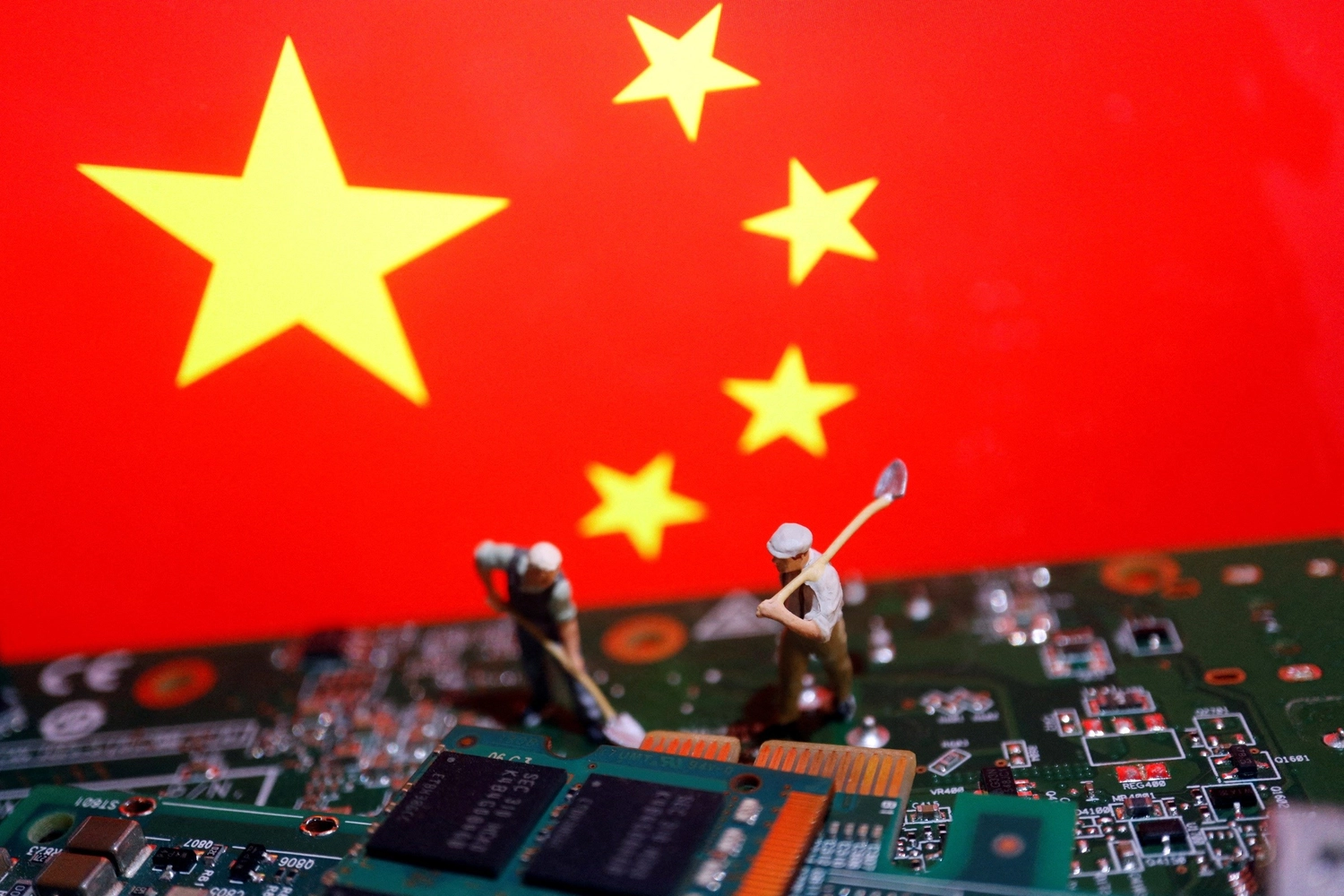
China to Lead in Chipmaking Investment in 2025, SEMI Reports

China is set to continue its dominance in global chipmaking investments in 2025, despite a notable year-over-year decline, according to a report from industry group SEMI. The country is expected to outpace all other regions in spending on new computer chipmaking equipment, followed by Taiwan and Korea.

Global Investment Growth

SEMI’s forecast for global fabrication plant investments shows a 2% increase in 2025, reaching $110 billion. This marks the sixth consecutive year of growth, driven largely by the demand for tools needed to produce chips for artificial intelligence (AI). SEMI predicts that the AI boom will have an even stronger impact on the industry in 2026, with an expected investment growth of 18%.

China’s Strategic Push and Decline in Investment

China has been the largest consumer of chips for years, and its chipmaking sector saw a massive push starting in mid-2023. With government support, China has accelerated efforts to reduce its dependence on imported chips, particularly in response to U.S. restrictions. Despite this surge, SEMI forecasts that China’s chipmaking spending will drop by 24% in 2025, falling to $38 billion from $50 billion in 2024. However, this still keeps China ahead of other major chip-producing countries like Korea, where SK Hynix and Samsung are expanding memory chip production, with investments projected at $21.5 billion.

Spending in Other Key Regions

Taiwan, home to TSMC, a major foundry for AI chips, is projected to spend $21 billion on chipmaking equipment in 2025. In comparison, spending in Korea will be significant, but not as high as China’s, with $21.5 billion expected. The Americas and Japan are each expected to invest $14 billion, while Europe’s investment is projected at $9 billion.

Key Players in the Equipment Market

The top players in the chip equipment market include ASML, Applied Materials, KLA, LAM Research, and Tokyo Electron. ASML, the largest chip equipment manufacturer, anticipates sales of €32-38 billion in 2025, maintaining a dominant market share in the lithography sector. Chinese equipment makers, such as Naura, AMEC, and SiCarrier (affiliated with Huawei), are also gaining traction in the market.

Samsung Electronics Union Approves 5.1% Wage Increase

Samsung Electronics’ main union in South Korea has approved a 5.1% wage increase for 2024, finalizing a deal reached last month between the company and the National Samsung Electronics Union (NSEU). The agreement, which required ratification by union members, also includes additional benefits such as company product purchase points and 30 Samsung Electronics shares per employee.

The NSEU, representing approximately 36,000 members—around 30% of Samsung’s South Korean workforce—has previously engaged in strikes to demand better pay and working conditions. However, Samsung maintained that production remained unaffected during the disputes.

This resolution comes as Samsung Electronics faces intensified competition in the semiconductor market, particularly in AI-related memory chip production. The deal helps stabilize labor relations at a crucial time for the world’s largest memory chipmaker as it seeks to strengthen its position in the industry.