Yazılar

U.S. Implements New Restrictions on China’s Semiconductor Industry

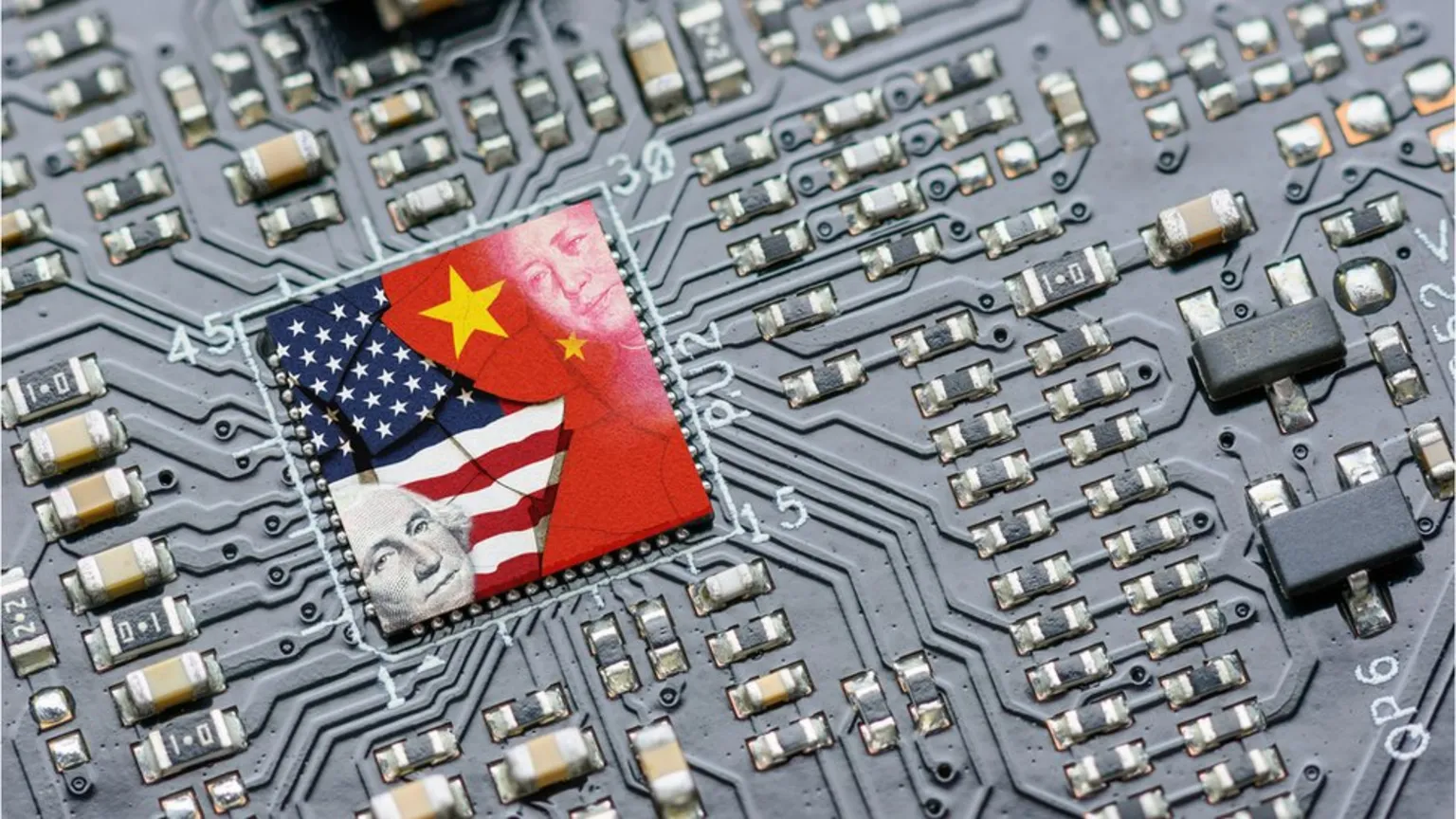
The United States unveiled a new wave of export controls on Monday targeting China’s semiconductor sector. The measures aim to restrict access to advanced chipmaking technologies that could bolster China’s AI and military capabilities. This marks the third significant U.S. crackdown on China’s semiconductor ambitions in three years.

Key Components of the New Restrictions

  1. Expanded Export Controls
    • New Targets: The U.S. added 140 entities, including Naura Technology Group, Piotech, and SiCarrier Technology, to its export restriction list.
    • High Bandwidth Memory (HBM) Chips: Restrictions now apply to advanced HBM chips critical for AI applications.
    • Tool and Equipment Curbs: New controls affect 24 chipmaking tools and three software tools essential for semiconductor production.
  2. Impacted Companies
    • Chinese Firms: Companies such as Swaysure Technology, Qingdao SiEn, and Shenzhen Pensun Technology were added to the Entity List, barring them from receiving U.S. shipments without special licenses.
    • International Suppliers: Major players like Lam Research, KLA, Applied Materials, and Dutch firm ASM International are likely to be affected.
  3. Foreign Direct Product Rule
    • Scope Expansion: The U.S. will regulate foreign-made equipment containing any U.S. chips, with exemptions for Japan and the Netherlands.
    • Affected Regions: Equipment from countries like Israel, South Korea, Taiwan, and Singapore will fall under U.S. controls.
  4. Investment Restrictions
    • For the first time, private equity and tech investment firms, including Wise Road Capital and Wingtech Technology, are included in the Entity List.

U.S. Objectives and Global Implications

The Biden administration aims to stymie China’s ability to produce advanced chips, particularly those used in artificial intelligence and defense. The move underscores bipartisan U.S. concerns over China’s tech ambitions, which are viewed as a national security threat.

China’s Response

Chinese officials criticized the measures, accusing the U.S. of undermining global trade and disrupting supply chains. Beijing vowed to protect the rights of its companies but did not provide specifics on retaliatory actions.

Industry Impact

  • Chinese Semiconductor Industry: The restrictions intensify challenges for China, which is striving for self-reliance in chipmaking but lags behind global leaders like Nvidia and ASML.
  • International Suppliers: Companies like Samsung, SK Hynix, and Micron may face disruptions, particularly in sales of HBM chips to China. Analysts estimate that China accounts for 30% of Samsung’s HBM chip sales.

Historical Context

The latest restrictions build on prior U.S. measures, including sweeping controls introduced in October 2022. These represent the most significant shifts in U.S. tech policy toward China since the 1990s.


 

Samsung Reports Disappointing Q3 Profit Guidance Amid AI Chip Challenges

Samsung Electronics, the world’s largest memory chip producer, reported lower-than-expected third-quarter profits on Tuesday, despite a year-on-year surge. The South Korean tech giant estimated operating profits of around 9.10 trillion won (approximately $6.7 billion) for the quarter ending in September. While this figure represents a massive 274% increase from the same period last year, it fell short of the 11.456 trillion won ($7.7 billion) forecast by analysts polled by LSEG.

Samsung’s projected revenue for the quarter stood at 81.96 trillion won ($61 billion), also missing expectations. The disappointing guidance comes amid the company’s struggles to manage its memory chip business and delays in shipments of its advanced high-bandwidth memory (HBM3E) chips.

In an unusual move, Jun Young-hyun, Samsung’s Vice Chairman and new head of the Device Solutions Division, issued a public apology following the release, acknowledging the company’s challenges. The performance of Samsung’s memory business has been negatively affected by “one-time costs and negative effects,” including inventory adjustments by mobile customers and increased competition from Chinese memory producers.

The company also noted that delays in shipments of its cutting-edge HBM3E chips to major clients added to its difficulties. These high-performance chips are critical for artificial intelligence applications, a growing sector where Samsung is trying to gain ground.

Despite being the dominant player in memory chips used in devices such as laptops, servers, and PCs, Samsung has seen weakened demand for legacy chips in these sectors. This trend, coupled with a less aggressive market share strategy, has hurt the company. “Samsung is not taking that market share as aggressively as we have seen in the past,” remarked Daniel Yoo, head of global asset allocation at Yuanta Securities Korea.

Macquarie Equity Research analysts warned that the fall in demand for conventional DRAM (dynamic random access memory) chips could have a more significant impact on Samsung than on its smaller rivals. DRAM chips are essential for PCs and workstations, and Samsung has traditionally relied on their steady demand.

In response to the market challenges, Samsung has reportedly instructed its subsidiaries to reduce staff by up to 30% in certain divisions, according to sources cited by Reuters. The company’s shares, which are down 22% year-to-date, fell by another 0.98% after the release of the third-quarter profit guidance. Samsung is expected to release more detailed financial results later this month.


SK Hynix Spurs Rally in Asian Semiconductor Stocks with Mass Production of Advanced AI Chip

SK Hynix shares surged by over 9% on Thursday after the South Korean chipmaker announced the mass production of a new high-bandwidth memory (HBM) chip designed for AI applications. The company revealed that the HBM3E chip, the first 12-layer version of its kind, will be ready for delivery by the end of the year. This updated chip boasts a 36 GB capacity, marking a 50% increase from the previous 8-layer version, all while maintaining the same physical thickness.

SK Hynix has positioned itself as a key player in the AI memory chip market, supplying HBM chips to major tech firms like Nvidia. With the new 12-layer HBM3E chip, the company seeks to solidify its dominance in the space, offering advanced solutions for high-end generative AI workloads.

HBM chips are dynamic random access memory (DRAM) components that are stacked vertically, allowing for more compact designs and reduced power consumption. The global HBM market is currently dominated by SK Hynix, Micron Technology, and Samsung Electronics.

Micron Technology also made headlines by issuing better-than-expected revenue and profit forecasts for its fiscal first quarter, citing strong demand for HBM chips. Micron expects $8.7 billion in revenue and profits of $1.74 per share, surpassing market estimates. This positive outlook, coupled with SK Hynix’s announcement, led to a rally in Asian semiconductor stocks.

In Japan, Tokyo Electron’s shares rose 7%, and Advantest climbed 5%, while Samsung Electronics saw a 3% gain. The South Korean Kospi index also responded positively, increasing by 2% as the sector benefitted from these developments.